
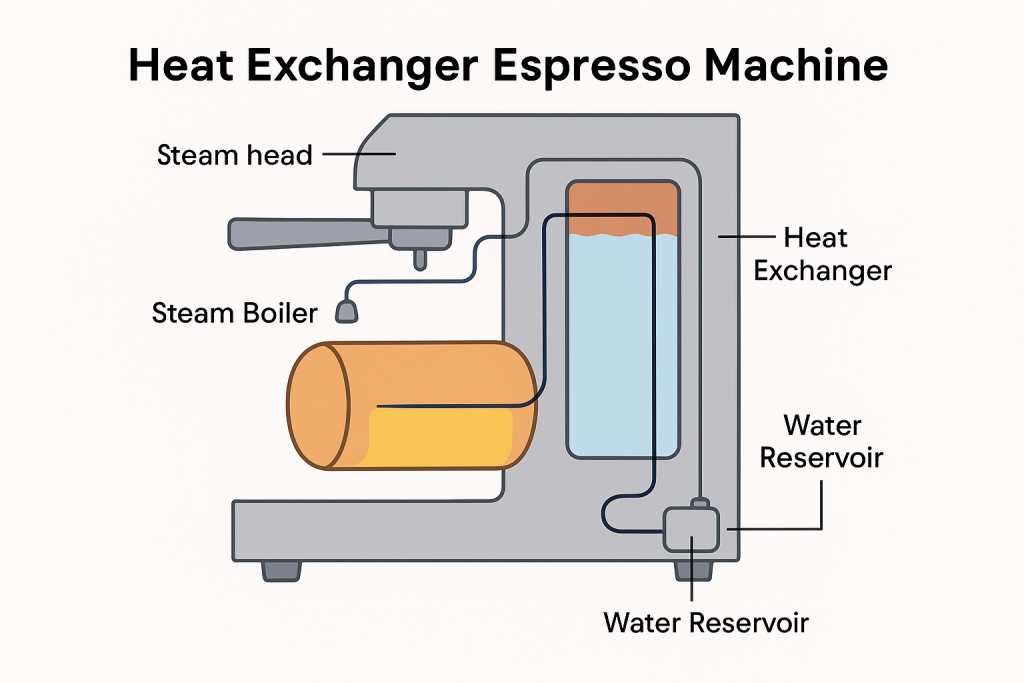
If you love espresso and want to make café-quality coffee at home, understanding how to use a heat exchanger espresso machine is key. This type of machine gives you more control over your brew, letting you pull rich, flavorful shots every time.
But if you’re new to heat exchanger machines, the process might seem a bit tricky at first. Don’t worry—this guide will walk you through each step clearly and simply. By the end, you’ll feel confident making the perfect espresso that impresses both you and your guests.
Ready to unlock the full potential of your espresso machine? Let’s dive in!
Heat Exchanger Basics
A heat exchanger espresso machineuses one boiler to heat water and steam. It has a special tube inside the boiler. Hot water moves through this tube to make coffee. Steam is created around the tube to froth milk.
This design lets you brew espresso and steam milk at the same time. No need to wait between shots or steaming. This saves time and keeps coffee hot.
Benefits for home baristasinclude:
- Faster coffee making with simultaneous brewing and steaming
- Consistent temperature for better espresso flavor
- Compact size, good for small kitchens
- More control over the brewing process
Credit: procoffeegear.com
Preparing Your Machine
Clean the espresso machine before use. Remove old coffee grounds and rinse parts well. Use warm water and a soft cloth to wipe the machine. Avoid harsh chemicals that can damage the surface. Regular cleaning keeps the machine working well and safe.
Check water and power connections carefully. Use fresh, filtered water to improve taste. Connect the machine to a stable power source. Avoid extension cords to prevent power issues. Make sure the machine is dry before plugging it in. This helps avoid electrical problems and keeps the machine safe.
Grinding And Dosing
Choosing the right grind size is key for espresso. A fine grind helps extract rich flavors. Too coarse, the coffee will taste weak. Too fine, it can block water flow and cause bitter taste. Adjust grind size depending on your coffee beans and machine.
Measuring the coffee dose ensures a balanced shot. Most espresso shots need about 18-20 gramsof coffee. Use a kitchen scale for accuracy. Too little coffee makes a weak espresso. Too much causes over-extraction and bitterness.
| Grind Size | Effect on Espresso |
|---|---|
| Too Coarse | Weak flavor, fast water flow |
| Fine (Ideal) | Rich flavor, balanced extraction |
| Too Fine | Slow water flow, bitter taste |

Credit: procoffeegear.com
Brewing Process
Preheating the machineis key for a good espresso. Turn the machine on and wait at least 15 minutes. This warms the water and the group head. Warm equipment helps extract better flavor from the coffee.
Extracting the espresso shotrequires firm tamping of the coffee grounds. Insert the portafilter and start the shot. Aim for about 25-30 seconds of extraction. The espresso should have a rich, dark color with a golden crema on top.
Managing brew temperatureis vital for taste. Heat exchanger machines keep water hot but control is needed. Avoid too high temperatures to prevent bitterness. Too low temperature causes weak flavor. Adjust settings to find the right balance.
Steaming Milk
Place the steam wand just below the milk surface. Turn on the steam to start frothing. Move the pitcher slowly to create a whirlpool effect. This helps mix air evenly into the milk.
Listen for a soft hissing sound. It means air is entering the milk. Avoid big bubbles by not raising the wand too high.
Heat the milk to about 140°F (60°C). Stop steaming once the pitcher feels warm to touch.
To create microfoam, keep the wand near the surface. This adds tiny air bubbles for smooth, velvety milk.
- Keep the wand tip just under the milk surface.
- Use gentle swirling to mix air and milk.
- Stop steaming at the right temperature to avoid burning.
- Tap and swirl the pitcher to remove large bubbles.
Troubleshooting Tips
Many users face problems with their espresso machines. A common issue is temperature fluctuations. This affects the taste of your coffee. Another problem is pressure inconsistency. It can cause weak or bitter espresso. Leaks may also occur. These can damage the machine over time. Understanding these issues is key to fixing them.
- Check if the machine is properly pluggedin.
- Ensure the water reservoiris full.
- Clean the machine parts regularly. This prevents clogs.
- Adjust the pressure settingsfor a better brew.
- Inspect seals and gaskets for wear and tear.
These small actions can save time and maintain your machine. Enjoy a great cup of espresso every day!
Advanced Techniques
Using a heat exchanger espresso machine allows precise temperature control for better espresso shots. Adjust the steam wand and brew water separately to get creamy milk and rich coffee. Practice helps balance pressure and temperature for consistent results.
Pressure Profiling
Pressure profiling is important for making tasty espresso. It means changing the pressure during brewing. Start with low pressure to wet the coffee. Gradually increase it for better flavor. This method helps control the extraction process. Different pressures bring out unique coffee flavors.
Temperature Adjustments
Temperature is key in making great espresso. Adjusting it can change the taste. Use a thermometer to check water temperature. Keep it between 195°F and 205°F for best results. Small changes can make big differences. Experiment with different settings for your perfect cup. Remember, consistency is crucial for delicious espresso.

Credit: www.youtube.com
Frequently Asked Questions
What Is A Heat Exchanger Espresso Machine?
A heat exchanger espresso machine uses one boiler to heat water and steam separately. It delivers fresh water for espresso while maintaining steam pressure for milk frothing. This design allows fast brewing and steaming without temperature fluctuation, making it ideal for home and professional use.
How Do I Properly Heat A Heat Exchanger Machine?
Turn on the machine and allow it to heat fully, about 15-20 minutes. This ensures stable water temperature for espresso extraction and sufficient steam pressure for frothing milk. Avoid starting before the machine reaches optimal heat to prevent weak or uneven espresso shots.
Can I Steam Milk While Brewing Espresso?
Yes, the heat exchanger system allows simultaneous steaming and brewing. The boiler maintains steam pressure for frothing milk while fresh water passes through the heat exchanger for espresso. This saves time and improves workflow in making espresso-based drinks like cappuccinos and lattes.
How Do I Clean A Heat Exchanger Espresso Machine?
Flush the group head with water after each use to remove coffee grounds. Regularly descale the boiler and clean the group head and steam wand to prevent buildup. Proper cleaning maintains machine performance and prolongs its lifespan, ensuring great espresso every time.
Conclusion
Using a heat exchanger espresso machine can bring great coffee at home. It heats water quickly and keeps the temperature steady. This helps make rich, smooth espresso every time. Clean the machine often to keep it working well. Practice your technique to get the best taste.
Small steps lead to better coffee. Enjoy the process, and savor each cup. Your perfect espresso is just a few tries away.