
Wondering how much electricity your pellet grill actually uses? If you’re like most grill lovers, you want to enjoy that perfect smoky flavor without shocking your electric bill.
Understanding the power consumption of your pellet grill can help you save money and use it more efficiently. You’ll discover exactly how much electricity your grill needs, what factors affect its usage, and simple tips to keep your energy costs low.
Keep reading to make the most out of your pellet grill while staying smart about energy use.
Pellet Grill Basics
Pellet grills cook food using wood pellets as fuel. They offer a mix of flavor and convenience for outdoor cooking.
Understanding how pellet grills work helps explain their electricity use. These grills use electricity to control temperature and feed pellets.
How Pellet Grills Work
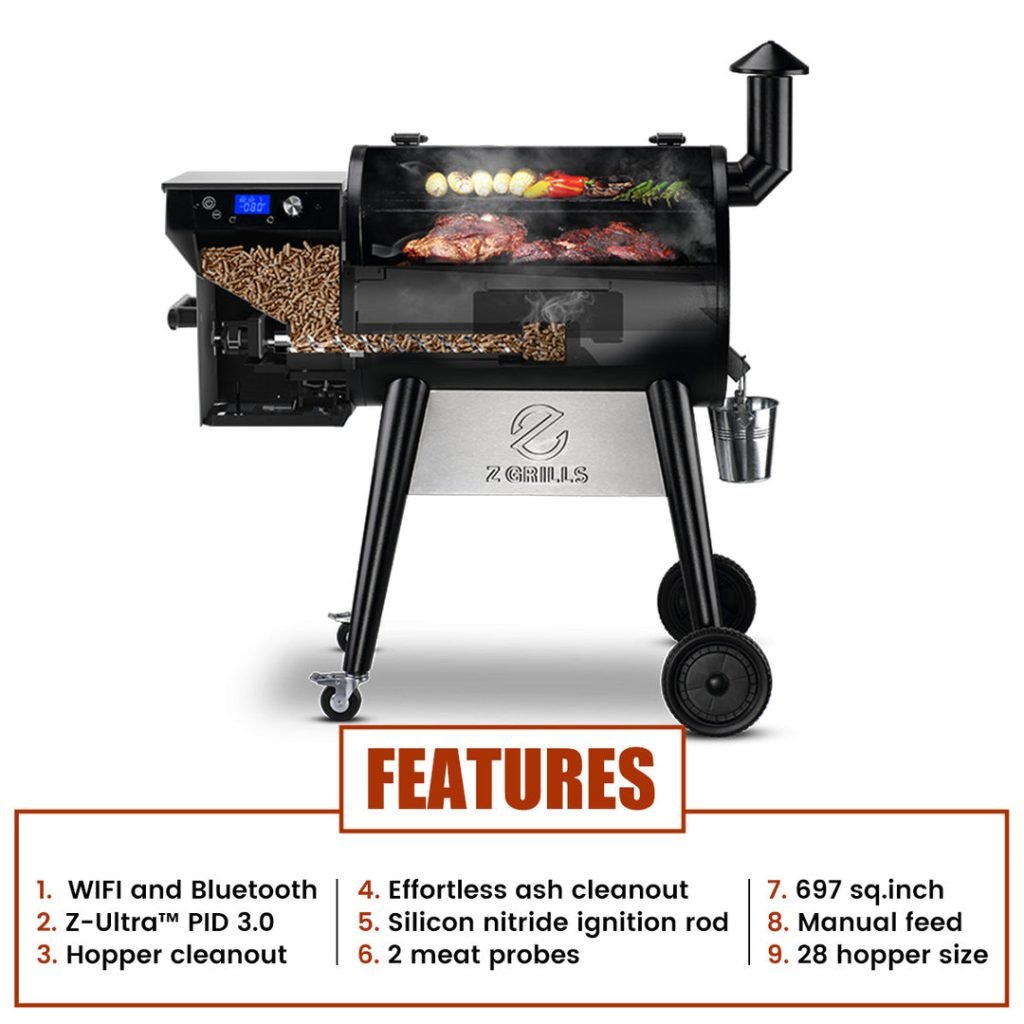
Pellet grills use an electric auger to push wood pellets into a fire pot. A fan blows air to help pellets burn evenly.
- Pellets ignite in the fire pot to create heat and smoke.
- The fan controls airflow, affecting the heat and smoke level.
- A thermostat monitors and adjusts the temperature automatically.
Key Components
| Component | Function |
| Electric Auger | Feeds pellets to the fire pot |
| Fire Pot | Burns pellets to produce heat |
| Fan | Circulates air for combustion and smoke |
| Thermostat | Maintains the set cooking temperature |
| Control Panel | Allows user to set temperature and timer |
Electricity Role In Pellet Grills
Pellet grills use electricity to operate key parts. This helps cook food evenly and keep temperature steady.
Knowing how much electricity a pellet grill uses helps you plan your energy costs better.
Powering The Auger
The auger moves wood pellets from the hopper into the fire pot. It runs on a small electric motor.
This motor uses low electricity, usually less than 100 watts. It runs only when pellets need feeding.
Ignition Process
The ignition starts the fire by heating a metal rod. This rod needs electricity to reach high temperatures fast.
Ignition uses more power but only for a short time, usually a few minutes. After that, it shuts off.
Temperature Control System
The control system uses electricity to monitor and adjust grill temperature. It runs the auger and fan as needed.
This system uses power continuously but at a low level. It keeps the grill cooking food evenly.
- Auger motor: about 50–100 watts when running
- Ignition rod: around 300–400 watts but only briefly
- Control system: low wattage, always on during cooking
Typical Energy Consumption
Pellet grills use electricity to power their motors and control systems. Knowing how much electricity they consume helps you estimate energy costs.
The energy use varies by model and cooking style. This guide covers typical wattage and usage per hour.
Wattage Range
Most pellet grills use between 300 and 500 watts while running. The startup phase can draw more power briefly.
- Startup wattage: 400 to 600 watts
- Running wattage: 300 to 500 watts
- Idle wattage: 20 to 50 watts
Average Usage Per Hour
Electricity use depends on cooking temperature and grill size. Longer cooking times increase total energy consumption.
| Grill Size | Average Watts Used Per Hour | Estimated kWh Per Hour |
|---|---|---|
| Small (up to 300 sq. in.) | 300 W | 0.3 kWh |
| Medium (300-600 sq. in.) | 400 W | 0.4 kWh |
| Large (600+ sq. in.) | 500 W | 0.5 kWh |

Credit: www.amazon.ca
Factors Affecting Electricity Use
Pellet grills need electricity to work. The amount they use depends on many things. Understanding these can help you manage power better.
Electricity use varies with the grill’s size, cooking temperature, and how long you use it. These factors change how much power your grill consumes.
Grill Size And Model
Bigger grills often use more electricity. They need more power to run fans and feed pellets. Different models have different power needs.
Some models are designed to be energy efficient. Others may use extra electricity for features like digital controls or Wi-Fi.
- Small grills use less electricity
- Large grills need more power
- Advanced models may consume extra energy
Cooking Temperature
Higher cooking temperatures need more electricity. The grill runs fans and pellet feeders faster to keep heat up. Lower temperatures use less power.
Keeping a steady temperature requires power. Fluctuations can cause the grill to work harder and use more electricity.
- High heat means more electricity
- Low heat means less electricity
- Stable temperatures save power
Usage Duration
The longer you use the pellet grill, the more electricity it consumes. Short cooking times use less power overall.
Grills use electricity even when keeping food warm. Extended cooking or warming increases power use.
- Long cooking times increase electricity use
- Short cooks use less power
- Warming mode still consumes electricity
Comparing Pellet Grills To Other Grills
Pellet grills use electricity to run their motors and control systems. This power helps feed pellets and keep the grill temperature steady. Understanding how pellet grills compare to other grill types can help you choose the best option for your needs.
Each grill type uses energy differently. This affects how much electricity or fuel you need to cook your food.
Gas Grills
Gas grills mostly use propane or natural gas, not electricity. They need a small amount of electricity for ignition and some control features. Their main power comes from burning gas, which heats the grill quickly.
Electricity use in gas grills is usually very low. It only powers the igniter and digital controls. The heat comes from gas flames, so the electric cost is minimal compared to pellet grills.
Charcoal Grills
Charcoal grills do not use electricity at all. They burn charcoal to create heat. Lighting charcoal may require a small electric fan or lighter, but many users light it manually.
- No continuous electricity use.
- Heat comes directly from burning charcoal.
- Electricity may be used only if you have an electric starter or fan.
Electric Grills
Electric grills depend fully on electricity to heat the cooking surface. They do not use gas or charcoal. These grills plug into a standard power outlet and use electric coils or elements to cook food.
| Grill Type | Heat Source | Electricity Use |
| Pellet Grill | Wood Pellets + Electric Motor | Moderate (for motors and controls) |
| Gas Grill | Propane or Natural Gas | Low (igniter and controls only) |
| Charcoal Grill | Charcoal | None to Minimal |
| Electric Grill | Electric Coils | High (main heat source) |
Energy-saving Tips
Pellet grills use electricity to operate fans and augers. Saving energy helps reduce your electric bill.
Small changes in how you use your grill can lower electricity use without losing cooking quality.
Efficient Cooking Practices
Cook larger amounts of food at once to use the grill less often. This saves electricity over time.
Keep the grill lid closed while cooking. Opening it wastes heat and makes the grill work harder.
- Group food to cook at the same temperature
- Preheat the grill only for the needed time
- Use direct heat for quick cooking to save power
Maintaining The Grill
Clean your pellet grill regularly. Dirt and ash make it less efficient and use more electricity.
Check and replace worn parts like gaskets and fans. Well-kept grills need less power to run.
- Empty the ash trap after each use
- Clean the fire pot to keep pellets burning well
- Inspect the fan and auger for blockages
Using Thermostats Wisely
Set the thermostat to the right temperature for your cooking. Too high wastes electricity.
Use the grill’s temperature control to avoid overcooking. This stops extra electricity use.
- Lower the temperature during long cooks to save power
- Turn off the grill soon after food is done
- Avoid frequent temperature changes
Estimating Cost Of Electricity
Pellet grills need electricity to run their motors and controllers. Knowing how much electricity they use helps you estimate the cost. This can keep your grilling budget clear.
We will look at two key points. First, how to calculate kilowatt-hours. Second, how electricity rates affect the total cost.
Calculating Kilowatt-hours
Kilowatt-hours (kWh) measure the energy a pellet grill uses. To find this, multiply the grill’s power by the hours it runs. Power is in kilowatts (kW), and time is in hours.
- Check the grill’s wattage on the label.
- Convert watts to kilowatts by dividing by 1000.
- Estimate how many hours you use the grill.
- Multiply kilowatts by hours to get kWh.
For example, a 300-watt pellet grill running for 3 hours uses 0.9 kWh (0.3 kW × 3 hours).
Electricity Rates Impact
Electricity cost depends on your local rate per kWh. These rates vary widely. Knowing your rate helps estimate the price of running your grill.
| Electricity Rate (per kWh) | Cost for 0.9 kWh Usage |
| $0.10 | $0.09 |
| $0.15 | $0.14 |
| $0.20 | $0.18 |
Credit: www.consumerreports.org
Credit: medium.com
Frequently Asked Questions
How Much Electricity Does A Pellet Grill Consume?
A pellet grill typically uses 300 to 400 watts during startup. While cooking, it averages around 50 to 100 watts, depending on the temperature and fan speed.
Does Pellet Grill Electricity Usage Affect Energy Bills?
Pellet grills use minimal electricity, so they add only a small amount to your energy bill. The cost depends on cooking duration and local electricity rates.
Can Pellet Grills Run On Battery Or Solar Power?
Some pellet grills can operate on battery packs or solar power with adapters. However, most models require a standard electrical outlet for reliable operation.
What Factors Influence Pellet Grill Electricity Consumption?
Electricity usage depends on grill temperature, cooking time, pellet feed rate, and fan speed. Higher temperatures and longer cooking increase power consumption.
Conclusion
Pellet grills use a small amount of electricity compared to other appliances. They need power mainly to run the auger, fan, and controller. Most models use less than 300 watts while cooking. This means they are energy-efficient and cost-effective to operate.
Knowing this helps you plan your cooking and electricity budget. Pellet grills offer great taste without high energy use. Choose one that fits your needs and enjoy tasty meals with less worry about power.