

Is there anything more mouthwatering than perfectly cooked ribs? The juicy, tender meat falling off the bone is a culinary delight we all crave.
But achieving that perfect doneness can be tricky. You’ve probably wondered, “When exactly should I insert the thermometer to check if my ribs are ready? ” You’re not alone in this quest for barbecue perfection. Understanding the right moment to take the temperature of your ribs can make all the difference between a disappointing meal and a delectable feast.
Stick around as we unravel the secret to nailing the perfect rib cook, ensuring that your next barbecue is nothing short of sensational.

Credit: www.numberanalytics.com
Choosing The Right Thermometer
Choosing the right meat thermometerhelps cook ribs perfectly every time. Different types suit different needs.
| Type | Description | Pros | Cons |
|---|---|---|---|
| Digital Instant-Read | Gives quick temperature readings in seconds. | Fast, easy to read, accurate. | Needs batteries, can be fragile. |
| Analog Dial | Classic dial that shows temperature slowly. | No batteries, simple design. | Slower to read, less precise. |
| Probe with Display | Probe stays in meat; shows temp on screen. | Monitors temperature while cooking. | More expensive, needs power source. |
Features to check include accuracy, speed, ease of use, and durability. A clear display helps.
- Digital thermometers give fast and exactresults.
- Analog thermometers are simpleand don’t need batteries.
- Digital models often have extra functionslike alarms.
- Analog models are usually more affordableand rugged.
Preparing Ribs For Temperature Check
Start by rubbing ribs with your favorite seasoningor marinade. This adds flavor and helps keep the meat moist. Let the ribs sit for at least 30 minutesbefore cooking to absorb the taste.
Set up your grill or smoker to low and slowheat. Aim for a temperature between 225°F and 275°F. This range cooks ribs gently and evenly.
| Cooking Method | Ideal Temperature | Notes |
|---|---|---|
| Smoking | 225°F to 250°F | Best for tender, smoky ribs |
| Grilling | 250°F to 275°F | Faster cooking, good bark |
Best Time To Insert Thermometer
Inserting the thermometer at the right timeensures accurate temperature readings. Early insertion can cause heat loss, making ribs cook longer. Late insertion helps keep the heat inside but risks missing the perfect temperature.
Look for visual signsthat ribs are nearly done before checking temperature:
- Meat pulling away from bones
- Clear juices running out
- Soft texture when poked
To avoid heat loss during temperature checking:
- Open the grill or oven lid briefly
- Insert the thermometer quickly
- Check temperature in the thickest part of the ribs
- Close the lid immediately after
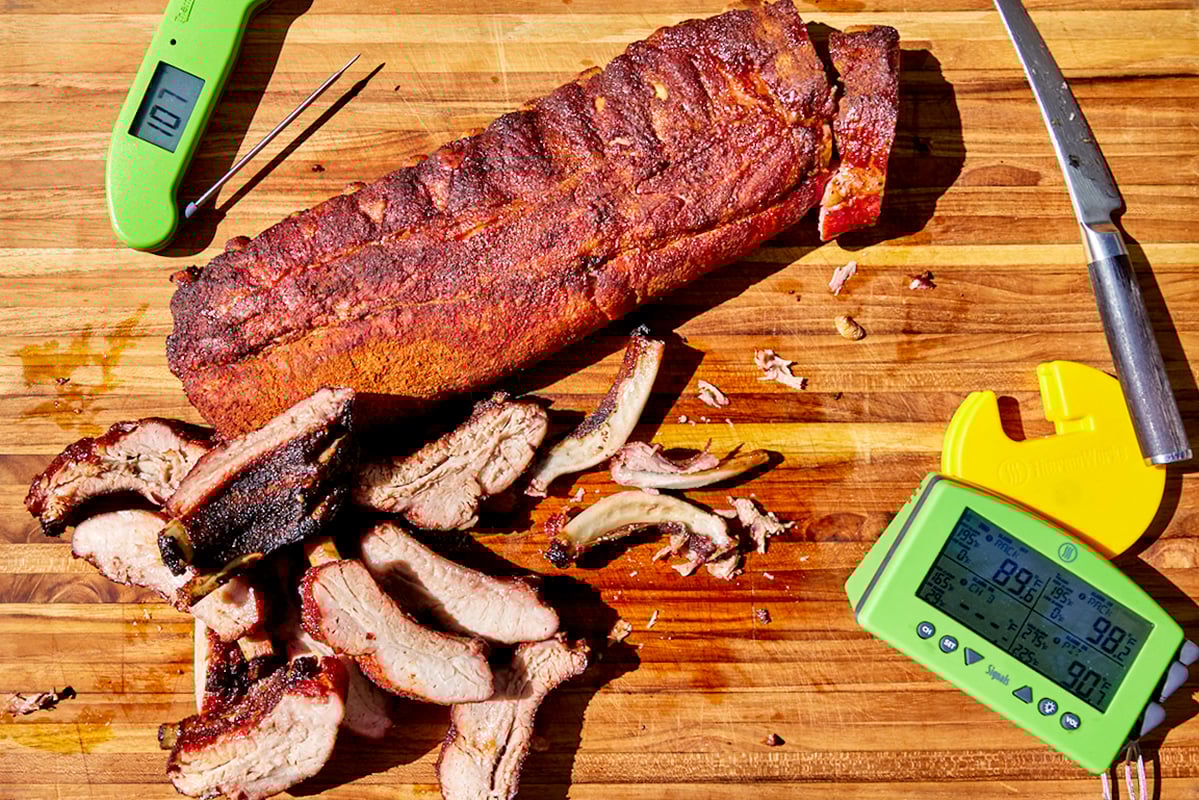
Credit: blog.thermoworks.com
Target Temperatures For Juicy Ribs
Insert the thermometerinto the thickest part of the ribs. Avoid touching bones for the best reading. The right temperature ensures ribs are juicy and tender. Ribs become tender at different temperatures depending on the type.
| Rib Type | Target Internal Temperature (°F) | Notes |
|---|---|---|
| Pork Spare Ribs | 195-205°F | For tender, fall-off-the-bone ribs |
| Pork Baby Back Ribs | 190-203°F | Juicy and tender texture |
| Beef Ribs | 203-210°F | Soft and flavorful |
After removing ribs from heat, let them rest. Resting temperaturerises by 5-10°F due to carryover cooking. This step helps juices spread and keeps ribs moist.
Common Mistakes To Avoid
Inserting the thermometer too early can give wrong readings. The meat needs time to cook before checking temperature. Checking too soon can show a cooler temperature than actual.
Thermometer placement matters. Insert it into the thickest part of the ribs, avoiding bone. Bones heat up faster and can mislead the reading.
Using the wrong thermometer type causes errors. Digital instant-read thermometers work best for ribs. Some thermometers take longer and give less accurate results.
- Insert thermometer latein cooking for accurate results.
- Avoid boneswhen placing the thermometer.
- Use a digital instant-read thermometerfor fast, accurate readings.

Credit: butcherbbq.com
Tips For Accurate Temperature Reading
Insert the thermometer probe into the thickest part of the ribs. Avoid touching bones or fat for a true reading. The center of the meat gives the best temperature.
Check thermometer accuracy by testing it in hot water before use. Adjust if the reading is off to ensure precise results.
- Take temperature readings every 15-20 minutes.
- Keep the thermometer in the meat during cooking if possible.
- Note temperature changes to avoid over or undercooking.
Frequently Asked Questions
When Should I Insert A Thermometer In Ribs?
Insert the thermometer when ribs are about 2/3 cooked. This ensures accurate internal temperature measurement without losing juices.
At What Temperature Do Ribs Need Checking?
Check ribs when the internal temperature reaches around 140°F (60°C) to monitor progress and avoid overcooking.
How Deep Should The Thermometer Go In Ribs?
Insert the thermometer probe into the thickest part of the ribs, avoiding bone for an accurate reading.
Can I Check Ribs Temperature Too Early?
Checking too early can cause heat loss and inaccurate readings. Wait until ribs are mostly cooked before inserting.
Conclusion
Checking ribs with a thermometer at the right time matters. Insert it when the ribs look cooked on the outside. The thermometer shows if the meat is juicy and safe to eat. Wait for the temperature to reach about 190°F for tender ribs.
Avoid opening the grill too often to keep heat inside. This simple step helps you serve tasty ribs every time. Remember, good timing brings perfect ribs to your plate. Keep practicing, and you will get better with each cook.