

When you’re preparing for a BBQ, you’ve got a lot on your plate—literally and figuratively. Between choosing the right cuts of meat and perfecting your marinade, safety might be the last thing on your mind.
But when you’re working with high heat and sizzling grills, protecting your hands is crucial. You might wonder, “What is the best glove material for BBQ? ” This choice can make all the difference in your grilling experience, ensuring you’re safe and comfortable while flipping those burgers or turning those ribs.
Stick with us as we dive into the best materials that offer both protection and flexibility, so you can focus on what truly matters—creating delicious meals for your family and friends. Don’t miss out on discovering the ideal glove that could become your new BBQ best friend.
Heat Resistance In Bbq Gloves
Glove material plays a big rolein heat protection. Some materials stop heat better than others. Thickness also matters. Thicker gloves give more protection but can be less flexible. The glove’s inner lining can help keep hands cool and dry. A good fit stops heat from sneaking inside. Some gloves have extra layers for more safety.
| Material | Heat Resistance (°F) | Notes |
|---|---|---|
| Leather | Up to 400°F | Durable but less flexible |
| Kevlar | Up to 800°F | Strong and heat resistant |
| Silicone | Up to 450°F | Waterproof and flexible |
| Cotton with heat shield | Up to 350°F | Comfortable but less heat safe |

Credit: www.amazon.com
Common Glove Materials
Common glove materials for BBQ include leather, silicone, and cotton. Leather offers good heat resistance, while silicone provides strong grip and protection. Cotton gloves are comfortable but less heat-resistant, making material choice key for safe grilling.
Leather Gloves
Leather glovesare strong and can protect well from heat. They last a long time and are good for heavy grilling. They can be stiff but get softer with use. These gloves also resist cuts and sparks.
Aramid Fiber Gloves
Aramid fiber glovesare made from a strong, heat-resistant fabric. They can handle very hot temperatures. These gloves are flexible and let you move your fingers easily. They also protect well from cuts and burns.
Silicone Gloves
Silicone glovesare water-resistant and easy to clean. They can handle heat but are less flexible than fabric gloves. Silicone grips well, so you can hold slippery items better. They are good for quick tasks near heat.
Cotton And Fabric Gloves
Cotton and fabric glovesare soft and comfortable. They are not very heat resistant. These gloves are good for light grilling or handling cool tools. They often have a heat-resistant lining for some protection.
Pros And Cons Of Each Material
Durability and Comfortvary across materials. Leather gloves last long and feel soft but may stiffen if wet. Kevlar offers excellent durability and stays flexible but can be bulky. Silicone gloves resist cuts and heat well but may feel tight or slippery.
Heat Insulation Efficiencydepends on material thickness and design. Leather and Kevlar provide strong heat protection, suitable for direct flame contact. Silicone excels in heat resistance but transfers heat faster if thin.
Flexibility and Gripaffect ease of handling tools. Leather gloves offer good grip and comfort but less flexibility. Kevlar can be stiff but protects well. Silicone gloves provide excellent grip on slippery items but may limit finger movement.
Maintenance and Longevitydiffer widely. Leather needs careful cleaning and drying to avoid damage. Kevlar is easy to clean and resists wear. Silicone gloves are dishwasher safe and last long without special care.
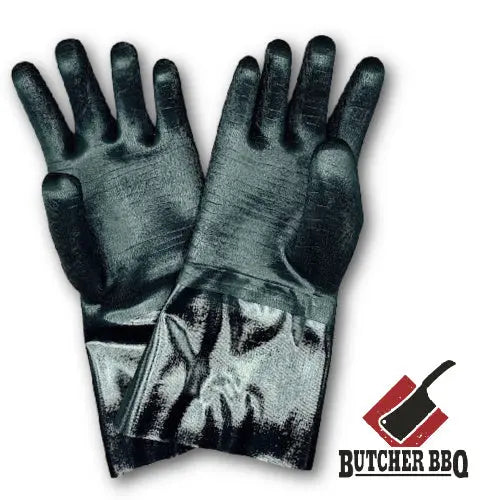
Credit: butcherbbq.com
Special Features To Consider
Water resistanceis key to keep hands dry and comfortable during BBQ. Gloves made from siliconeor rubber materialsstop water and juices from soaking through. This helps maintain a firm grip on tools and food.
Length and coverageprotect arms from heat and splatters. Longer gloves cover wrists and forearms, reducing burns. Short gloves offer more flexibility but less protection.
| Lining and Padding | Benefits |
|---|---|
| Cotton lining | Breathable and soft, good for comfort |
| Heat-resistant padding | Protects hands from hot surfaces and flames |
| Foam padding | Absorbs sweat and adds cushioning |
Safety Standards And Certifications
Safety standards for BBQ gloves ensure protectionfrom heat and burns. Gloves must meet industry heat resistance ratingsto be safe for use.
Common ratings include EN 407and ANSI/ISEAstandards. These ratings test gloves for heat resistance, flame resistance, and contact heat protection.
| Rating | Heat Resistance Level | Test Description |
|---|---|---|
| EN 407 | 0 to 4 | Measures protection against heat and flames |
| ANSI/ISEA 105 | A1 to A9 | Tests contact heat resistance in degrees Celsius |
Testing procedures include exposing gloves to heat sources. They measure how long gloves protect hands without failure. This ensures gloves are safe and reliablefor BBQ use.
Choosing Gloves For Different Bbq Styles
Charcoal grilling needs gloves that resist high heatand sparks. Thick leather gloves work well. They protect your hands from burnsand hot coals. Gloves should be long enoughto cover wrists.
Smoking and low-heat cooking require gloves that offer heat protectionand dexterity. Lightweight gloves made of heat-resistant fabrics like Kevlar are best. They allow you to handle food and tools easily without risking burns.
Gas grills and infrared cookers heat quickly. Gloves with silicone gripshelp hold greasy or wet items safely. Look for gloves that resist heat up to 500°F. They should also be flexible for fast movements.
Care Tips To Extend Glove Life
To clean BBQ gloves, use mild soap and warm water. Avoid harsh chemicals that can damage the material. Gently scrub dirt and stains with a soft brush or cloth. Rinse thoroughly to remove soap. Let gloves air dry completely before storing. Never put gloves in the dryer or near direct heat.
Store gloves in a cool, dry place away from sunlight. Avoid folding them tightly to keep their shape intact. Hanging gloves or placing them flat helps maintain their form. Keep gloves away from sharp objects that might cause tears. Proper storage increases glove life and keeps them safe for grilling.

Credit: www.amazon.com
Frequently Asked Questions
What Glove Material Protects Best Against Bbq Heat?
Leather gloves offer excellent heat resistance and durability. They protect hands from high BBQ temperatures effectively. Look for thick, heat-resistant leather for the best protection.
Are Silicone Gloves Good For Bbq Grilling?
Yes, silicone gloves provide excellent heat resistance and flexibility. They are waterproof and easy to clean, making them ideal for handling hot BBQ tools and food safely.
How Do Cotton Bbq Gloves Compare To Leather?
Cotton gloves offer comfort and breathability but less heat protection. They are better for light tasks, not for direct contact with high heat or flames.
Can Heat-resistant Gloves Improve Bbq Safety?
Absolutely, heat-resistant gloves prevent burns and allow secure handling of hot items. They enhance safety and confidence when grilling or smoking BBQ.
Conclusion
Choosing the best glove material for BBQ protects your hands from heat. Leather gloves offer good heat resistance and durability. Silicone gloves provide a strong grip and are easy to clean. Cotton gloves are comfortable but less heat resistant. Consider your cooking style and safety needs.
The right gloves make BBQ safer and more enjoyable. Stay safe and enjoy your grilling time.