
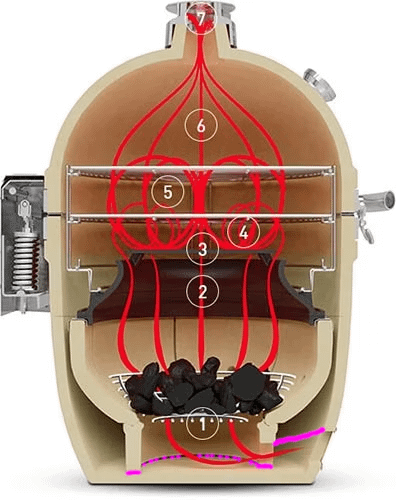
If you want to get the most out of your Kamado grill, understanding airflow is key. The way air moves inside your grill controls the heat and smoke, which directly affects how your food cooks and tastes.
But airflow can be confusing, especially if you’re new to Kamado grilling. Don’t worry—this guide will break it down for you in simple terms. By the end, you’ll know exactly how to adjust your grill’s vents to cook like a pro and impress your friends and family every time.
Keep reading, because mastering airflow will change the way you grill forever.
.jpg)
Credit: www.bbqspitrotisseries.com.au
Kamado Grill Basics
Kamado grills are popular for their unique cooking style. They use ceramic walls to keep heat steady.
Understanding airflow helps you control the temperature and cook food evenly. It is key to using a Kamado grill well.
Design And Structure
Kamado grills have a rounded shape that holds heat inside. This shape helps with even cooking and heat retention.
The grill has two vents. One vent is at the bottom for air intake. The other vent is on top to release air and smoke.
- Rounded body for even heat
- Bottom vent controls air entry
- Top vent controls air exit
- Heavy lid to trap heat
Materials Used
Most Kamado grills use ceramic because it holds heat well. Ceramic also keeps the grill moist inside.
Some models use other materials like stainless steel or fiberglass. These materials affect heat retention and weight.
- Ceramic for heat retention and moisture
- Stainless steel for durability
- Fiberglass for lighter weight
- Cast iron parts for strength
How Airflow Affects Cooking
Airflow controls how hot the grill gets. More air means higher heat. Less air means lower heat.
Adjust the bottom vent to let in air. Open the top vent to let smoke and air out. This controls temperature and flavor.
- Open vents for high heat and fast cooking
- Close vents to lower heat and cook slow
- Proper airflow keeps fuel burning efficiently
- Good airflow produces better smoke flavor
Airflow Components
A Kamado grill uses air to control the temperature inside. Good airflow helps cook food evenly. It also keeps the fire burning strong.
There are three main parts that control airflow. These parts work together to bring air in and let smoke out.
Top Vent Function
The top vent is at the lid of the Kamado grill. It lets smoke and hot air escape. This controls how much air flows through the grill.
Opening the top vent more allows more air out. This increases the fire’s heat. Closing it lowers the heat by trapping smoke inside.
- Controls smoke release
- Adjusts grill temperature
- Helps maintain steady airflow
Bottom Vent Role
The bottom vent sits near the base of the grill. It lets fresh air enter the fire chamber. This air feeds the charcoal or wood inside.
Opening the bottom vent more lets more oxygen in. This makes the fire burn hotter. Closing it slows the fire by reducing oxygen supply.
- Supplies oxygen to the fire
- Controls fire intensity
- Works with top vent for airflow balance
Gasket And Seal Importance
The gasket is a soft ring between the lid and body. It creates a tight seal to stop air leaks. A good seal helps keep airflow steady.
If the gasket is worn or damaged, air can escape. This makes it hard to control the grill’s heat. A strong seal ensures efficient cooking and fuel use.
- Prevents unwanted air leaks
- Keeps temperature stable
- Improves fuel efficiency
Controlling Temperature
Controlling temperature is key to cooking with a Kamado grill. The grill’s airflow controls the heat inside.
You adjust airflow to raise or lower the temperature. Understanding airflow helps you cook food evenly.
Adjusting Air Intake
The air intake is at the bottom of the Kamado grill. It lets air flow into the fire to feed the flames.
Open the intake more to increase airflow. More air means hotter fire and higher temperature.
- Fully open intake for high heat
- Half open for medium heat
- Mostly closed for low heat
Managing Exhaust Flow
The exhaust vent is at the top of the Kamado grill. It lets smoke and hot air escape from the grill.
Opening the exhaust vent more lets air flow faster. This raises the temperature inside the grill.
- Wide open vent for high heat
- Partially open for medium heat
- Almost closed for low heat
Using Dampers Effectively
Dampers control the size of the air openings on your Kamado grill. They help balance air intake and exhaust.
Use small adjustments to the dampers to keep steady heat. Large changes can cause temperature spikes.
- Open dampers slowly to raise temperature
- Close dampers slowly to lower temperature
- Check temperature often after changes

Credit: www.kamadojoe.com
Common Airflow Issues
Good airflow is key to cooking with a Kamado grill. Problems with airflow can cause uneven heating.
Knowing common airflow issues helps you fix them quickly. This keeps your grill working well.
Blocked Vents
Blocked vents stop air from moving inside the grill. Ash, grease, or food debris often block vents.
- Check vents before each use to remove blockages
- Use a brush to clean vent holes and slots
- Clear ashes from the bottom vent regularly
- Keep vents dry to avoid rust or dirt buildup
Improper Vent Settings
Setting vents wrong can limit airflow or let too much air in. Both affect the cooking temperature.
| Vent Setting | Effect on Airflow | Result on Cooking |
| Almost closed | Very low airflow | Low temperature, slow cook |
| Half open | Moderate airflow | Steady temperature for most foods |
| Fully open | High airflow | High temperature, fast cooking |
Seal Wear And Tear
Worn seals allow air leaks. This makes it hard to control the grill’s airflow.
Signs of seal wear include:
- Smoke escaping from the lid edges
- Difficulty holding steady temperature
- Cracks or gaps in the rubber gasket
Replace seals if you see these signs to keep airflow tight.
Advanced Techniques
Understanding airflow control is key to getting the best from your Kamado grill. Small adjustments can change cooking results dramatically.
These techniques help you control temperature and smoke for different cooking styles. Let’s explore how to adjust airflow for better results.
Setting Up For Low And Slow Cooking
Low and slow cooking needs steady heat and steady airflow. Open the bottom vent slightly to keep air moving without making the fire flare up.
Keep the top vent mostly open to allow smoke to escape. This keeps the grill temperature stable and smoke flowing around the food.
- Open bottom vent 1/4 to 1/3 for steady airflow
- Keep top vent 50-75% open to release smoke
- Use a heat deflector to avoid direct flames
- Check temperature often and adjust vents slowly
High-heat Searing Tips
High heat needs plenty of oxygen. Open both vents wide to get maximum airflow and fuel the fire for quick searing.
Wait until the grill reaches a high temperature before placing food on it. Use a thermometer to check the surface heat.
- Open bottom vent fully to increase oxygen flow
- Open top vent fully for proper smoke exit
- Use lump charcoal for hotter flames
- Preheat grill for 15-20 minutes before searing
Using Accessories To Enhance Airflow
Accessories like heat deflectors and airflow rings help control air inside the Kamado. They improve heat distribution and smoke control.
Proper placement of these tools allows better airflow paths. This leads to more even cooking and better smoke flavor.
- Heat deflectors block direct flames for indirect cooking
- Airflow rings adjust bottom vent size precisely
- Charcoal baskets improve air movement under coals
- Use a top vent cap to fine-tune smoke release
Maintenance For Optimal Airflow
Good airflow is key for the best Kamado grill performance. Clean parts and regular care keep air moving well.
Keeping your grill in top shape helps heat spread evenly. It also makes cooking easier and more fun.
Cleaning Vents Regularly
Vents can get clogged with ash and grease. This blocks air and lowers grill heat.
Use a brush or cloth to clean vents after every few uses. Remove all debris for smooth airflow.
- Remove ash buildup from bottom vents
- Wipe grease off top vents
- Check for rust or damage during cleaning
Inspecting And Replacing Gaskets
Gaskets seal the grill and control air leaks. Old gaskets can let too much air in or out.
Look for cracks or worn spots on gaskets. Replace them if they do not fit tightly anymore.
- Check gasket around lid and base
- Clean gasket with mild soap and water
- Use manufacturer-approved gasket replacements
Storing The Grill Correctly
Proper storage keeps your grill safe and clean. It also protects vents and gaskets from damage.
Cover the grill with a weatherproof cover. Store it in a dry place to avoid rust and mold.
- Close vents before covering
- Keep grill on a flat surface
- Remove ashes before storing

Credit: www.kamadojoe.com
Frequently Asked Questions
What Is Kamado Grill Airflow And Why Is It Important?
Kamado grill airflow controls oxygen flow inside the grill. Proper airflow ensures consistent temperature and even cooking. It helps regulate heat and smoke, enhancing food flavor and preventing flare-ups.
How Do I Adjust Airflow On A Kamado Grill?
Adjust airflow using the top vent and bottom damper. Opening vents increases oxygen, raising temperature. Closing vents reduces airflow, lowering temperature for slow cooking or smoking.
Can Airflow Affect Kamado Grill Temperature Stability?
Yes, airflow directly impacts temperature stability. Consistent airflow maintains steady heat, preventing spikes or drops. Proper airflow control ensures precise cooking and better results.
What Happens If Kamado Grill Airflow Is Too Low?
Low airflow reduces oxygen, causing temperature drops and poor combustion. It can lead to smoky taste and longer cooking times. Adequate airflow is essential for efficient burning and heat.
Conclusion
Understanding Kamado grill airflow helps control temperature well. Adjusting vents changes how air moves inside the grill. More air means higher heat, less air lowers heat. This simple trick lets you cook food just right. Keep vents clean for smooth airflow every time.
Practice makes it easier to manage your grill. Enjoy better cooking with steady heat control. Now, you can grill with confidence and ease.