

Are you tired of uneven slices and messy cutting when preparing your favorite meats at home? Using a home meat slicer can change the way you cook, making slicing faster, cleaner, and more precise.
But to get the best results, you need to know how to use it efficiently. You’ll discover simple tips and tricks that will save you time, reduce waste, and help you slice like a pro every time. Ready to unlock the full potential of your meat slicer?
Let’s dive in!
Choosing The Right Meat Slicer
Manual meat slicers are simple and cost less. They need hand power to slice. Electric models work faster and need less effort. They are good for slicing large amounts of meat.
Blade size affects slice thickness and ease of use. Common sizes are 7, 8, and 10 inches. Bigger blades cut through meat faster. Smaller blades are easier to control.
Different blades suit different needs:
- Straight bladesare good for firm meats.
- Serated bladeswork well for bread and soft meats.
- Adjustable bladesoffer slice thickness control.
Safety is very important. Look for features like:
- Blade guard to protect fingers.
- Non-slip feet to keep slicer steady.
- Automatic shut-off for electric models.
- Food pusher to keep hands away from blade.

Credit: www.vevor.ca
Preparing Meat For Slicing
Choose fresh, firm meat and chill it before slicing for clean cuts. Trim excess fat and bones to avoid blade damage. Secure the meat firmly to ensure even, safe slicing with your home meat slicer.
Chilling Meat For Better Cuts
Cold meat slices better. Put meat in the fridge. Let it chill for an hour. Colder meat keeps its shape. It makes slicing easy and neat.Trimming And Portioning
Cut away extra fat from the meat. It helps the slicer work well. Divide meat into smaller chunks. Smaller pieces fit better in the slicer. They ensure even slices every time.Avoiding Cross-contamination
Use a clean cutting board. Wash it after each use. Keep raw meat separate. Use different tools for cooked meat. Clean slicer parts after each use. This keeps everyone safe from germs. `Setting Up Your Meat Slicer
Assembling the meat slicer starts with placing the blade and guard correctly. Make sure all parts fit tightly. Use the manual to check each piece. Tight screws keep the slicer safe and stable.
Adjusting thickness settings lets you slice meat thin or thick. Turn the knob gently to pick the right slice size. Test on a small piece first to see the thickness. This helps avoid wasting meat.
Securing the meat properly is key for even slices. Use the clamp or holder to keep the meat steady. Press firmly but not too hard. This stops the meat from moving or slipping during slicing.
Slicing Techniques For Consistency
Maintain steady pressureon the meat slicer handle for even slices. Avoid pushing too hard; gentle force works best. This helps the blade cut smoothly without tearing the meat.
Use smooth, even strokesto keep slice thickness consistent. Move the meat slowly and steadily across the blade. Quick or jerky moves can cause uneven cuts.
| Meat Type | Tips for Slicing |
|---|---|
| Raw Meat | Keep it cold for firm slicing. Use steady pressure. |
| Cooked Meat | Slice slower and gentler to avoid shredding. |
| Frozen Meat | Let it thaw slightly for easier cutting. |
Cleaning And Maintenance Tips
Disassemble the meat slicer carefully before cleaning. Remove the blade, food carriage, and trays. Wash all parts with warm, soapy water. Use a soft brush to clean hard-to-reach areas. Dry each part completely to stop rust.
Keep the blade sharp for smooth slicing. Use a sharpening stone or tool made for meat slicers. Follow the blade’s angle while sharpening. Sharpen regularly to avoid dullness and uneven cuts.
Check the slicer often for loose screws or worn parts. Tighten screws and replace damaged pieces quickly. Lubricate moving parts with food-safe oil. This keeps the slicer working well and safe.

Credit: www.amazon.ca
Safety Practices To Follow
Always use the guards and safety locksprovided with the meat slicer. These parts keep fingers away from the blade and stop the machine from running accidentally. Never remove or bypass safety features.
Wear protective glovesmade for handling sharp tools. Gloves protect hands from cuts and help hold the meat steady. Safety glasses can protect eyes from splashes or small particles.
After finishing, clean the slicer carefully. Store it in a safe placewhere children cannot reach it. Make sure the blade is locked or covered. This prevents accidents and keeps the slicer in good condition.
Troubleshooting Common Issues
Uneven slices happen when the blade is not sharp or the meat is not placed properly. Make sure the meat is steady and flat on the slicer. Adjust the thickness setting for more control.
Blade dullness causes rough cuts and can strain the motor. Sharpen the blade regularly or replace it if it is too worn. Clean the blade after each use to keep it sharp and safe.
Machine jamming can occur due to hard bones or too much meat at once. Avoid slicing frozen meat or bones. Clear any stuck pieces immediately and check for proper assembly of parts.
Maximizing Efficiency In The Kitchen
Batch slicing helps cut large amounts of meat quickly. Set the slicer thickness to the right size before starting. Group similar cuts together for smooth slicing. This reduces the need to change settings often.
Organize your workspace by placing sliced meat on a clean tray. Keep a waste container nearby for scraps. This keeps the area tidy and safe. Working in a clean space speeds up the process.
Save time by preparing the slicer properly. Make sure the blade is sharp and clean. Adjust the slicer for the size and type of meat. Turn on the slicer and let it reach full speed before slicing.
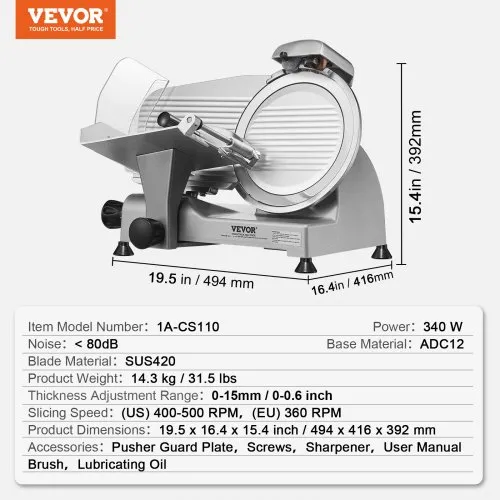
Credit: www.vevor.ca
Frequently Asked Questions
How Do I Safely Operate A Home Meat Slicer?
Always read the manual before use. Keep hands away from the blade. Use the food pusher for stability. Turn off and unplug when not in use. Wear cut-resistant gloves for extra protection.
What Is The Best Way To Clean A Meat Slicer?
Unplug the slicer before cleaning. Remove the blade carefully. Use warm soapy water and a soft cloth. Dry all parts thoroughly to prevent rust. Sanitize the slicer after each use to ensure hygiene.
How To Maintain A Meat Slicer Blade Sharpness?
Regularly sharpen the blade with a built-in sharpener or a sharpening stone. Clean the blade after every use. Avoid slicing frozen meat, as it dulls the blade. Lubricate moving parts as recommended in the manual.
Can I Slice Frozen Meat With A Home Meat Slicer?
It is not recommended to slice frozen meat. Frozen meat can damage the blade and motor. Thaw the meat properly before slicing. This ensures smooth, even slices and prolongs slicer life.
Conclusion
Using a home meat slicer can save time and effort. Keep the blade sharp and clean for best results. Always follow safety tips to avoid accidents. Adjust thickness to suit your recipe needs. Regular maintenance helps your slicer last longer.
Practice slicing slowly and steadily for even cuts. Enjoy fresh, homemade slices anytime you want. Simple steps lead to better slicing every time. Your kitchen routine will become easier and faster.