

If you love lattes, knowing how to use coffee tools can turn your everyday cup into a café-quality treat. You don’t need to be a barista to create that smooth, creamy texture or those perfect coffee flavors.
With the right tools and simple steps, you can impress yourself—and anyone you share your latte with. Ready to unlock the secrets behind your favorite drink? Let’s dive into how you can master coffee tools for the perfect latte every time.

Credit: myeverydaytable.com
Essential Coffee Tools
An espresso machineis key for making a latte. It brews strong coffee fast. Look for machines with easy controls and a good steam wand. This helps create smooth milk foam.
The grinderaffects coffee taste a lot. Burr grinders are best because they grind beans evenly. Choose a grinder with adjustable settings to control grind size for espresso.
Milk frothers come in different types:
- Manual frothersneed hand pumping or whisking.
- Electric frothersheat and foam milk quickly.
- Steam wandson espresso machines froth milk with hot steam.
Each frother type creates different foam textures for your latte.

Credit: madcof.com
Preparing The Espresso Shot
Grinding coffee beansis the first step to prepare an espresso shot. Use a burr grinder for even grounds. The grind size should be fine but not powdery. Too coarse or too fine affects the taste and extraction time.
Tampingmeans pressing the coffee grounds evenly in the portafilter. Use a tamper to apply firm pressure. Make sure the surface is level. This helps water flow evenly through the coffee for a balanced shot.
Extracting the perfect shotrequires the right water temperature and pressure. The ideal temperature is around 195°F to 205°F (90°C to 96°C). Extraction should take about 25 to 30 seconds. The espresso should have a rich color and a layer of crema on top.
Frothing Milk Like A Pro
Milk choiceaffects frothing quality. Whole milk creates creamier foam. Skim milk gives lighter, airier foam. Non-dairy options like almond or oat milk can also froth well but may taste different.
- Use cold milk for better frothing.
- Fill the pitcher halfway to allow room for foam.
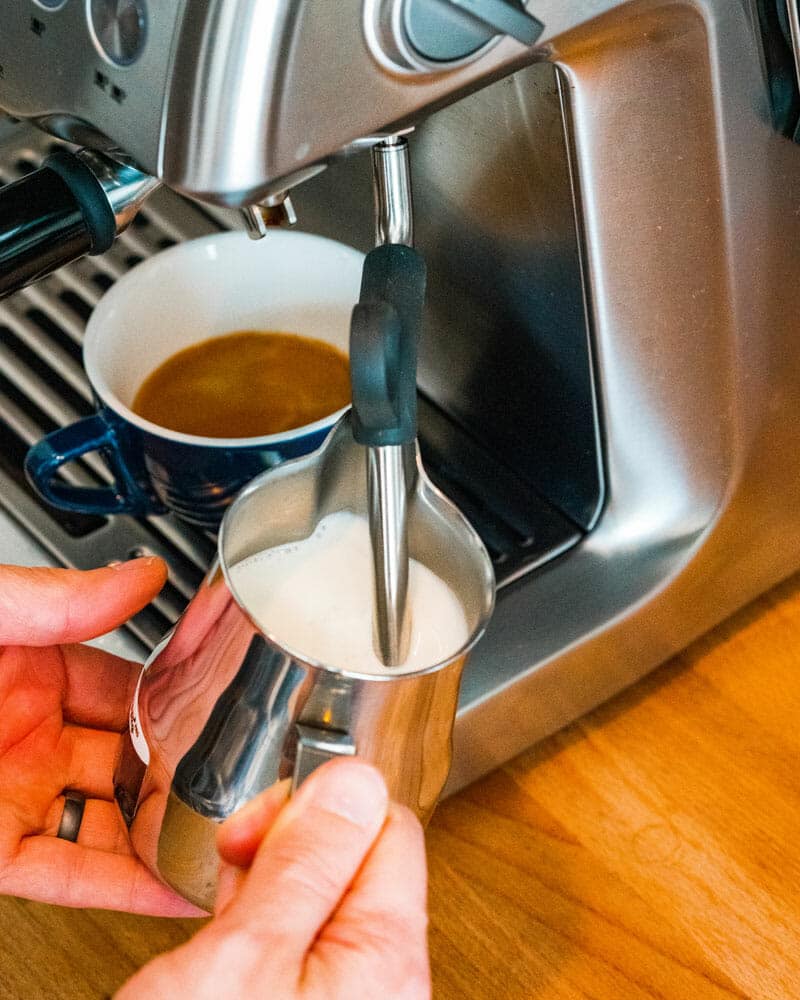
- Keep the steam wand just below the milk surface.
- Move the pitcher slowly to mix air evenly.
- Stop steaming when milk reaches 140-150°F (60-65°C).
Microfoam is smooth, shiny, and dense. It blends well with espresso.
To create microfoam:
- Introduce small air bubbles at the start by positioning the steam wand near the surface.
- Submerge the wand deeper to heat milk evenly.
- Tap and swirl the pitcher after steaming to remove large bubbles.
Credit: www.acouplecooks.com
Pouring Latte Art
Pouring latte artneeds steady hands and fresh espresso. Hold the cup at a slight angle. Pour the milk gently from a height of a few inches. As the cup fills, lower the pitcher closer to create the design. Keep the pour slow and smooth to control the flow. Practice helps improve precision and flow control. Use whole milk for better foam texture and shine.
Common latte art shapes include hearts, rosettas, and tulips. Hearts are simple and perfect for beginners. Rosettas need a steady, side-to-side motion while pouring. Tulips require layering small hearts on top of each other. Each design depends on milk foam quality and pour speed.
Pouring problems happen often. If foam breaks or spills, the milk might be too hot or over-steamed. Thin foam causes weak designs. Try pouring slower or adjust milk temperature. If designs are unclear, check the cup angle and pour height. Small changes make big differences.
Cleaning And Maintenance
Cleaning your coffee tools daily keeps flavors fresh and machines working well. Wipe the grinder’s exterior to remove coffee dust. Use a brush to clean the burrs inside the grinder carefully. For the espresso machine, flush water through the group head to clear leftover coffee. Clean the portafilter and basket with warm water after each use.
Regular maintenance extends the life of your coffee tools. Descale your machine every few weeks to remove mineral buildup. Check and replace worn-out gaskets and seals to avoid leaks. Keep steam wands free from milk residue by wiping them immediately after steaming milk.
- Use a soft cloth for wiping surfaces.
- Clean grinder burrs with a brush, not water.
- Flush espresso machine group head daily.
- Descale machine regularly to prevent clogs.
- Replace worn parts to maintain performance.
Frequently Asked Questions
What Essential Coffee Tools Are Needed For A Perfect Latte?
To make a perfect latte, you need an espresso machine, a milk frother, a coffee grinder, and a tamper. These tools ensure proper extraction and creamy milk texture for a rich latte experience.
How Do I Use A Milk Frother For Latte Art?
Heat milk to 140-150°F and froth it until smooth and velvety. Pour steamed milk slowly over espresso, creating patterns by controlling flow and cup movement for latte art.
Why Is Grinding Coffee Beans Important For Lattes?
Grinding coffee beans fresh enhances flavor and aroma. For lattes, use a fine grind to ensure balanced extraction and a rich espresso base for your milk.
How To Tamp Coffee Grounds Correctly For Espresso?
Use a tamper to press grounds firmly and evenly with about 30 pounds of pressure. Proper tamping ensures uniform extraction and a smooth, flavorful espresso shot.
Conclusion
Using the right coffee tools makes latte-making simple and fun. Each tool helps create a better taste and smooth texture. Practice with these tools to find your perfect cup. Enjoy the process and experiment with your style. Making lattes at home saves money and brings joy.
Keep your tools clean for the best results every time. Start small, and soon you’ll make great coffee like a barista. Your coffee moments become special with the right tools.