
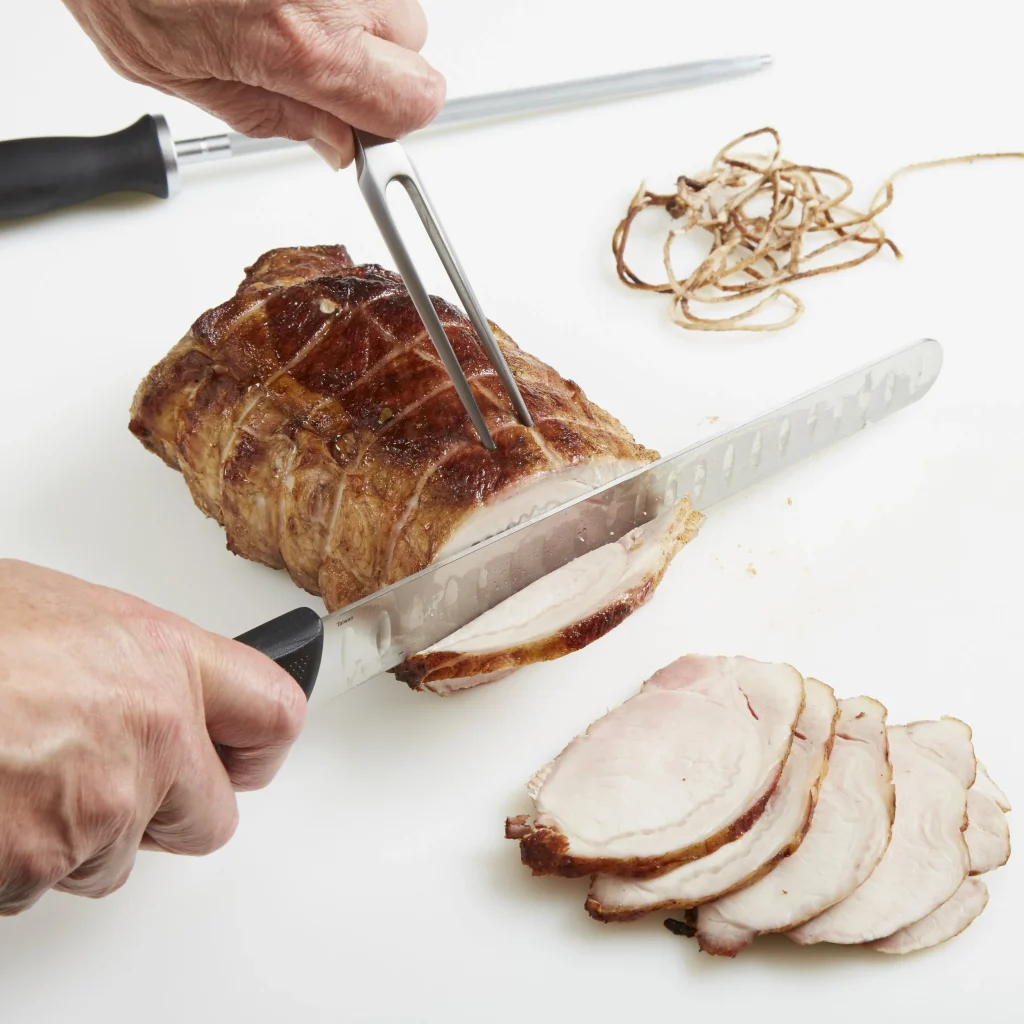
If you work in a hotel kitchen, you know how important it is to slice meat perfectly every time. The right cut can make your dishes look more appealing and taste better.
But slicing meat isn’t just about using a sharp knife—it’s about technique, safety, and efficiency. You’ll discover simple steps and expert tips to help you slice meat like a pro. Whether you’re handling beef, chicken, or pork, mastering this skill will save you time and impress your guests.
Keep reading to learn how you can transform your kitchen work and boost the quality of your meals.

Credit: coupleinthekitchen.com
Choosing The Right Knife
Different knives serve different purposes. Chef’s knives are versatile and popular. Boning knives are perfect for removing bones. Slicing knives cut thin, even slices. Cleavers handle tough cuts with ease. Choose the right knife for each task.
Keep your knives sharp for easy cutting. Dull knives can be dangerous. Use a sharpening stone or a honing rod. Sharpen regularly to maintain the edge. Clean knives after each use. Dry them well to prevent rust. Store knives safely to protect the blades.

Credit: www.youtube.com
Selecting Quality Meat Cuts
Choosing fresh, tender cuts ensures better flavor and texture for hotel dishes. Slice meat against the grain to keep it soft and easy to chew. Proper cutting techniques save time and improve presentation in busy kitchens.
Popular Cuts For Hotels
- Ribeye:Known for its tenderness and marbling.
- Sirloin:A lean cut with good flavor.
- Tenderloin:Very soft, ideal for special dishes.
- Chuck:Best for slow cooking and stews.
- Brisket:Great for smoking and slow roasting.
Freshness And Storage Tips
Always choose meat with a bright red color. Avoid cuts that look brown or gray. Check for a fresh smell, not sour or strong. Store meat in a cool placebelow 40°F (4°C). Use airtight packaging to keep it fresh longer.
Use meat within 3 to 5 daysfor best taste. For longer storage, freeze it. Thaw frozen meat in the fridge, not at room temperature. This keeps the meat safe and tasty.
Preparing Meat For Slicing
Meat should be thawed safely to keep it fresh and clean. Place frozen meat in the fridge overnight. This slow thaw helps keep the meat at a safe temperature. Avoid thawing meat at room temperature to stop bacteria growth. Quick thaw in cold water if needed, but keep the meat sealed.
Trim meat by cutting off excess fat and silver skin. Remove any blood spots or tough parts. Clean meat ensures even cooking and better taste. Use a sharp knife for smooth cuts. Always wash hands and tools before and after handling meat.

Credit: ggmgastro.en.made-in-china.com
Slicing Techniques For Different Meats
Beefshould be sliced against the grainto keep it tender. Use a sharp knife for thin, even pieces. Thicker slices work well for steaks and roasting. Chill the beef slightly; it slices cleaner and easier.
Pork and lambneed careful handling to keep juices locked in. Slice pork with the grain for pulled pork dishes. For lamb, cut across the grain to ensure softness. Trim excess fat before slicing for better presentation.
Poultryrequires clean, smooth cuts to avoid tearing. Cut along the joints to separate parts easily. Use a carving knife to slice breast meat thinly. Keep skin on for extra flavor and moisture.
Achieving Consistent Slice Thickness
Using guides and tools helps keep slices uniform in thickness. A meat slicer with adjustable thickness settings works best. It lets chefs set the exact thickness for each cut. Knife guides also help by holding the meat steady. This ensures every slice is the same size.
Maintaining even pressure is key for smooth, consistent cuts. Apply firm, steady pressure with your slicing hand. Avoid pushing too hard or too softly. Uneven pressure causes slices to be unequalin size and shape. Use your other hand to hold the meat firmly but gently.
- Set slicer to desired thickness
- Use knife guides or meat holders
- Apply steady, even pressure during slicing
- Hold meat securely without crushing it
Safety Practices In Hotel Kitchens
Knife safetyis key in hotel kitchens. Always hold knives by the handle and cut away from your body. Use a sharp knife to reduce slipping. A dull knife is more dangerous. Keep fingers curled under when slicing to avoid cuts.
Sanitation stops germs from spreading. Wash hands before and after handling meat. Clean knives and cutting boards with hot soapy water. Use separate boards for raw meat and cooked food to prevent cross-contamination.
| Safety Practice | Why It Matters | How to Do It |
|---|---|---|
| Knife Handling | Prevents cuts and injuries | Hold handle firmly, cut away from body, keep fingers safe |
| Sanitation | Stops bacteria spread | Wash hands, clean tools, separate boards for raw and cooked meat |
| Cross-Contamination Prevention | Protects food safety | Use different utensils and surfaces for raw and cooked items |
Storing Sliced Meat Properly
Packaging sliced meatproperly keeps it fresh and safe. Use airtight containers or vacuum-sealed bags. This stops air and moisture from spoiling the meat. Label packages with the date to track freshness. Avoid over-packing; leave some space for air circulation.
Temperature controlis key to storing sliced meat safely. Keep the meat at below 40°F (4°C)to prevent bacteria growth. Use refrigerators or cold rooms designed for meat storage. Check temperatures regularly with a thermometer. Avoid storing meat near raw foods to stop cross-contamination.
Common Mistakes And How To Avoid Them
Slicing meat too thick or uneven can affect cooking and presentation. Using a sharp knife and cutting against the grain helps achieve tender, uniform slices. Avoid rushing to maintain safety and precision in hotel kitchens.
Over-slicing And Underslicing
Cutting meat too thin can cause it to dry out quickly. Thick slices may cook unevenly and be tough. Try to keep slices even for better cooking. Use a ruler or guide if needed. Consistent slices look better on plates. They also help with portion control.
Dull Knives And Improper Handling
Dull knives make slicing harder and unsafe. They crush meat instead of cutting cleanly. Always sharpen knives before use. Hold the meat firmly to avoid slips. Use a cutting board that won’t move. This reduces accidents and helps cut better.
Frequently Asked Questions
How Do You Choose The Best Knife For Slicing Meat?
Select a sharp, long, and flexible slicing knife. It ensures clean cuts and reduces meat damage. Use knives designed for hotel kitchen demands.
What Is The Ideal Slicing Technique For Hotel Kitchens?
Slice against the grain with smooth, even strokes. This method enhances tenderness and presentation. Consistent thickness ensures uniform cooking and serving.
How Thick Should Meat Slices Be For Hotel Service?
Aim for slices around ¼ to ½ inch thick. Thickness depends on the meat type and dish style. Uniform slices improve cooking and portion control.
How Do You Maintain Meat Freshness During Slicing?
Keep meat chilled before slicing to retain freshness. Use clean, sanitized surfaces and tools. Proper handling prevents contamination and preserves flavor.
Conclusion
Slicing meat correctly saves time and keeps food fresh. Use sharp knives and steady hands for best results. Cut meat against the grain for tender slices. Always keep safety in mind to avoid accidents. Practice helps improve speed and precision in busy kitchens.
Clean tools and surfaces regularly to maintain hygiene. These simple steps help hotel kitchens work smoothly. Quality slicing adds to customer satisfaction and meal taste. Keep these tips in mind for better kitchen efficiency.