
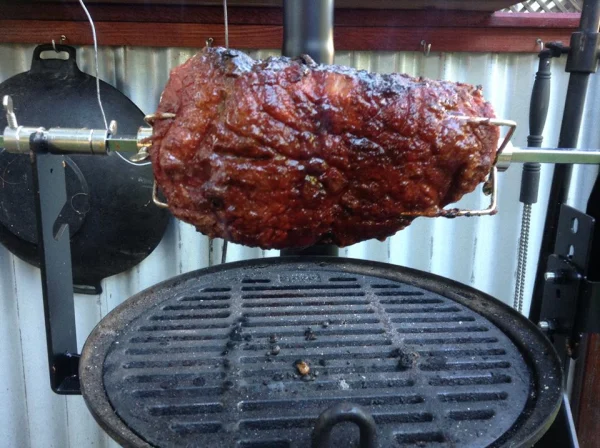
Are you tired of watching your perfectly seasoned meat slip and slide on the rotisserie rod? You’re not alone.
Many cooking enthusiasts face this challenge, and it can turn a delightful grilling experience into a frustrating affair. Imagine preparing a mouth-watering feast for your family or friends, only to discover that your delicious roast is unevenly cooked or worse, ends up on the grill instead of the plate.
Don’t let this happen to you. In this guide, you’ll discover simple yet effective techniques to secure your meat on the rotisserie rod like a pro. By following these steps, you’ll ensure even cooking, achieve that perfect caramelized exterior, and impress your guests with a mouth-watering masterpiece. Dive in to learn how to transform your rotisserie skills and make every meal a culinary success.
Choosing The Right Meat
Choosing the right meat is key for a perfect rotisserie cook. Lean cutswith some fat work best. Fat helps keep meat juicy and flavorful.
Best cuts for rotisserieinclude:
- Whole chickens
- Pork loin
- Beef roasts like sirloin or ribeye
- Lamb leg
These cuts hold well on the rod and cook evenly.
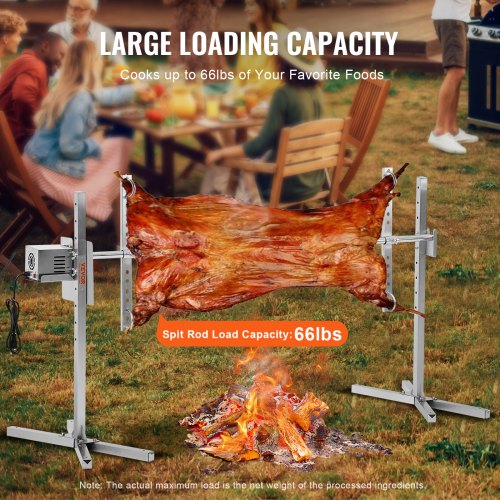
Size and weight matter. Meat should not be too heavy or large. It must fit securely on the rod without slipping or unbalancing.
Choose pieces between 3 to 7 pounds. This size cooks well and is easy to handle.
Credit: whatsgabycooking.com
Preparing The Meat
Trim off extra fat and loose skin to help the meat cook evenly. Use kitchen twine to tie the meat firmly. This keeps it steady on the rotisserie rod. Make sure the meat is balanced to avoid wobbling during cooking.
Marinate the meat for at least 2 hours for better flavor. Use simple ingredients like oil, herbs, salt, and pepper. Acidic elements like lemon juice or vinegar help tenderize the meat. Pat the meat dry before placing it on the rod for a good grip.
Selecting The Right Rod And Forks
The rod and forks should be made of strong, heat-resistant metal. Stainless steel is a good choice because it does not rustand can hold heavy meat. Avoid rods that bend easily or forks that are too thin.
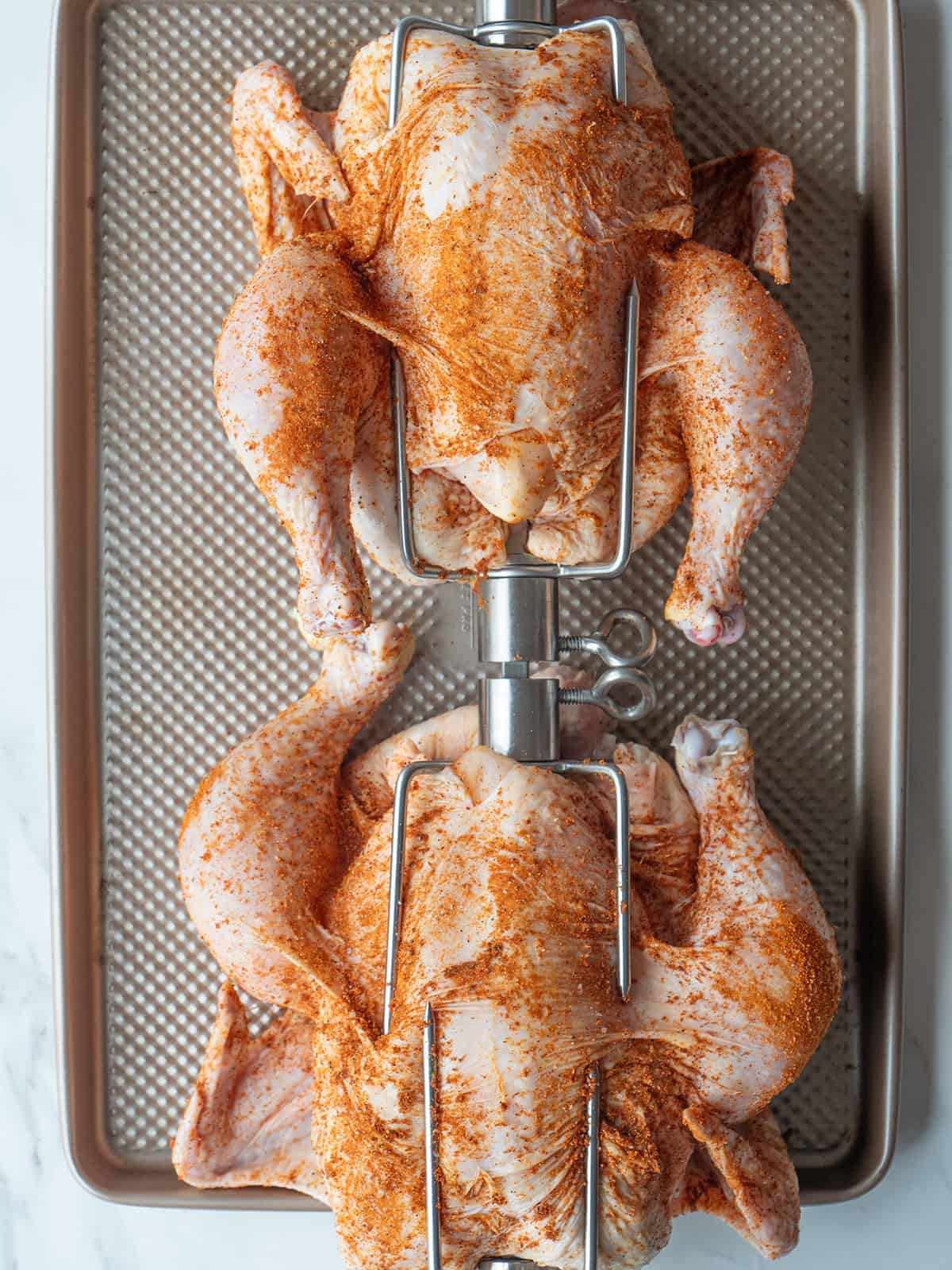
Forks must be placed to balance the meat evenlyon the rod. Insert one fork near the thick end and the other near the thin end. This helps keep the meat from spinning or slipping.
- Make sure forks are tightened securelyto the rod.
- Use forks with sharp prongsto hold the meat firmly.
- Place forks so the meat stays centered on the rod.
Credit: www.vevor.com
Skewering The Meat
Place the meat evenly on the rotisserie rod for balanced cooking. The rod must run through the center of the meat. This helps the meat cook evenly on all sides.
Use forks on both sides of the meat to keep it steady. Push the forks tightly into the meat to avoid slipping. Tie the meat with kitchen twine for extra support. Wrap the twine around the meat and the rod to hold everything in place.
- Center the rod inside thick parts of the meat
- Push forks firmly into the meat near edges
- Use strong kitchen twine for secure tying
- Check that the meat does not wobble on the rod
Balancing The Load
Balancing the meat on the rotisserie rod is key for even cooking. Uneven weight can cause the rod to spin poorly or stop. This leads to uneven heatand undercooked spots.
Make sure the meat is centered on the rod. Use skewers or forks to hold it in place. If one side is heavier, add small pieces of meat or vegetables on the lighter side.
- Check the weight distribution before starting.
- Adjust the meat position to balance the load.
- Secure the meat tightly to prevent slipping.
Balancing helps the rotisserie turn smoothly. This ensures the meat cooks evenlyand stays juicy.
Safety Tips For Secure Attachment
Secure the meat tightlyon the rotisserie rod to prevent slipping. Use the rotisserie forks and screws to hold the meat firmly in place. Make sure the forks are pushed deep into the meat for a strong grip.
Check the meat’s balance on the rod before cooking. A well-balanced load helps the rotisserie spin smoothly without wobbling. If the meat is uneven, adjust the position or add extra support.
- Push forks firmly into the meat.
- Tighten screws on the forks securely.
- Center the meat on the rod.
- Test stability by gently spinning the rod.
- Re-adjust if the meat moves or slips.
Rotisserie Cooking Tips
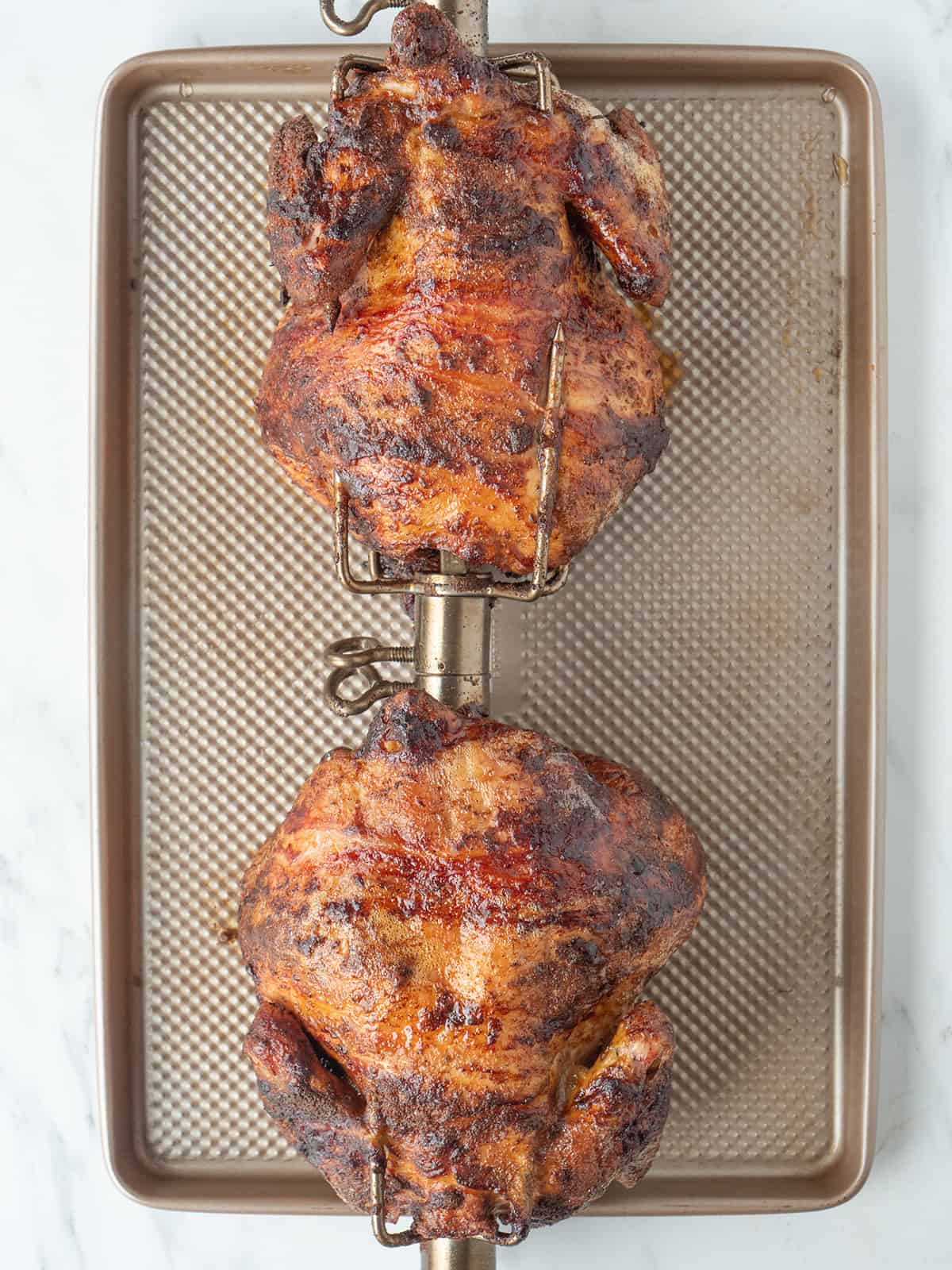
Optimal rotation speedkeeps meat cooked evenly and juicy. Too fast, and the meat won’t cook well inside. Too slow, and it might burn outside. A good speed is about 3 to 5 RPM. This speed lets heat spread evenly.
Temperature managementis key for tasty meat. Keep the heat steady at 300°F to 350°F (150°C to 175°C). Use a meat thermometerto check the inside temperature. This helps avoid undercooking or overcooking. Let the meat rest after cooking to keep juices inside.
Credit: whatsgabycooking.com
Troubleshooting Common Issues
Secure the meat tightly on the rotisserie rod to avoid slipping. Use two forks or skewersto hold the meat in place firmly. Wrap the ends with kitchen twinefor extra grip. Check the balance by spinning the rod by hand before cooking. If the meat feels loose, tighten the twine or skewers again.
Collecting juices and drippings is important for flavor and safety. Place a drip pan below the meat to catch falling juices. This prevents flare-ups and keeps the grill clean. Use the collected juices to make sauces or gravies. Clean the drip pan regularly to avoid buildup and smoke.
Frequently Asked Questions
How Do I Properly Secure Meat On A Rotisserie Rod?
To secure meat, center it on the rod and push it firmly. Use rotisserie forks to hold the meat tightly on both sides. Tighten the forks to prevent slipping during cooking.
What Tools Help Secure Meat On A Rotisserie Rod?
Rotisserie forks and screws are essential. They hold the meat firmly and prevent movement. Using kitchen twine can also help to tie loose parts securely.
Can I Use Twine To Secure Meat On Rotisserie Rods?
Yes, kitchen twine helps secure uneven or small pieces. Tie the meat snugly to avoid shifting while rotating. This ensures even cooking and prevents falling off.
How Tight Should The Meat Be On The Rotisserie Rod?
The meat should be tight but not crushed. Secure it firmly to avoid wobbling. Loose meat can cause uneven cooking or fall off the rod.
Conclusion
Securing meat on a rotisserie rod keeps it steady and cooks it evenly. Tighten the forks and balance the meat well. Check the rod before starting the heat. This prevents slipping and uneven cooking. Use simple tools like kitchen twine for extra hold.
Practice makes it easier each time. Enjoy juicy, perfectly cooked meat every time you grill. Keep these tips in mind for your next rotisserie meal. Easy steps lead to great results and happy diners.