
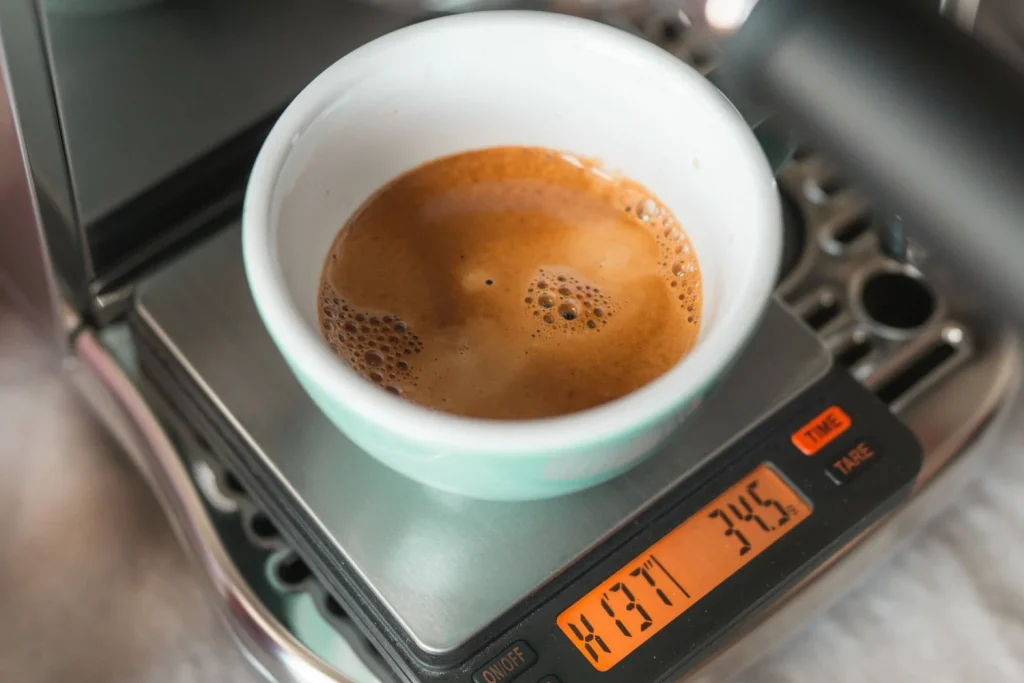
Are you tired of guessing how much coffee to use and ending up with a brew that’s too weak or too strong? Measuring your coffee with a scale can change everything.
It’s a simple step that gives you control and consistency every time you brew. Imagine waking up to the perfect cup, made just the way you like it, without any guesswork. Keep reading, and you’ll learn exactly how to measure coffee with a scale so you can enjoy better coffee every single day.
Why Use A Coffee Scale
Using a coffee scaleensures consistency in brewing. You get the same amount of coffee every time. This helps avoid weak or too strong coffee.
Accuracy over volumematters because measuring by volume can be wrong. Different beans have different sizes and weights. A scale gives the exact weight, so your coffee tastes just right.
Improved flavor controlcomes from knowing the exact coffee amount. It lets you adjust the taste easily. Small changes in coffee weight can change the flavor a lot.
Choosing The Right Coffee Scale
Choosing the right coffee scale means finding one with accuracyand easy readability. A good scale should measure in gramsand have a tare functionto reset weight. Compact size helps with counter space. A fast response time ensures quick weighing. Battery life matters for long use. Some scales include a timerfor brewing precision. Water resistance is useful for kitchen spills.
| Type | Features | Best For |
|---|---|---|
| Digital | Precise, fast, often with timer | Daily coffee brewing |
| Analog | No batteries, simple | Basic use, no tech needed |
- Budget scalesoffer basic accuracy and fewer features.
- Premium scalesprovide better precision and added tools like timers.
- Consider how often you brew and your budget.
- Premium options suit those who want exact control.
- Budget options work well for casual coffee drinkers.
How To Calibrate Your Scale
Place a known weight on your scale to check its accuracy. Adjust the scale settings until it shows the correct weight. This ensures precise coffee measurements every time you brew.
Step-by-step Calibration
Place the scale on a flat, stable surface. Turn it on and wait for it to zero out. Use a known weight, like a calibration weight or a small object with a known mass. Place the weight gently on the scale. Wait for the reading to stabilize. Adjust the scale using the calibration button or instructions in the manual. Remove the weight and check if the scale returns to zero. Repeat the process if needed until the scale shows the correct weight consistently.
Maintaining Accuracy
- Keep the scale clean and dry.
- Use the same surface every time.
- Calibrate regularly, especially after moving the scale.
- Avoid overloading the scale beyond its limit.
- Store the scale in a safe, dust-free place.
:max_bytes(150000):strip_icc()/sea-hario-polaris-coffee-scale-irvin-lin-06-4cc222f2c1f64d13a76f2cf4a76dcce8.jpeg)
Credit: www.seriouseats.com
Measuring Coffee Beans
Use a digital scale to measure coffee beans for accuracy. Place the container on the scale and zero it out before adding beans. Weigh whole beans first to get the exact amount needed.
Different roast levels affect bean weight and volume. Darker roasts are lighter because they lose more water. Adjust the amount slightly when using dark roast beans to keep taste consistent.
- Weigh beans before grinding to avoid losing small pieces.
- Use a clean, dry container for weighing.
- Check the scale’s accuracy regularly.
- Measure in grams for best results.
Measuring Ground Coffee
Weighing coffee after grinding helps achieve a consistent taste. Ground coffee can settle, so use a digital scalefor accuracy. Place your container on the scale first and zero it out before adding coffee. This way, you measure only the coffee, not the container.
Grind size affects the weight and extraction time. Finer grinds pack more tightly, which can make the coffee seem heavier. Coarser grinds are lighter and take longer to brew. Adjust your grind size based on your brewing method for the best flavor.
- Do not weigh coffee in a full container; zero the scale first.
- Use the same scale every time for consistency.
- Measure coffee just before brewing for freshness.
- Be aware that different grind sizes may change the volume but not the weight.
Using The Scale During Brewing
A scale helps make coffee taste better. It tells you the exact weight of coffee and water. Weigh the coffee beans first. Next, weigh the water. This keeps your coffee tasting the same every time. Use the scale while you pour water. This helps you know how much water you use. The scale also helps you track time. Timing is key for perfect coffee. Make sure to watch the clock as you brew.
Timing And Weight Tracking
Keep an eye on the scale and clock together. Weigh your coffee and water first. Track how long it takes to brew. This helps to make a good cup each time. Timing affects the taste. Use the scale to keep track of both weight and time.
Water-to-coffee Ratios
Ratios help you know how much water and coffee to use. A common ratio is 1:15. This means 1 gram of coffee for 15 grams of water. You can try different ratios. This lets you find your favorite taste. Use the scale to measure each time. This keeps coffee tasting the same.
Tips For Different Brewing Methods
- Pour-Over:Use slow, steady pours.
- French Press:Let it sit for 4 minutes.
- Espresso:Use fine ground coffee.
- AeroPress:Try upside down for rich taste.
Troubleshooting Scale Issues
Scales may show wrong readings if not set to zero before measuring coffee. Keep the scale on a flat surface and check the battery if it’s unresponsive. Using a clean container and avoiding spills helps keep measurements accurate.
Common Problems And Fixes
Scales can sometimes show wrong numbers. Check if the scale is on a flat surface. Uneven surfaces make scales give bad numbers. Clean the scale. Dust can stop it from working right. If the scale uses batteries, try new ones. Old batteries can make it stop.
When To Replace Your Scale
Broken scales should be replaced. If numbers keep changing, it might be time. When the display is broken, it’s hard to read. If cleaning and new batteries don’t help, consider a new scale. A good scale makes measuring coffee easy and fun.
:max_bytes(150000):strip_icc()/winner-graphic-sea-acaia-pearl-coffee-scale-irvin-lin-01-8f9de2f3b4b54fc883c907d76def43d0.jpg)
Credit: www.seriouseats.com
:max_bytes(150000):strip_icc()/sea-hario-polaris-coffee-scale-irvin-lin-07-dc73858eff1a4cbf857132e1d29af6e4.jpeg)
Credit: www.seriouseats.com
Frequently Asked Questions
Why Use A Scale To Measure Coffee?
Using a scale ensures precise coffee-to-water ratio. It improves consistency and taste in every brew. Scales provide accuracy over volume measurements like scoops.
How Much Coffee Should I Weigh Per Cup?
A general guideline is 15-18 grams of coffee per 8 ounces. Adjust based on taste preferences and brewing method. Weighing helps maintain ideal strength and flavor.
When Should I Tare The Scale During Brewing?
Always tare the scale after placing the coffee container. This resets the weight to zero. It ensures you measure only the coffee grounds precisely.
What Type Of Scale Is Best For Coffee Measurement?
Choose a digital scale with a tare function and high accuracy. A scale with a timer is helpful for brewing methods like pour-over. Compact and durable models work well.
Conclusion
Measuring coffee with a scale ensures the right amount every time. It helps you make coffee taste just how you like it. Using a scale is simple and saves you from guesswork. Small changes in coffee weight affect flavor a lot.
Try weighing your coffee for better brewing results. Consistency is key for a great cup daily. Start with a scale and enjoy your coffee more.