

Are you craving a simple dish that feels like a warm hug on a plate? Butter pasta is that perfect comfort food you can whip up in minutes.
But how do you make the best butter pasta that’s rich, creamy, and full of flavor every single time? You’re about to discover easy tips and tricks that will turn plain pasta into a mouthwatering meal. Keep reading, and you’ll never settle for bland pasta again.

Credit: smittenkitchen.com
Choosing The Right Pasta
Butter pasta tastes best with pasta that holds sauce well. Choosing the right pasta makes your dish creamy and smooth.
Not all pasta works for buttery sauces. Some types catch the sauce better and add texture.
Types Of Pasta For Creamy Sauces
For a creamy butter sauce, pasta with ridges or tubes work great. They catch the sauce and keep every bite flavorful.
- Fettuccine – flat and wide, perfect for creamy sauces.
- Penne – tube-shaped, holds sauce inside.
- Rigatoni – larger tubes with ridges for extra sauce grip.
- Orecchiette – small, cup-shaped pasta that traps sauce well.
- Shells – scoop up butter sauce easily.
Cooking Pasta To Perfection
Cook pasta just right to enjoy butter sauce fully. Overcooked pasta loses texture and does not hold sauce well.
| Tip | Details |
| Use plenty of water | Helps pasta cook evenly and prevents sticking. |
| Salt the water | Adds flavor to pasta itself. |
| Cook until al dente | Pasta should be firm but cooked through, about 8-12 minutes. |
| Reserve pasta water | Use some water to loosen butter sauce if needed. |
| Drain carefully | Do not rinse; keep starch to help sauce stick. |
Selecting Quality Ingredients
Good ingredients make butter pasta taste better. Choose fresh and high-quality items for best results.
Simple ingredients like butter, herbs, and cheese need care. Picking the right ones improves flavor and texture.
Best Butter For Flavor
Butter is the main flavor in butter pasta. Use unsalted butter to control salt levels in your dish.
Look for butter with a creamy texture and fresh smell. European-style butter has more fat and richer taste.
- Unsalted butter lets you add salt as needed
- European-style butter adds extra creaminess
- Fresh butter has a sweet, clean aroma
Fresh Vs. Dried Herbs
Fresh herbs add bright, natural flavor to butter pasta. They also add a nice color and aroma.
Dried herbs are stronger but less fresh. Use less dried herb to avoid overpowering the dish.
- Fresh herbs like parsley or basil brighten the taste
- Dried herbs offer a more intense but less fresh flavor
- Use fresh herbs for garnish and dried in cooking
Choosing The Right Cheese
Cheese adds richness and depth to butter pasta. Pick cheese that melts well and tastes mild.
Parmesan is a classic choice. It adds nutty flavor and a little saltiness. Grate it fresh for best taste.
- Parmesan for a nutty, salty flavor
- Pecorino Romano for a sharper taste
- Use fresh, finely grated cheese
Creating A Creamy Sauce
Butter pasta is simple and delicious. The key is making a smooth, creamy sauce.
A creamy sauce coats the pasta well. It blends rich flavors for a tasty dish.
Balancing Butter And Cream
Butter gives richness, while cream adds smoothness. Use both in the right amounts.
Too much butter makes the sauce greasy. Too much cream makes it thin.
- Start with 2 tablespoons of butter for one serving
- Add 1/4 cup of heavy cream gradually
- Adjust cream to reach the texture you want
Adding Garlic For Depth
Garlic adds a strong, tasty flavor to the sauce. Use it fresh and finely chopped.
Cook garlic gently in butter. This brings out its flavor without burning.
- Use 1-2 cloves per serving
- Sauté garlic on low heat for 1-2 minutes
- Stop cooking when garlic is soft and fragrant
Incorporating Cheese Smoothly
Cheese adds creaminess and taste. Use grated cheese that melts well.
Mix cheese into warm sauce slowly. Stir to avoid clumps and keep it smooth.
- Choose cheeses like Parmesan or Pecorino
- Add cheese off the heat to prevent clumping
- Stir cheese in until fully melted
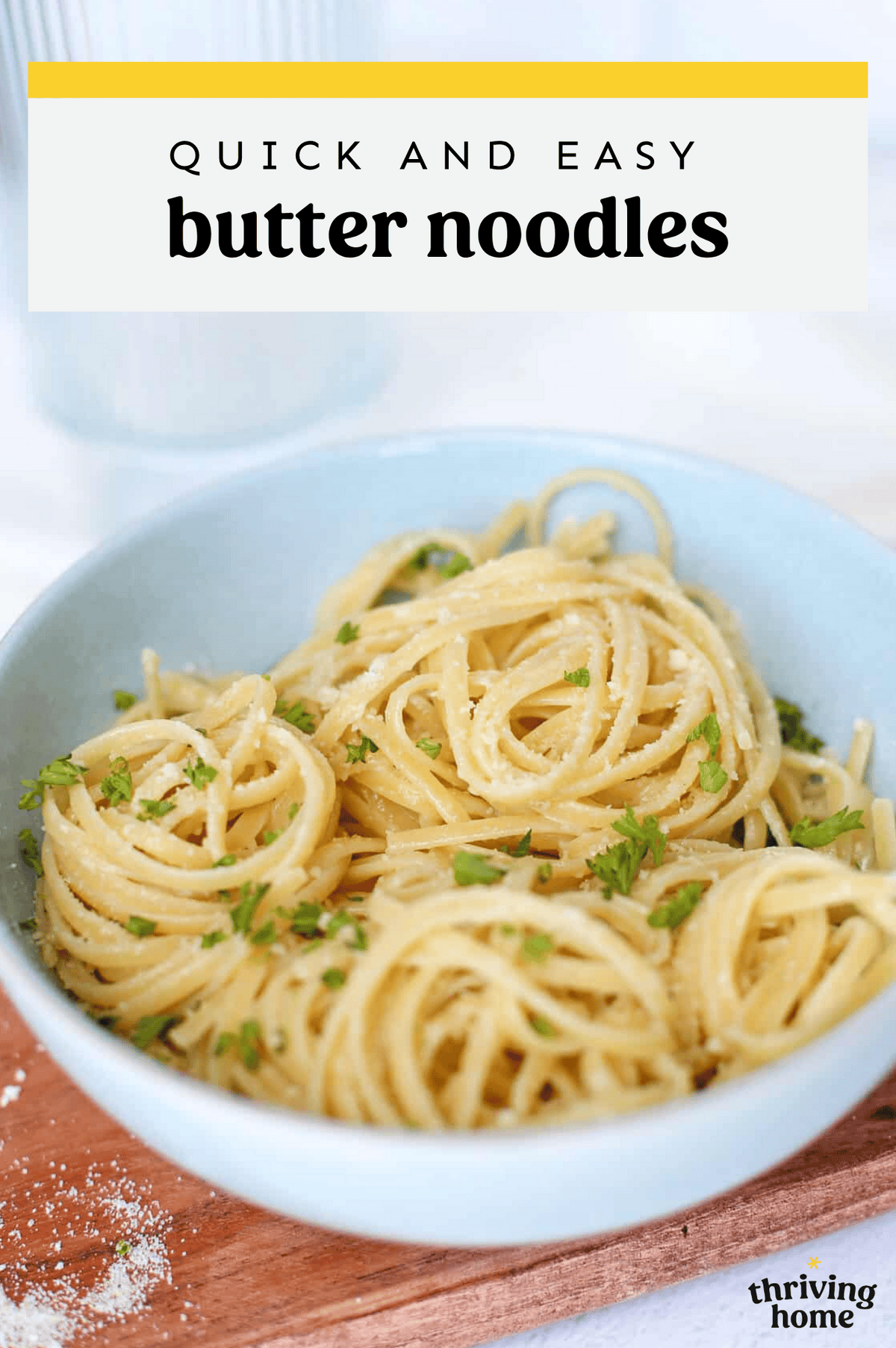
Credit: thrivinghomeblog.com
Cooking Techniques
Butter pasta is a simple dish that depends on careful cooking. The right methods make the pasta creamy and smooth.
Focus on timing and temperature to get the best flavor and texture. Small changes can make a big difference.
Timing And Temperature Tips
Cook pasta just until it is al dente. This means the pasta is firm but not hard. Overcooking makes it mushy.
- Boil water with enough salt before adding pasta.
- Cook pasta for 8 to 10 minutes, depending on the type.
- Drain the pasta but keep some cooking water.
- Add butter to the warm pasta immediately.
- Use low heat to melt butter without burning.
Achieving The Perfect Consistency
Butter pasta should be creamy and silky. Use pasta water to adjust the sauce thickness.
| Consistency | How to Achieve |
| Too Thick | Add a small amount of reserved pasta water |
| Too Thin | Cook gently to evaporate excess water |
| Just Right | Smooth sauce coating the pasta strands evenly |
Enhancing With Add-ins
Butter pasta is simple and tasty on its own. You can make it more exciting with add-ins. These extras add flavors and textures.
Adding vegetables, proteins, or herbs can change your dish. They make the pasta more filling and fresh.
Vegetables For Texture
Vegetables add a nice crunch or softness to butter pasta. They bring color and healthy nutrients too. Cook them lightly to keep texture.
- Sautéed spinach for a soft touch
- Roasted cherry tomatoes for sweetness
- Grilled zucchini for mild flavor
- Steamed broccoli for crunch
- Caramelized onions for a sweet taste
Protein Options For Heartiness
Proteins make butter pasta a full meal. They add richness and keep you full longer. Add cooked proteins just before serving.
- Grilled chicken slices for lean protein
- Sautéed shrimp for a light seafood touch
- Crispy bacon bits for smoky flavor
- Cooked sausage pieces for spice
- Tofu cubes for a vegetarian choice
Herbs For Freshness
Fresh herbs lift the flavor of butter pasta. They add a clean and bright taste. Add herbs at the end to keep their aroma.
- Chopped basil for a sweet, peppery note
- Fresh parsley for mild bitterness
- Chives for a mild onion flavor
- Thyme for earthiness
- Oregano for a warm, slightly bitter taste
Plating And Serving Tips
Serving butter pasta with style makes the dish more inviting. Simple touches can create a restaurant-quality look. This guide covers plating and beverage pairing ideas.
Good presentation enhances the dining experience. Follow these tips to make your butter pasta look and taste its best.
Presentation For A Restaurant Feel
Use a wide, shallow bowl or a flat plate to serve the pasta. It helps spread the butter sauce evenly and shows off the noodles.
- Twirl pasta into small nests with a fork for neat portions
- Sprinkle freshly chopped parsley or basil on top for color
- Add a few shavings of Parmesan cheese to enhance texture
- Place a lemon wedge on the side for a fresh touch
- Use white or neutral-colored plates to highlight the pasta’s golden color
Pairing With Wine Or Beverages
Butter pasta pairs well with drinks that complement its rich and creamy flavor. Choose a beverage that balances the dish without overpowering it.
| Beverage | Taste Profile | Why It Works |
| Chardonnay | Buttery, oaky | Matches the creamy butter sauce |
| Sauvignon Blanc | Crisp, citrusy | Cuts through richness for balance |
| Pinot Grigio | Light, fresh | Does not overwhelm delicate pasta |
| Sparkling Water with Lemon | Refreshing, light | Cleanses palate between bites |
| Light Lager | Mild, smooth | Pairs well without heavy flavors |

Credit: therecipecritic.com
Frequently Asked Questions
What Ingredients Are Essential For Making Butter Pasta?
Essential ingredients include pasta, unsalted butter, garlic, salt, and pepper. Fresh parsley or Parmesan cheese can enhance flavor and texture, making the dish more delicious and aromatic.
How Do You Cook Pasta Perfectly For Butter Pasta?
Cook pasta in boiling salted water until al dente. Drain it quickly but reserve some pasta water to mix with butter for a creamy sauce.
Can I Use Different Types Of Pasta For Butter Pasta?
Yes, butter pasta works well with spaghetti, fettuccine, linguine, or penne. Choose your favorite pasta shape to match the sauce and personal preference.
How Can I Make Butter Pasta Healthier?
Use whole-grain pasta, reduce butter quantity, and add vegetables like spinach or tomatoes. This adds fiber, vitamins, and balances the richness of butter.
Conclusion
Butter pasta is simple, tasty, and quick to make. It needs only a few ingredients. You can change the recipe to match your taste. Fresh herbs or cheese add nice flavors. This dish fits any meal, day or night. Try it once, and you will want more.
Cooking can be easy and fun. Enjoy your delicious butter pasta today!