

Your home slicer is a powerful tool that makes food prep faster and easier. But if you don’t take care of its parts, it can lose its sharpness and efficiency quickly.
Imagine struggling with dull blades or clogged mechanisms every time you want to slice your favorite foods. That frustration is avoidable. By learning how to maintain your home slicer parts properly, you can keep it working like new, save money on repairs, and enjoy perfect slices every time.
Ready to discover simple tips that will extend the life of your slicer? Keep reading—you’re just a few steps away from mastering easy maintenance that anyone can do.

Credit: www.vevor.com
Choosing The Right Slicer
Home slicers come in different types. The main types are manual and electric. Manual slicers need your hand to operate. They are simple and cheaper. Electric slicers use power. They are faster but cost more. Choose based on your needs. Do you slice a lot or just a little? For small jobs, manual is fine. For more slicing, electric is better.
Strong materials mean a long-lasting slicer. Stainless steel is a great choice. It does not rust and is easy to clean. Plastic slicers are light but can break easily. Look for slicers with solid construction. Check the parts. Are they firm and well-made? Good build quality ensures safety. It also means less trouble with repairs.
Regular Cleaning Practices
Clean the slicer parts after every useto keep them safe and sharp. Remove the blade carefully and wash it with warm, soapy water. Wipe down the food carriage, guard, and other parts with a clean cloth. Dry each part thoroughlyto stop rust and damage. Use a soft brush for hard-to-reach spots.
For deep cleaning, disassembleall removable parts. Soak them in warm water mixed with a little vinegar or mild bleach. Scrub gently with a soft brush to remove stuck food and stains. Rinse well and dry completely. Clean the slicer base with a damp cloth, avoiding water near electrical parts.
Blade Maintenance
Keeping the blade sharpis key for smooth slicing. Use a sharpening tool made for slicer blades. Follow the tool’s instructions carefully. Sharpen the blade regularly to avoid dullness. A sharp blade cuts more easily and safely.
Replacing dull bladesis important when sharpening no longer works. Always use the right blade size for your slicer. Handle blades with care to avoid injuries. Dispose of old blades safely to prevent accidents.
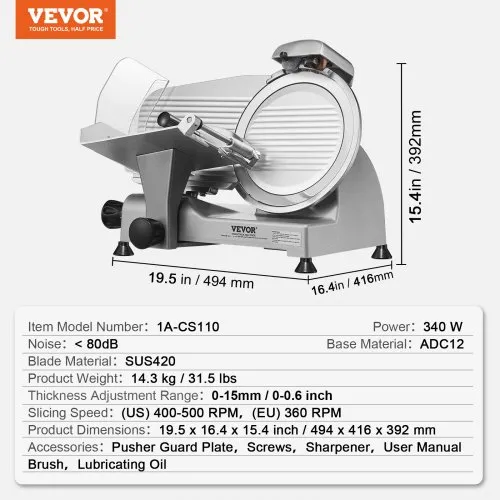
Credit: www.vevor.com
Lubrication And Moving Parts
Use food-safe lubricantsto protect your home slicer parts. Avoid oils that can spoil food or harm the machine. Common safe options include mineral oiland silicone-based lubricants. These keep parts moving smoothly without causing damage.
Lubricate parts like bearings, hinges, and slidesto reduce friction. This helps the slicer work better and last longer. Wipe off any excess lubricant to avoid attracting dust or food particles.
| Part | Recommended Lubricant | Frequency |
|---|---|---|
| Bearings | Mineral oil | Every 3 months |
| Hinges | Silicone-based lubricant | Monthly |
| Slides | Food-safe grease | Monthly |
Storage Tips
Keep slicer parts in a dry and cool place. Moisture can cause rust and damage. Avoid areas with high heat or direct sunlight. Use clean cloth coversto protect parts from dust and dirt.
Store sharp blades separately to prevent accidents and dulling. Use blade guardsor wrap blades in soft cloth. Keep small parts in labeled containers to avoid loss.
- Do not stack heavy items on slicer parts.
- Use padded storage boxes for fragile parts.
- Check stored parts regularly for signs of damage or rust.

Credit: www.amazon.com
Troubleshooting Common Issues
Noise and vibrationsoften signal loose or worn parts. Tighten screws and bolts regularly. Check the blade for damage or dullness. A bent blade causes shaking and loud noise. Clean the slicer to remove any debris that might cause imbalance. Lubricate moving parts to reduce friction. Use the recommended oil for your model.
Uneven slicing problemsusually come from blade misalignment or dull edges. Adjust the blade angle according to the user manual. Sharpen the blade or replace it if needed. Make sure the food carriage moves smoothly. Clean the guide rails to prevent sticking. Avoid slicing very hard or frozen items to protect the blade.
Frequently Asked Questions
How Often Should I Clean Home Slicer Parts?
Clean slicer parts after every use to prevent food buildup. Regular cleaning ensures hygiene and maintains slicer performance. Use warm soapy water and a soft brush for best results.
What Is The Best Way To Sharpen Slicer Blades?
Sharpen blades using a sharpening stone or professional sharpening tool. Always follow manufacturer instructions and wear protective gloves. Regular sharpening extends blade life and improves slicing efficiency.
Can I Dishwasher Clean Home Slicer Parts?
Most slicer parts are dishwasher safe, but check the manual first. Hand washing is recommended for blades to avoid damage. Always dry parts thoroughly to prevent rust and corrosion.
How Do I Prevent Rust On Slicer Parts?
Keep slicer parts dry and clean after each use. Apply a thin layer of food-safe oil on blades to protect against rust. Store parts in a dry, ventilated area away from moisture.
Conclusion
Maintaining your home slicer parts keeps the machine working well. Clean the blades and other parts regularly to avoid rust. Check for loose screws or worn-out pieces often. Use mild soap and water for cleaning, then dry completely. Proper care saves money and extends the slicer’s life.
Small efforts prevent big problems later. Keep your slicer safe and ready for every use. Simple steps make a big difference in performance. Stay consistent with maintenance for the best results.