
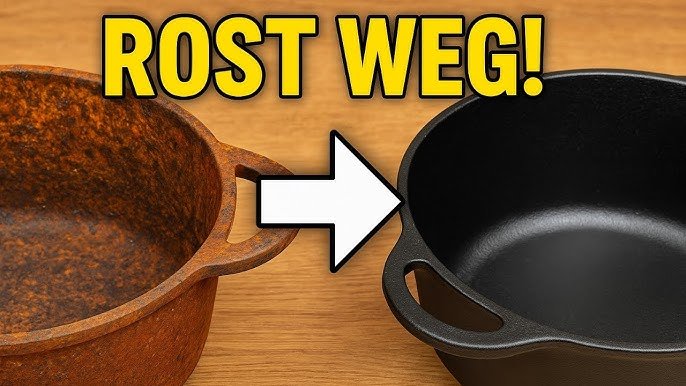
Is your trusty cast iron skillet looking a bit worse for wear with rust taking over its surface? You’re not alone.
Many grill enthusiasts and home cooks face this common problem. But don’t worry, restoring your skillet to its former glory is easier than you might think. In this guide, you’ll discover simple and effective ways to banish rust and bring back the shine to your cast iron companion.
Imagine the satisfaction of grilling with a skillet that feels brand new, enhancing every dish you prepare. Stay with us, and let’s dive into the easy steps to fix your rusty cast iron skillet, ensuring it’s ready for your next delicious grilling adventure.

Credit: www.reddit.com
Identifying Rust On Cast Iron
Rust on a cast iron skillet appears as reddish-brown spots or flakes. It often forms in areas where seasoning has worn away or moisture remains. Recognizing these signs helps prevent damage and keeps your skillet ready for grilling.
Common Signs Of Rust
Rustappears as orange or reddish spotson the skillet. It feels rough or flaky to touch. The surface may have pits or small holes. Food may stick more than usual. Rust can cause a metallic tastein food.
Assessing Damage Severity
Light rust can often be cleaned off easily. Heavy rust may need scrubbing or sanding. Deep pits show more damage and might weaken the skillet. If rust covers most of the pan, restoration may take more time. Check if the skillet feels thin or weakin some spots.

Credit: www.reddit.com
Preparing Your Workspace
Gathering the right toolsmakes fixing a rusty cast iron skillet easier. Start with steel woolor a wire brushto scrub rust off. Have some mild dish soapand clean waterready for washing. Use vegetable oilor shorteningfor seasoning later. Keep a clean clothor paper towels nearby for drying.
Ensuring safety is very important. Work in a well-ventilated areato avoid breathing dust or fumes. Wear rubber glovesto protect your hands from rust and cleaning agents. Use eye protectionif scrubbing vigorously to avoid debris getting in your eyes. Keep your workspace clear to prevent accidents.
Removing Rust Effectively
Scrubbingremoves loose rust from the skillet. Use a steel wool pador stiff brush. Scrub with warm waterand mild soap. Rinse and dry completely to stop more rust.
Natural rust removers like white vinegarsoak rust off gently. Soak skillet in vinegar for 1 to 2 hours. Then scrub rust away. Baking soda mixed with water makes a paste. Apply it to rust spots and scrub after 30 minutes.
| Chemical Rust Removal | How to Use |
|---|---|
| Rust remover gels or sprays | Apply to rust, wait per instructions, scrub, then rinse well |
| Phosphoric acid solutions | Use carefully with gloves; converts rust to a stable compound |
| Naval jelly | Paint on rust, let sit, scrub off, then wash thoroughly |
Always dry skillet fully after cleaning. Prevent rust by seasoning the pan well.
Cleaning And Drying The Skillet
Rinse the skillet under warm water to remove loose dirt and rust flakes. Use a soft brush or sponge to scrub away stuck-on residues gently. Avoid harsh soaps, as they can strip the seasoning.
For stubborn rust, sprinkle coarse salt and scrub with a cloth. Salt acts as a mild abrasive to clean without damage. Rinse thoroughly to remove all salt and rust particles.
Dry the skillet immediately after washing. Use a clean towel to wipe off water. Leaving it wet can cause new rust spots quickly.
Heat the skillet on low flame for a few minutes. This step helps evaporate any leftover moisture inside pores. Cool it down before storing in a dry place.
- Use a towel to wipe dry
- Heat skillet slightly on stove
- Store in a dry, ventilated area
Seasoning The Cast Iron
Choosing the right oilis key for a good seasoning layer. Use oils with a high smoke pointlike flaxseed, grapeseed, or vegetable oil. These oils create a hard, non-stick surface when baked. Avoid butter or olive oil as they burn easily and can cause sticky spots.
Applying seasoning layersrequires a thin, even coat. Use a paper towel to spread a small amount of oil all over the skillet. Rub the oil into every corner and edge. Too much oil leads to a sticky, uneven surface.
Baking for optimal coatinghelps the oil bond to the cast iron. Place the skillet upside down in a preheated oven at 450°F (230°C). Bake for one hour. Let it cool inside the oven. Repeat this process 2-3 times for a strong seasoning layer.
Maintaining Your Skillet Post-restoration
Clean the skillet using warm water and a soft brush. Avoid soap as it removes the seasoning. Dry it well with a towel immediately after washing. Leaving it wet causes rustto form again.
Apply a thin layer of cooking oil to the skillet’s surface. This protects the metal and keeps it seasoned. Heat the skillet on low for a few minutes to help the oil soak in.
| Action | Reason |
|---|---|
| Do not soak in water | Prevents rust from forming |
| Use a dry cloth to wipe | Removes moisture quickly |
| Store in a dry place | Avoids dampness that causes rust |
| Place paper towel inside skillet | Absorbs moisture during storage |
Grilling With Your Restored Skillet
Preheat your cast iron skillet on medium heat for about 5 minutes. This helps the skillet heat evenly. Avoid high heat as it may damage the seasoning. Wait until you see a thin layer of smoke; this shows the pan is ready. A properly heated skillet gives food a nice, crispy texture.
Foods that work well with cast iron grilling include:
- Steaks and burgers
- Chicken breasts and thighs
- Fish fillets like salmon or trout
- Vegetables such as bell peppers and zucchini
- Tofu or halloumi cheese for a vegetarian option
After grilling, clean the skillet while still warm. Use hot water and a stiff brush to remove food bits. Avoid soap as it can strip the seasoning. Dry the skillet completely to prevent rust. Apply a thin layer of oil to keep the surface smooth and protected.

Credit: www.reddit.com
Frequently Asked Questions
How Do I Remove Rust From A Cast Iron Skillet?
Use steel wool or a scrub brush to scrub off rust. Rinse with warm water and dry completely. Apply a thin layer of oil to prevent future rust.
Can I Use Vinegar To Clean A Rusty Cast Iron Skillet?
Yes, soak the skillet in a vinegar and water solution for up to an hour. Scrub off the rust afterward. Avoid soaking too long to protect the metal.
How Do I Reseason A Rusty Cast Iron Skillet?
After cleaning, dry the skillet thoroughly. Apply a thin layer of vegetable oil all over. Bake it upside down at 350°F (175°C) for one hour. Let it cool in the oven.
Is It Safe To Grill With A Rusty Cast Iron Skillet?
No, cooking on a rusty skillet can contaminate food. Always remove rust and reseason the skillet before grilling to ensure safety and flavor.
Conclusion
Rusty cast iron skillets can be fixed with simple steps. Clean off rust using steel wool or a scrubber. Dry the skillet well to stop more rust. Apply oil and heat it to protect the surface. Regular care keeps your skillet ready for grilling.
Enjoy tasty meals cooked on your restored skillet. It saves money and keeps your cookware strong. Try these easy tips and bring your skillet back. Cooking with cast iron becomes fun and easy again.