

You’ve cooked your brisket low and slow, and now comes the crucial step: finishing it in the oven. This final touch can make all the difference between a tough, dry piece of meat and a tender, juicy masterpiece.
If you want to know the secrets to getting that perfect, melt-in-your-mouth brisket right at home, you’re in the right place. Keep reading, and you’ll learn simple, effective tips to transform your brisket into the star of any meal.
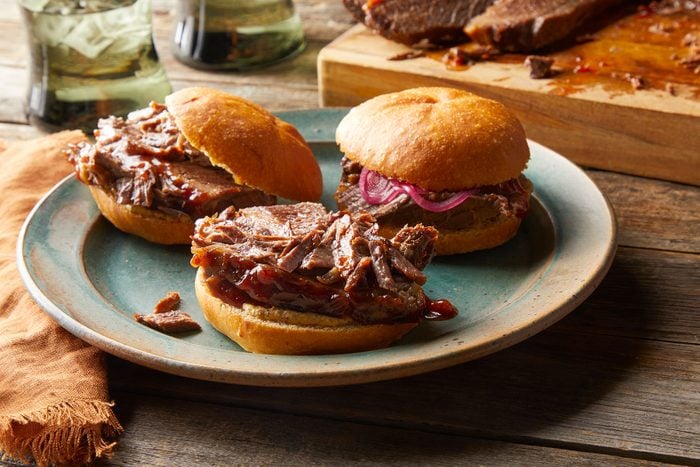
Credit: www.tasteofhome.com
Choosing The Right Brisket
Choosing the right brisket is important for a great meal. A good brisket cooks evenly and tastes better.
Knowing the types of brisket cuts and their size helps you pick the best one for your oven cooking.
Types Of Brisket Cuts
Brisket has two main cuts: the flat cut and the point cut. Each cut has different qualities.
The flat cut is leaner and easier to slice. It is good for neat, uniform pieces.
The point cut has more fat and marbling. It is juicier and has richer flavor.
- Flat cut:lean, firm, easy to slice
- Point cut:fatty, tender, flavorful
Size And Quality Considerations
Choose a brisket size that fits your oven and the number of people you will serve.
Look for brisket with good marbling. Fat adds flavor and keeps meat moist during cooking.
- Pick brisket between 8 to 12 pounds for oven cooking
- Check for marbling or small streaks of fat inside the meat
- Avoid brisket with dry or dark spots on the surface
Preparing The Brisket
Finishing a brisket in the oven takes time and care. Proper preparation makes it tender and flavorful.
Start by getting the brisket ready. This step helps the meat cook evenly and taste better.
Trimming Excess Fat
Trim the thick fat layer on the brisket. Leave about a quarter inch for moisture and flavor.
Remove any large chunks of hard fat. These pieces won’t melt during cooking and can be chewy.
- Use a sharp knife for clean cuts
- Keep some fat for tenderness
- Trim uneven edges for even cooking
Seasoning And Marinating
Season the brisket well to add flavor. Use salt, pepper, and spices you like.
Marinate the brisket if you want extra taste. Let it sit in the fridge for several hours or overnight.
- Apply dry rub evenly on all sides
- Use a simple mix of salt, pepper, and garlic powder
- For marinade, mix oil, vinegar, and spices
- Cover and refrigerate for at least 4 hours
Setting Up The Oven
Finishing brisket in the oven takes careful preparation. Setting your oven correctly helps cook the meat evenly.
Proper oven setup keeps the brisket tender and juicy. Follow these tips to get the best result.
Ideal Temperature Settings
Set the oven to a low temperature for slow cooking. This breaks down the tough fibers in brisket.
Temperatures between 225°F and 275°F work well. This range cooks the meat gently without drying it out.
- 225°F (107°C) for long, slow cooking
- 250°F (121°C) for balanced cooking time and tenderness
- 275°F (135°C) for faster cooking with good moisture
Using A Roasting Pan Or Dutch Oven
A roasting pan or Dutch oven holds the brisket well. It helps keep heat and moisture around the meat.
Use a pan with a lid or cover it tightly with foil. This traps steam and keeps the brisket tender during cooking.
- Place brisket fat side up for self-basting
- Add a small amount of liquid, like broth or water
- Cover tightly to keep moisture inside
- Use a roasting rack to lift brisket if available
Cooking Techniques For Tenderness
Finishing brisket in the oven needs care to keep the meat tender. Using the right cooking methods helps break down tough fibers and keeps the brisket juicy.
This guide explains two key techniques: low and slow cooking and wrapping with basting. Each method improves tenderness and flavor.
Low And Slow Cooking Method
Cooking brisket at a low temperature for a long time helps soften the meat. This slow heat breaks down collagen, making the brisket tender.
- Set your oven to 225°F (107°C).
- Place the brisket on a rack in a roasting pan.
- Cook for 1 to 1.5 hours per pound of meat.
- Use a meat thermometer to check for an internal temperature of 195°F to 205°F (90°C to 96°C).
- Let the meat rest before slicing to keep juices inside.
Wrapping And Basting Tips
Wrapping the brisket during cooking keeps moisture in and helps it cook evenly. Basting adds flavor and prevents drying out.
| Wrapping Material | Purpose |
| Aluminum foil | Seals moisture tightly around the meat |
| Butcher paper | Allows some airflow, keeps crust crisp |
| Basting liquid | Enhances flavor and keeps surface moist |
Wrap brisket when it reaches about 160°F (71°C) to speed up cooking and keep it juicy. Baste every 30 minutes with your choice of liquid like beef broth or a mix of vinegar and spices.
Checking Doneness
Finishing a brisket in the oven requires careful checking to ensure it is cooked perfectly. Knowing when your brisket is done helps keep it juicy and tender.
Two common ways to check doneness are using a meat thermometer and observing visual and texture cues. Both methods give clues about the brisket’s readiness.
Using A Meat Thermometer
A meat thermometer is the most reliable tool to check brisket doneness. Insert the probe into the thickest part of the meat, avoiding fat or bone.
- Look for an internal temperature between 195°F and 205°F.
- At 195°F, the brisket starts to become tender.
- Temperatures above 200°F usually mean very soft, pull-apart meat.
- If the temperature is below 190°F, the brisket needs more cooking time.
Visual And Texture Cues
Besides temperature, you can check the brisket by its look and feel. These cues help confirm the meat is cooked well.
| Visual Cue | Texture Cue | What It Means |
| Dark, bark crust on outside | Soft, springy when pressed | Brisket is cooked and tender |
| Juices clear when poked | Pulls apart easily with fork | Brisket is fully done |
| Fat renders and glistens | Meat feels slightly firm but not tough | Brisket is close to done |
| Pinkish or raw inside | Meat feels hard or chewy | Needs more cooking time |

Credit: cre8ov.com
Resting And Serving
After cooking brisket in the oven, resting it is very important. Resting lets juices settle, making the meat tender.
Serving brisket right after resting helps keep the flavor and moisture in every bite.
Importance Of Resting Time
Resting brisket after cooking helps the juices spread evenly inside the meat. If you cut it too soon, juices will run out, leaving dry meat.
- Remove brisket from the oven and wrap it in foil.
- Let it rest for at least 30 to 60 minutes.
- Keep it in a warm place during resting.
- Do not skip resting to keep meat moist and flavorful.
Slicing For Maximum Juiciness
How you slice brisket affects its texture and juiciness. Cutting against the grain gives tender slices that are easy to chew.
| Tip | Description |
|---|---|
| Identify the grain | Look for the direction of muscle fibers in the meat |
| Cut across the grain | Slicing perpendicular to fibers keeps meat tender |
| Use a sharp knife | Clean cuts prevent tearing and keep juices inside |
| Slice thinly | Thin slices are easier to chew and taste juicier |
Troubleshooting Common Issues
Finishing brisket in the oven can be tricky. Some cooks face problems like dry or tough meat.
Knowing how to fix these issues helps you get tender, juicy brisket every time.
Dry Brisket Fixes
Dry brisket happens when it loses too much moisture. This can make it hard to enjoy.
You can fix dry brisket by adding moisture back during cooking or after it is done.
- Wrap the brisket in foil with some beef broth to steam it.
- Use a spray bottle to mist the brisket with water or broth while cooking.
- Rest the brisket covered for 30 minutes to let juices redistribute.
- Slice against the grain to make the meat easier to chew.
Dealing With Tough Meat
Tough brisket means it did not cook long enough or was cooked too fast. It can be hard to chew.
Slow cooking and letting the meat rest helps break down the fibers and soften the brisket.
- Cook the brisket at a low temperature for a longer time.
- Use a meat thermometer to check for an internal temperature of around 195°F to 205°F.
- Let the brisket rest covered for at least 30 minutes before slicing.
- Slice thinly against the grain to reduce chewiness.

Credit: www.youtube.com
Enhancing Flavor
Finishing brisket in the oven can create deep, rich flavors. You can boost taste with simple techniques.
Adding smoke flavor and using the right rubs and sauces make a big difference in the final dish.
Adding Smoke Flavor Indoors
You can add smoke flavor to brisket without a smoker. Use liquid smoke or smoked spices to mimic the taste.
Another way is to use a smoke box with wood chips inside your oven or grill. Keep the temperature low for better flavor.
- Use a few drops of liquid smoke in your marinade or sauce
- Sprinkle smoked paprika or chipotle powder on the brisket
- Place soaked wood chips in a foil pouch with holes, then in the oven
- Keep oven temperature around 225°F to 250°F to avoid burning
Recommended Rubs And Sauces
Choose rubs with a balance of salt, sugar, and spices. This helps create a tasty crust on the brisket.
Sauces add moisture and extra flavor. Use tangy or sweet sauces depending on your taste.
- Simple rub: salt, black pepper, garlic powder, and onion powder
- Sweet rub: brown sugar, paprika, salt, and chili powder
- Tangy sauce: tomato-based with vinegar and a little sugar
- Sweet sauce: barbecue sauce with honey or molasses
- Apply rub before cooking and sauce near the end or after cooking
Frequently Asked Questions
How Long To Finish Brisket In Oven?
Finishing brisket in the oven typically takes 2 to 3 hours. Preheat your oven to 300°F (150°C). Place the brisket in a roasting pan, cover it with foil, and cook until it reaches the desired tenderness. Check with a meat thermometer for optimal results.
What Oven Temperature For Brisket?
Set your oven to 300°F (150°C) for finishing brisket. This temperature ensures slow and even cooking. It helps break down the connective tissues, resulting in a tender, juicy brisket. Always use a meat thermometer to check doneness, aiming for an internal temperature of around 200°F (93°C).
Can You Finish Brisket In Oven After Smoking?
Yes, finishing brisket in the oven after smoking is common. After smoking, wrap the brisket in foil and transfer it to a preheated oven at 300°F (150°C). This method enhances tenderness while maintaining the smoky flavor. Cook until it reaches the desired internal temperature of around 200°F (93°C).
How To Keep Brisket Moist In Oven?
To keep brisket moist, wrap it tightly in foil or butcher paper. This method traps steam and juices, preventing the meat from drying out. Additionally, consider adding a little beef broth or apple juice before sealing. Check regularly to ensure it remains tender and juicy.
Conclusion
Finishing brisket in the oven takes patience and care. Keep the temperature low and cook it slow. Wrap the meat tightly to keep it juicy. Check the brisket often to avoid overcooking. Let it rest before slicing to keep flavors inside.
This method brings tender, flavorful brisket every time. Give it a try and enjoy a delicious meal. Cooking brisket at home can be simple and rewarding. Your oven can create mouthwatering results with these steps.