

Grilling with charcoal is an art, but controlling the temperature can feel like a mystery. If you’ve ever struggled with food that’s too burnt on the outside or raw inside, you’re not alone.
Knowing how to manage your grill’s heat is the key to perfect, mouth-watering meals every time. You’ll discover simple, effective ways to take full control of your charcoal grill’s temperature—so you can cook like a pro and impress everyone at your next cookout.
Ready to master your grill and unlock amazing flavors? Let’s dive in!
Choosing The Right Charcoal
Controlling temperature on a charcoal grill starts with the charcoal you select. The type and quality of charcoal affect heat and cooking time. Picking the right charcoal helps you cook food evenly and safely.
Some charcoals burn hotter and longer than others. Some produce more ash and smoke. Knowing these differences lets you manage grill temperature better.
Types Of Charcoal
Charcoal comes in several types. The main ones are lump charcoal and briquettes. Each type behaves differently on the grill.
Lump charcoal is made by burning wood in low oxygen. It lights quickly and burns hot. It gives a natural smoky flavor but burns unevenly sometimes.
Briquettes are made from compressed charcoal dust and binders. They burn more evenly and last longer. Briquettes produce more ash and less smoke than lump charcoal.
- Lump Charcoal:Quick lighting, hotter flames, natural taste
- Briquettes:Steady heat, longer burn, more ash
Quality And Size Impact
High-quality charcoal burns cleaner and lasts longer. Low-quality charcoal may contain fillers that create more ash and bad smells.
The size of charcoal pieces affects airflow and heat control. Larger pieces burn slower and are good for long cooking. Small pieces light quickly but burn faster.
- Large pieces: Slow burn, steady heat, less ash
- Small pieces: Fast lighting, quick heat, more ash
- Good quality: Clean burn, less smoke, better flavor
- Poor quality: More ash, uneven heat, unpleasant smell
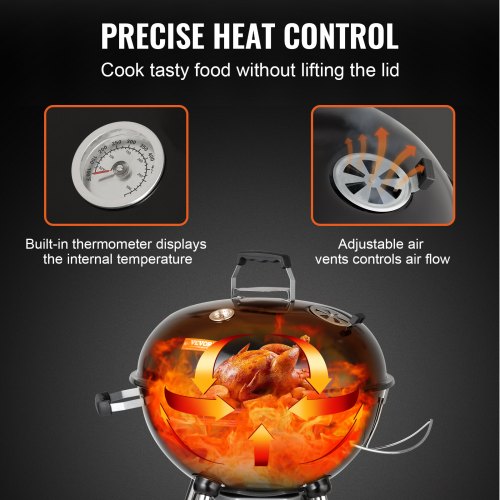
Credit: www.vevor.com
Setting Up Your Grill
Controlling temperature on a charcoal grill starts with the right setup. Preparing your grill properly helps you cook food evenly.
Two key parts to focus on are arranging the charcoal and adjusting the grill vents. These control the heat levels and airflow.
Arranging Charcoal For Heat Zones
Creating heat zones lets you cook different foods at the right temperatures. Arrange charcoal for direct and indirect heat areas.
- Pile charcoal on one side for high, direct heat.
- Leave the other side empty or with fewer coals for low, indirect heat.
- Use a charcoal chimney to light coals evenly before placing them.
- Spread coals evenly in each zone for consistent heat.
Using The Grill Vents
Grill vents control air flow. More air means hotter fire. Less air cools it down. Adjust vents to keep steady temperature.
| Vent Position | Effect on Temperature |
| Fully Open | Maximum airflow, hotter fire |
| Half Open | Moderate airflow, steady heat |
| Mostly Closed | Low airflow, cooler fire |
| Fully Closed | Fire starves, heat drops quickly |
Lighting Techniques
Controlling the temperature on a charcoal grill starts with lighting the charcoal properly. The way you light the charcoal affects how hot the grill gets and how long the fire lasts.
Using the right lighting technique can help you cook food evenly and avoid flare-ups. Here are two common ways to light charcoal safely and effectively.
Chimney Starter Method
The chimney starter is a metal tube that helps light charcoal quickly. It uses air flow to start the coals without lighter fluid.
To use it, fill the chimney with charcoal and place crumpled newspaper or fire starters under the tube. Light the paper to start the fire. The coals will heat evenly and be ready in about 15 minutes.
- Fill chimney with charcoal
- Place newspaper under chimney
- Light the newspaper
- Wait until coals are covered with gray ash
- Pour coals into grill
Using Lighter Fluid Safely
Lighter fluid can start charcoal fast but must be used carefully. Too much fluid or lighting too soon can cause dangerous flare-ups.
Pour lighter fluid evenly over the charcoal and wait a few minutes before lighting. Never add fluid to hot or burning coals. Use just enough fluid to soak the charcoal.
- Use only charcoal lighter fluid
- Pour fluid evenly over charcoal
- Wait 3-5 minutes before lighting
- Light charcoal carefully
- Never add fluid to hot coals

Credit: www.siuhaau.com
Adjusting Airflow
Controlling airflow is key to managing temperature on a charcoal grill. Air vents let you control how much oxygen feeds the fire.
By adjusting the vents, you can raise or lower the heat for better cooking results.
Top And Bottom Vent Control
The bottom vents bring air into the grill to feed the charcoal. Opening them wide makes the fire burn hotter.
The top vents release smoke and heat. Keeping them open helps air flow smoothly and controls temperature.
- Open bottom vents fully for high heat and fast cooking.
- Partially close bottom vents for medium heat.
- Close bottom vents to lower heat or put out the fire.
- Open top vents wide to avoid smoke buildup and keep oxygen flowing.
- Close top vents slightly to slow cooking and keep heat in.
Effects On Temperature
| Vent Setting | Airflow | Temperature Effect |
| Bottom vents open wide | Maximum air | High heat, fast burning |
| Bottom vents partly open | Moderate air | Medium heat, steady burn |
| Bottom vents closed | Minimal air | Low heat, fire dies down |
| Top vents open wide | Good smoke exit | Even temperature, clean burn |
| Top vents partly closed | Restricted smoke exit | Heat builds, slower burn |
Managing Charcoal Amount
Controlling the heat on a charcoal grill depends on how much charcoal you use. Adding or removing charcoal changes the temperature quickly. You can keep your food cooking just right by managing the charcoal amount.
Knowing when and how to add or remove charcoal helps you keep the grill hot or cool as needed. This guide explains easy ways to do both.
Adding More Charcoal
If the grill is not hot enough, adding more charcoal will raise the temperature. Use fresh charcoal and add it carefully to avoid letting heat escape.
- Wear heat-resistant gloves before handling charcoal.
- Use tongs or a chimney starter to place new charcoal on hot coals.
- Arrange added charcoal evenly to spread heat well.
- Close the grill lid to keep the heat inside after adding charcoal.
Removing Charcoal For Lower Heat
To lower the heat, take some charcoal out of the grill. This reduces the fire’s intensity and cools the cooking area.
| Method | How to Do It |
| Use Tongs | Pick out glowing coals carefully with long tongs. |
| Spread Charcoal | Move coals apart to reduce concentrated heat. |
| Close Air Vents | Limit oxygen to slow down the burning. |

Credit: www.youtube.com
Using Water And Other Tricks
Controlling temperature on a charcoal grill can be tricky. Using water and other simple methods helps keep heat steady. These tricks also add moisture to the cooking process.
Below are two easy ways to control temperature and improve the flavor of your grilled food.
Water Pan For Moisture
Place a water pan inside the grill. The water adds moisture to the air. This keeps food from drying out during long cooking times.
- Use a shallow pan that fits under the grill grate.
- Fill it with water before lighting the charcoal.
- Check water level regularly and refill as needed.
- The water helps keep the grill temperature steady.
- It also adds flavor by creating steam around the food.
Spritzing Meat For Temperature Control
Spritz meat with water or a flavored liquid. This lowers the surface temperature of the meat. It also adds moisture and enhances taste.
| Spritz Liquid | Effect |
| Water | Cool meat surface |
| Apple juice | Add sweet flavor |
| Vinegar mix | Tenderize meat |
| Beer | Add smoky taste |
Monitoring Temperature
Controlling temperature is key to cooking on a charcoal grill. Monitoring the heat helps you cook food evenly.
There are different ways to check the grill temperature. You can use built-in or external thermometers.
Using Built-in Thermometers
Most charcoal grills come with built-in thermometers on the lid. These show the inside temperature at grill level.
Built-in thermometers help you watch the heat without opening the lid. Opening the lid lets heat escape.
- Place the thermometer on the grill lid
- Check the temperature before adding food
- Adjust vents to raise or lower heat
- Keep the lid closed to keep temperature steady
External Thermometer Tools
External thermometers give more precise temperature readings. You can place probes near the food or coals.
Some external thermometers connect to phones or have digital displays. They let you monitor without opening the grill.
- Probe thermometers measure meat and grill heat
- Wireless thermometers send data to your phone
- Instant-read thermometers check food temperature quickly
- Use probes to track different grill zones
Common Temperature Issues
Controlling temperature on a charcoal grill can be tricky. Many people face problems like uneven heat or sudden flames.
Understanding common temperature issues helps you cook food better. It also keeps your grill safe to use.
Fixing Hot Spots
Hot spots are areas on the grill that get much hotter than others. They can burn food while other parts stay undercooked.
To fix hot spots, spread the charcoal evenly. You can also move food around to avoid burning.
- Use a two-zone fire: pile coals on one side, leave the other side empty.
- Rotate food often to cook it evenly.
- Adjust the vents to control airflow and heat.
- Use a drip pan to reduce flare-ups near hot spots.
Dealing With Flare-ups
Flare-ups happen when fat drips onto hot coals. They cause sudden flames that can burn your food.
Keep flare-ups under control by trimming excess fat. Also, keep a spray bottle of water nearby to calm small flames.
- Move food away from flames during flare-ups.
- Use a drip pan to catch fat and prevent flames.
- Open the grill lid to reduce oxygen and lower flames.
- Close vents only if flames get too high, but watch temperature changes.
Advanced Heat Control Tips
Controlling the temperature on a charcoal grill takes practice and smart techniques. Proper heat control helps cook food evenly and avoid flare-ups.
Two key methods for managing heat are setting up two cooking zones and using heat deflectors. These tricks improve your grill’s performance.
Two-zone Cooking Setup
Two-zone cooking means creating a hot side and a cooler side on your grill. This lets you sear food on high heat and then move it to a cooler area to finish cooking.
- Arrange charcoal on one side of the grill for direct heat.
- Leave the other side free of coals for indirect heat.
- Place food that needs searing over the hot side.
- Move food to the cooler side to slow cook or keep warm.
- Adjust vents to control airflow and temperature.
Using Heat Deflectors
Heat deflectors block direct flames from food. They spread heat evenly and prevent burning. You can use stones, bricks, or special grill plates as deflectors.
| Type of Heat Deflector | Material | Benefit |
| Grill Stone | Soapstone or ceramic | Retains and spreads heat evenly |
| Heat Shield Plate | Metal | Blocks flames and protects food |
| Firebricks | Clay brick | Absorbs heat and prevents flare-ups |
Frequently Asked Questions
How Do You Maintain Grill Temperature?
To maintain temperature on a charcoal grill, adjust the air vents. Opening vents increases heat, while closing them reduces it. Monitor the grill’s built-in thermometer and add charcoal as needed. Use a two-zone fire setup for better control over direct and indirect heat.
What Is The Ideal Temperature For Grilling?
The ideal grilling temperature varies based on food type. For high heat, aim for 450-550°F, great for searing steaks. Medium heat, around 350-450°F, is suitable for chicken. Low heat, between 250-350°F, works well for slow-cooked meats like ribs.
How Do I Cool Down A Charcoal Grill?
To cool down a charcoal grill, close the vents to reduce oxygen. This will lower the temperature gradually. Remove some charcoal if necessary. Avoid using water to douse the coals, as this can damage the grill. Always monitor the temperature with a grill thermometer.
How Long Should Charcoal Burn Before Cooking?
Let charcoal burn until it’s covered with white ash, typically 15-20 minutes. This indicates the coals are hot and ready for cooking. Wait for consistent heat across the charcoal bed before placing food on the grill. This ensures even cooking and enhances flavor.
Conclusion
Controlling temperature on a charcoal grill takes practice and patience. Adjust the air vents to raise or lower heat. Add or spread charcoal to control hot spots. Keep the lid closed to keep heat steady. Watch the grill carefully to avoid burning food.
With time, you will cook better and enjoy great flavors. Happy grilling!