
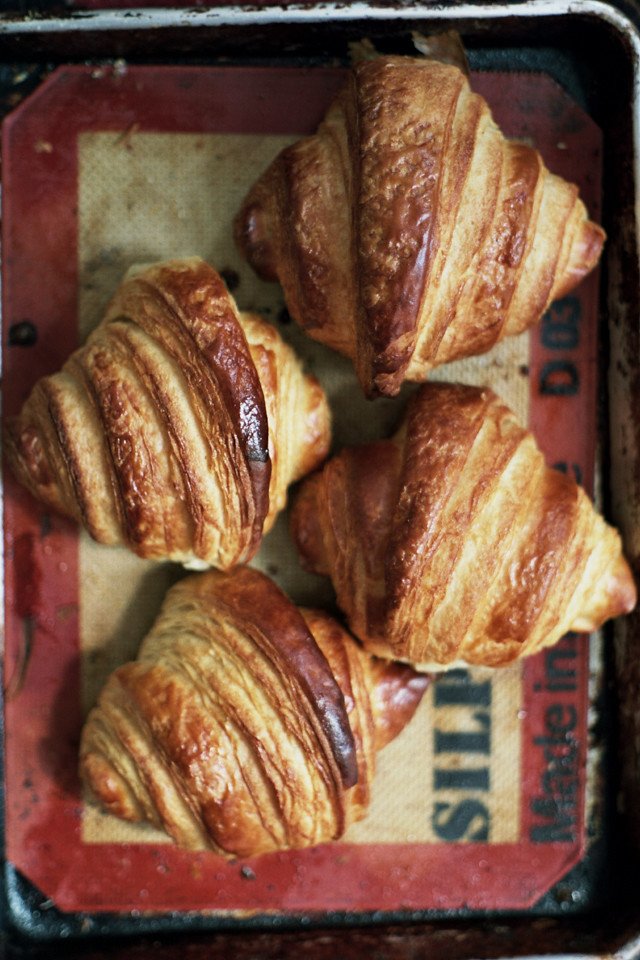
Are you ready to fill your kitchen with the warm, buttery smell of fresh croissants? Baking croissants on a baking sheet might sound tricky, but with the right steps, you can create flaky, golden pastries right at home.
Whether you’re a beginner or just looking to perfect your technique, this guide will walk you through everything you need to know. By the end, you’ll have the confidence to bake croissants that taste like they came from a French bakery.
Let’s get started and turn your baking sheet into a croissant-making masterpiece!

Credit: olivesnthyme.com
Preparing The Ingredients
Gathering the right ingredients is key to baking perfect croissants. Use high-quality flour, such as bread flour, for a better texture. Bread flour has more protein, which helps create a chewy, flaky crust. Avoid low-quality or all-purpose flour for this recipe.
Butter should be cold and unsalted. Cold butter layers create the flaky texture croissants are known for. Unsalted butter gives control over salt levels in the dough. Look for butter with at least 80% fat content for best results.
| Ingredient | Quality Tips |
|---|---|
| Flour | Use bread flour; higher protein for flaky texture |
| Butter | Cold, unsalted, 80% fat content for best layering |
Credit: fournoratio.com
Making The Dough
Combine flour, sugar, salt, yeast, milk, water, and butter in a large bowl. Stir gently until the dough begins to form. Use cold ingredients to keep the dough cool. This helps create flaky layers in croissants.
Knead the dough on a floured surface for about 10 minutes. Press, fold, and stretch the dough using your hands. Stop kneading when the dough becomes smooth and elastic. This strengthens the dough’s structure.
Let the dough rest in a covered bowl for at least 1 hour. Keep it in a warm place but not too hot. Resting allows the dough to rise and the gluten to relax. This makes it easier to roll and shape.
Laminating The Dough
Start with a cold dough to keep the butter from melting. Roll the dough gently into a thin rectangle. Make sure the surface is lightly floured to avoid sticking. The dough should be even in thickness.
Place a cold butter slab in the center of the dough. Fold the dough edges over the butter, sealing it completely. This creates the butter layerinside the dough. Chill the dough for a short time before rolling again.
- Roll the dough out into a long rectangle.
- Fold it into thirds like a letter (this is called a “turn”).
- Chill the dough between folds to keep butter firm.
- Repeat rolling and folding 3 to 4 times.
This process builds many thin butter layerswhich create flaky croissants.
Shaping The Croissants
Cut the dough into long triangles with a sharp knife or pizza cutter. Each triangle should have a wide base and a pointed tip. The size depends on how big you want your croissants.
Start rolling from the wide base towards the tip. Roll tightly but gently to keep the layers inside. Curve the ends to form a crescent shape.
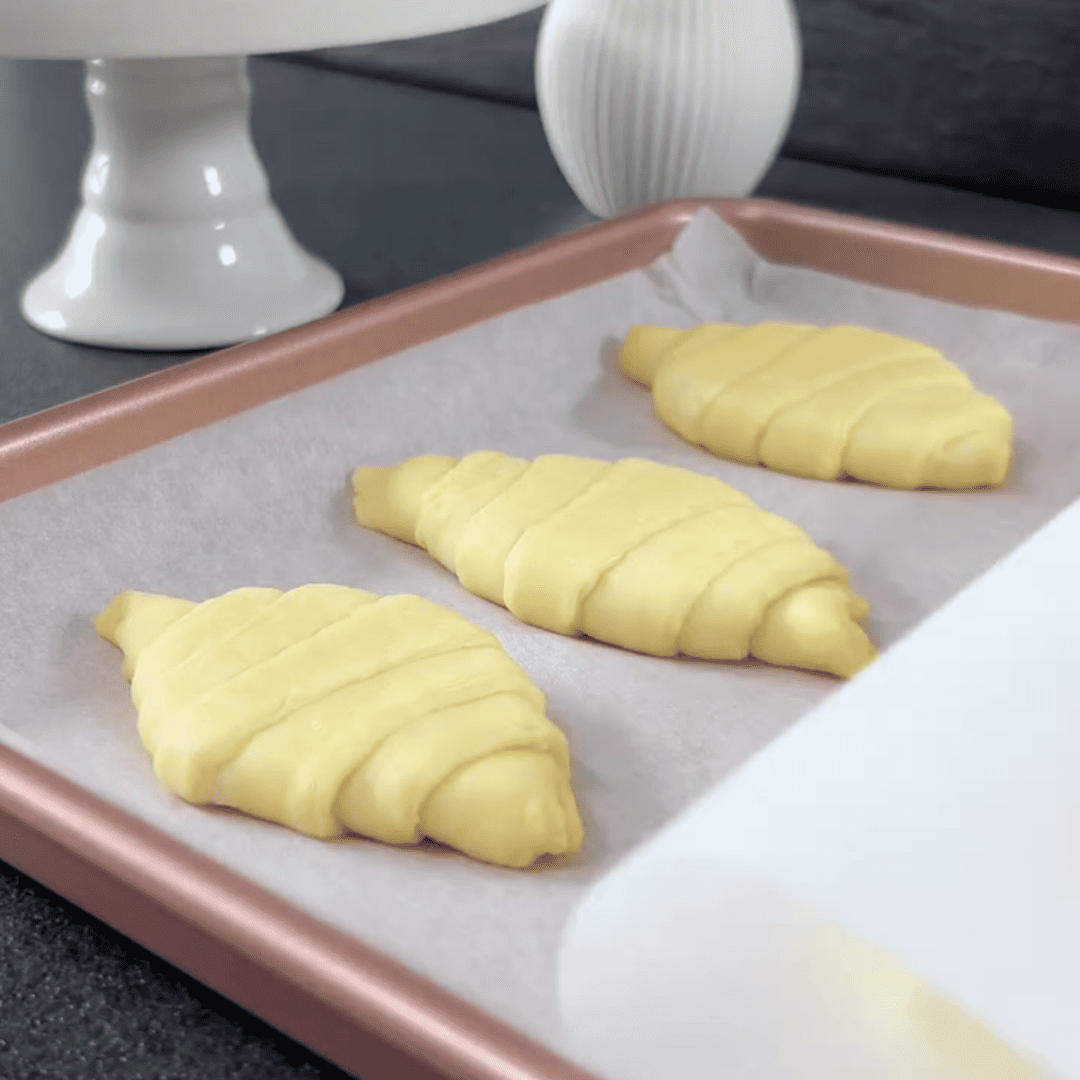
Place the shaped croissants on a baking sheet lined with parchment paper. Leave enough space between them to grow.
Cover the croissants with a clean kitchen towel or plastic wrap. Let them rest in a warm place to rise. This process is called proofing.
Proofing time can take 1 to 2 hours. The croissants should double in size and feel soft to touch.
Baking On A Sheet
Preheat the oven to 375°F (190°C)for the best results. This temperature helps croissants bake evenly and become golden brown.
Arrange croissants on the baking sheet with enough space between each. Leave about 2 inchesapart to let them expand while baking.
Optimal baking time is usually 15 to 20 minutes. Keep an eye on the croissants to avoid burning. They are ready when they turn golden and puffed up.
Credit: food-with-style.com
Achieving Flaky Perfection
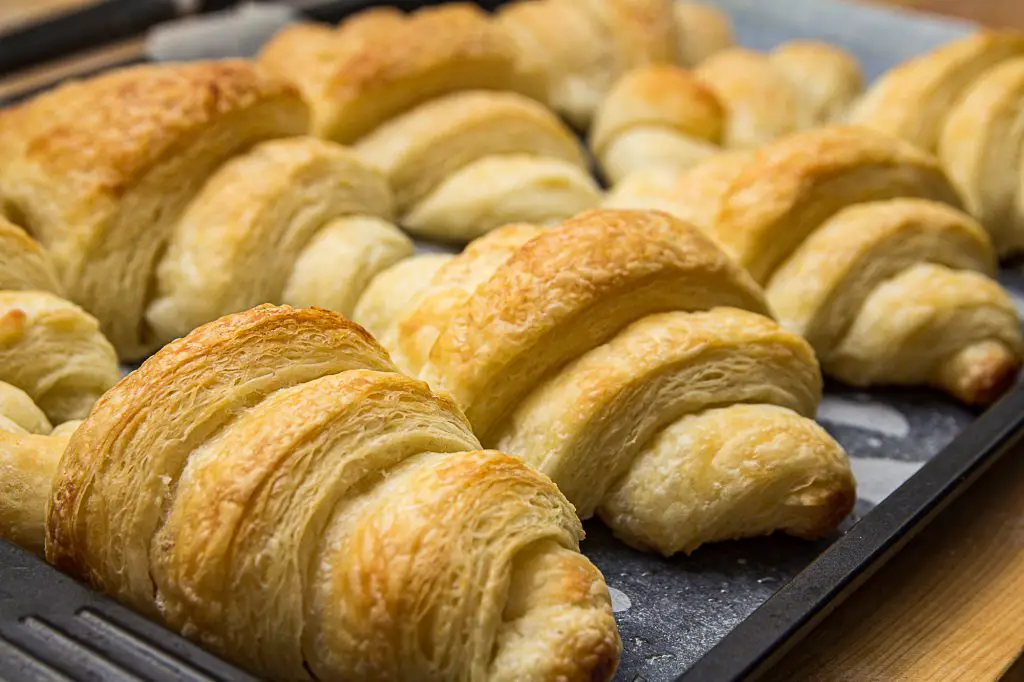
Check croissants by looking for a golden browncolor all over. The edges should be crispyand the layers flaky. Tap the bottom gently; it should sound hollow. If it feels too soft, bake a few more minutes. Avoid opening the oven often to keep heat steady.
Let croissants cool on a rack for at least 10 minutes. This helps the layers set and stops them from becoming soggy. Avoid covering croissants while warm to keep the crust crisp. Cooling also makes them easier to handle and slice.
- Serve croissants plain to enjoy their buttery flavor.
- Add jam, honey, or chocolate for extra taste.
- Fill with ham and cheese for a savory snack.
- Pair with coffee or tea for a perfect treat.
Frequently Asked Questions
How Long Should Croissants Bake On A Baking Sheet?
Bake croissants for 15-20 minutes at 375°F (190°C). Check for a golden-brown color. Avoid overbaking to keep them flaky and soft.
Can I Bake Frozen Croissants On A Baking Sheet?
Yes, bake frozen croissants without thawing. Add a few extra minutes to baking time. This keeps layers flaky and texture perfect.
What Type Of Baking Sheet Is Best For Croissants?
Use a heavy-duty, rimmed baking sheet for even heat. Line with parchment paper to prevent sticking and ensure easy cleanup.
Should Croissants Be Spaced Apart On The Baking Sheet?
Yes, leave 2 inches between croissants. Proper spacing allows heat circulation and prevents them from sticking or merging during baking.
Conclusion
Baking croissants on a baking sheet is simple and fun. Just follow the steps carefully and use fresh ingredients. Watch your croissants rise and turn golden brown in the oven. The smell alone makes the wait worth it. Enjoy warm, flaky croissants with your favorite jam or butter.
Practice makes perfect, so keep trying and enjoy the process. Fresh homemade croissants bring joy to any breakfast or snack time. Give yourself time and patience, and you will see great results. Happy baking!