
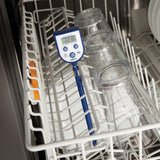
Have you ever found yourself staring at your thermometer probe, wondering if it’s safe to toss it in the dishwasher? You’re not alone.
This common kitchen conundrum raises questions about convenience, hygiene, and the lifespan of your trusty tool. We’re diving into the nitty-gritty details to uncover the truth. Is it a time-saving hack, or a recipe for disaster? You deserve to know the answer to ensure your kitchen gadgets remain in top shape.
Stick around, because what you discover might just change the way you handle your kitchen cleanup forever. Ready to find out? Let’s get started!
Credit: hhsolutions.ie
Thermometer Probes Explained
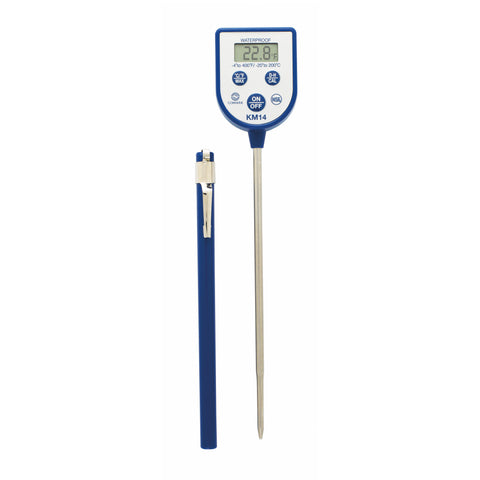
Thermometer probes come in different types. Some are designed for measuring food temperature. Others work for liquids or air. Probes can be digital or analog. Digital probes show the temperature on a screen. Analog probes use a needle to point to the temperature.
Probes are made from various materials. The most common is stainless steel. It is strong and resists rust. The probe tip must be food safe. The handle or cable might be made of plastic or silicone. These materials can handle heat but may not always be dishwasher safe.
Dishwasher Impact On Probes
Dishwasher heat can damage thermometer probes. High temperatures may melt plastic parts or harm electronic sensors. Metal probes might tolerate heat but repeated exposure can weaken connections.
Detergents in dishwashers can be harsh. Chemicals may corrode metal probes or fade markings. Water pressure may also bend thin probes. Some probes are not built for dishwasher cleaning, risking malfunction.
- Heat exposurecan cause warping or sensor failure.
- Detergent chemicalsmay corrode or discolor probes.
- Water pressurecould bend or damage thin probes.
- Plastic parts might melt or crack under high heat.
- Repeated dishwasher use shortens probe lifespan.
Manufacturer Guidelines
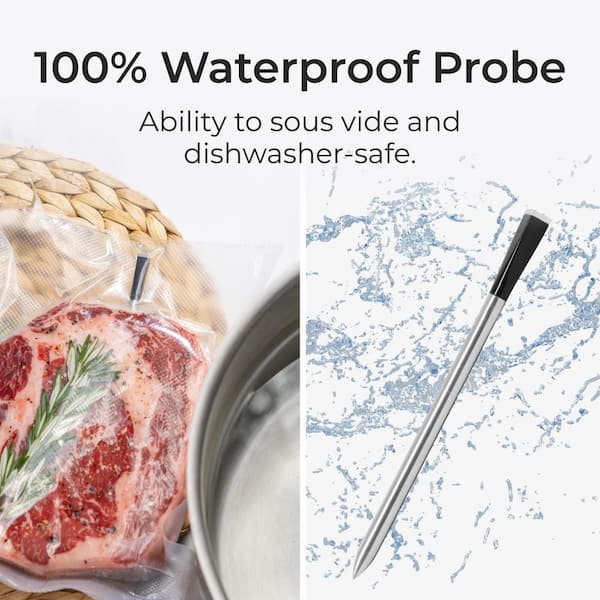
Always check the manufacturer’s guidelinesbefore washing a thermometer probe. Some probes are dishwasher safe, but many are not. The high heat and strong water pressure in dishwashers can damage the probeor its wiring.
Many manufacturers suggest hand washingthe probe with warm, soapy water. Avoid soaking the probe for a long time. Dry it carefully after cleaning to prevent rust or corrosion.
| Care Instructions | Details |
|---|---|
| Hand Wash | Use mild soap and warm water |
| Do Not Soak | Keep water exposure brief |
| Dry Immediately | Prevent rust and damage |
| Dishwasher Use | Check if probe is labeled dishwasher safe |
Warrantymay be void if the probe is washed incorrectly. Using a dishwasher against instructions can cause permanent damage. Always follow the care advice to keep your thermometer working well.

Credit: www.homedepot.com
Safe Cleaning Alternatives
Thermometer probes often have sensitive parts that can get damaged in a dishwasher. Hand washing with warm, soapy water keeps them safe and clean. Avoiding the dishwasher helps maintain their accuracy and longevity.
Hand Washing Tips
Use warm water and mild soap to clean the thermometer probe. Gently scrub with a soft cloth or sponge. Avoid harsh scrubbing to protect the sensor. Rinse well to remove all soap. Dry with a clean towel or let air dry. This method keeps the probe safe and clean without damage.
Sanitizing Without Damage
Use rubbing alcohol on a cotton ball or soft cloth. Wipe the probe carefully to kill germs. Avoid soaking the probe in liquids. Do not use bleach or strong chemicals. These can harm the thermometer. Let the probe dry completely before storing or using again.
Common Mistakes To Avoid
Placing a thermometer probe in the dishwasher without care can cause damage. The probe tipis often very delicate and can break or bend easily. Avoid putting it near sharp objects or heavy items that might knock against it.
Some probes have sensitive electronicsthat water and heat can harm. Make sure the probe is labeled as dishwasher-safe before cleaning. Otherwise, hand wash it with a soft cloth and mild soap.
- Place the probe on the top rack to keep it away from heating elements.
- Do not place the probe next to knives or heavy pots.
- Check the manufacturer’s instructions for cleaning tips.
- Never use harsh detergents or scrubbers on the probe tip.
Credit: www.homedepot.com
Signs Of Damage From Dishwashing
Thermometer probes may show signs of damage after dishwashing, like broken wires or foggy screens. Heat and water can harm their delicate parts. Careful cleaning helps keep them working well.
Performance Issues
Thermometer probesmight not give correct readings after dishwashing. Hot water and strong soaps can harm sensitive parts. The probe may react slower or show wrong temperatures. This can cause cooking mistakesand food safety risks.
Physical Wear And Tear
Dishwashing can cause scratches, cracks, or ruston the probe. Plastic parts may warp or melt. Metal tips can lose their shine or sharpness. Wires inside the probe might break or loosen, making it unsafe or unusable.
Frequently Asked Questions
Can I Safely Wash A Thermometer Probe In A Dishwasher?
Most thermometer probes are not dishwasher safe. High heat and strong detergents can damage the probe’s sensitive parts. Hand washing with warm, soapy water is usually recommended to keep accuracy and longevity.
Will Dishwasher Damage My Digital Thermometer Probe?
Yes, dishwasher heat and water pressure can harm digital thermometer probes. It may cause malfunction or inaccurate readings. Always check the manufacturer’s cleaning instructions for safe care.
How To Clean A Thermometer Probe Without A Dishwasher?
Clean the probe gently with warm water and mild soap. Use a soft cloth or sponge to avoid scratches. Dry thoroughly before storing to prevent rust or damage.
Are All Thermometer Probes Dishwasher Safe?
No, not all probes are dishwasher safe. Some are designed with water-resistant features, but many are sensitive to heat and detergents. Always verify the cleaning guidelines from the product manual.
Conclusion
Thermometer probes need careful cleaning to last longer. Most probes should not go in the dishwasher. Heat and water can damage sensitive parts inside. Instead, wash them by hand with warm, soapy water. Dry them well before storing to avoid rust.
Taking these small steps keeps your probe accurate and safe. Clean tools help cook food properly and avoid illness. Always check the manufacturer’s advice for the best care. Simple care makes your thermometer work well every time.