
Have you ever paused mid-chop, knife in hand, and wondered if you’re using your cutting board correctly? You’re not alone.
Many home cooks and culinary enthusiasts grapple with the question: can you cut on both sides of a cutting board? This seemingly simple query hides layers of intrigue that might just change the way you approach food prep in your kitchen.
Imagine doubling the lifespan of your cutting board or enhancing your food hygiene practices with one simple tweak. Curious? Keep reading to uncover the truth about this everyday kitchen essential. You’ll discover not only the answer to this question but also tips to maximize your cutting board’s efficiency and longevity. Dive into the details and empower your culinary skills like never before.

Credit: www.amazon.com
Cutting Board Basics
Cutting boards come in different materials. Each has its own strengthsand weaknesses. Wood boards are gentle on knives and last long. They need regular oiling to stay good. Plastic boards are easy to clean and often dishwasher safe. They can get scratched more easily.
Bamboo boards are harder than wood and resist water well. But they can dull knives faster. Glass boards look nice and are easy to clean. Still, they can damage knife edges quickly.
| Material | Durability | Knife Friendly | Maintenance |
|---|---|---|---|
| Wood | High | Very Good | Oiling needed |
| Plastic | Medium | Good | Dishwasher safe |
| Bamboo | High | Fair | Hand wash only |
| Glass | High | Poor | Easy clean |
Using Both Sides Safely
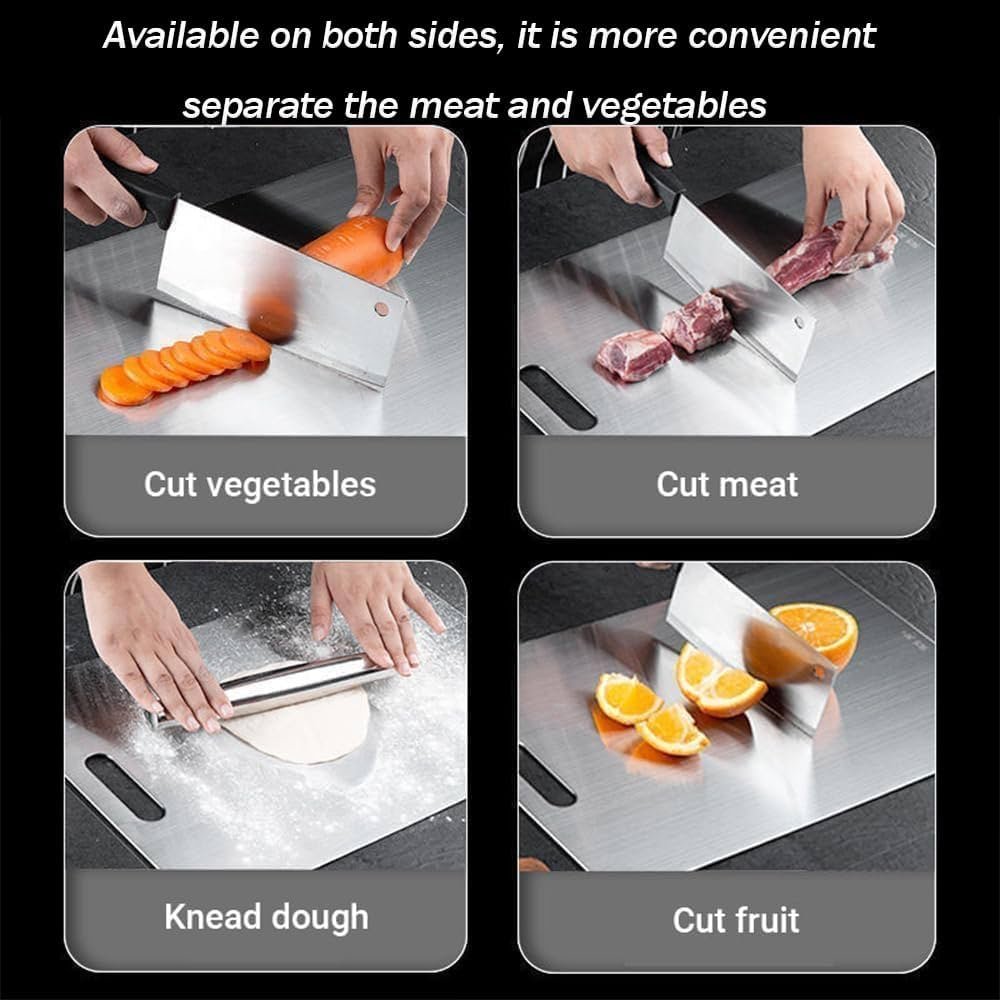
Using both sides of a cutting board is possible, but safety is key. One side can be for raw meat, while the other for vegetables or cooked food. This helps keep flavors and germs separate.
To prevent cross-contamination:
- Use one side only for raw foods like meat or fish.
- Use the other side for ready-to-eat foods like bread or salad.
- Wash the board well after each use, especially if you cut raw meat.
- Dry the board fully to stop bacteria from growing.
Keep colored boards or labels to remember which side is for what. This simple habit keeps your kitchen safer and your food healthier.
Cleaning And Maintenance
Use warm water and soap to wash the cutting board. Scrub with a brush or sponge to remove food bits. Rinse well to avoid soap taste on food.
Dry the board with a clean towel or air dry it. Avoid leaving the board wet as it can cause cracks or mold growth.
To sanitize, use a mix of one tablespoon of bleach with one gallon of water. Wipe the board with this solution and let it sit for a few minutes. Rinse thoroughly and dry well.
- Use vinegar as a natural sanitizer. Spray and let it sit for a few minutes.
- Use lemon juice and salt to scrub the board to remove stains and smells.
- Avoid soaking wooden boards in water for long times.

Credit: www.reddit.com
Extending Cutting Board Life
Using both sides of a cutting board helps even out wearand extend its life. This simple practice prevents deep grooves from forming on just one side.
Cleaning the board after each use is very important. Use warm water and mild soap. Avoid soaking the board to stop wood from cracking or warping.
Oiling the board regularly keeps the wood hydrated and strong. Food-grade mineral oil is best for this. Apply a thin layer and let it soak in.
Small cuts and scratches can be smoothed out by sanding lightly with fine-grit sandpaper. This removes rough spots and keeps the surface safe for food.
Always dry the board completely before storing. Store it standing up or on a rack to allow air circulation and prevent moisture buildup.
Common Mistakes To Avoid
Cutting boards can wear out fast if used on both sides without care. Always check the board’s surface conditionbefore use. Cracks or deep grooves can hide bacteria and make cutting unsafe.
Using the wrong side of the board can also cause problems. Some boards have a smooth sidefor cutting and a rough sidefor gripping. Cutting on the rough side may dull your knife quickly.
- Inspect the board regularly for damage.
- Use the side meant for cutting only.
- Clean both sides thoroughly to avoid germs.

Credit: www.tastingtable.com
Frequently Asked Questions
Can You Safely Cut On Both Sides Of A Cutting Board?
Yes, you can cut on both sides if the board is double-sided. Ensure both sides are clean and in good condition for hygiene. This practice helps extend the board’s life and offers flexibility in the kitchen.
Does Cutting On Both Sides Affect Cutting Board Hygiene?
Cutting on both sides is hygienic if you clean the board thoroughly. Avoid cross-contamination by washing after each use. Proper cleaning maintains food safety and prevents bacteria buildup on either side.
What Types Of Cutting Boards Allow Cutting On Both Sides?
Wood and plastic cutting boards often support double-sided use. Some have a juice groove on one side and a flat surface on the other. Check the manufacturer’s guidelines to confirm if your board is designed for both sides.
How To Maintain A Cutting Board Used On Both Sides?
Clean both sides with hot, soapy water after each use. Dry thoroughly to prevent warping or cracking. Regularly oil wooden boards to keep them smooth and resistant to moisture damage.
Conclusion
You can cut on both sides of a cutting board, but be careful. Using both sides helps keep your kitchen clean and organized. Always clean the board well between uses to avoid germs. Some boards are made for double-sided use, while others are not.
Check your board’s material before cutting on both sides. This simple habit keeps food safe and your tools lasting longer. Try it out and see what works best for you. Safe and smart cutting makes cooking easier and more fun.