

Are you tired of struggling with your slicer and wasting time on uneven cuts? Learning how to operate your slicer efficiently can save you hours and improve the quality of every slice.
Imagine slicing faster, safer, and with less effort—sounds good, right? You’ll discover simple tips and tricks that make your slicer work smarter for you. Keep reading, and you’ll unlock the secrets to mastering your slicer like a pro.
Credit: www.vevor.ca
Choosing The Right Slicer
Choosing a slicer that fits your needs ensures smoother operation and better results. Focus on blade quality, ease of use, and safety features for efficient slicing. Proper selection reduces effort and improves precision.
Types Of Slicers
There are many types of slicers. Some work best for meats. Others are for bread or vegetables. Manual slicers need hand power. Electric slicers are faster and easier. Choose one based on what you slice most.
Matching Slicer To Product
Match the slicer to the product for best results. Thin slices need a sharp blade. Thick slices work with wide blades. Soft foods need gentle slicing to avoid crushing.
Key Features To Consider
- Blade size:Bigger blades slice larger items.
- Adjustable thickness:Lets you control slice size.
- Safety guards:Protect your hands during slicing.
- Easy cleaning:Parts should be simple to remove and wash.
- Durability:Strong materials last longer.

Credit: manuals.plus
Setting Up Your Slicer
Ensure the slicer is unpluggedbefore installing the blade. Handle the blade with care to avoid cuts. Mount the blade securely in its slot. Tighten the screws to keep it stable. Adjust the blade to the desired angle. Make sure it is aligned properly. A well-aligned blade cuts better and safer.
Safety checksare important before using the slicer. Inspect the power cord for any damage. Ensure the machine parts are intact. Check that all screws are tight. Confirm the emergency stop button works. Wear protective gloves if needed. Keep hands away from the blade when operating.
Set the slicer to the desired thickness. Use the adjustment knob for this. Start with a small test slice. Checkif the thickness is correct. Adjust if needed for precision. Thicker slices require more force. Ensure the slicer is stable while cutting.
Operating Techniques For Speed
Feed the slicer with steady, even motions. Avoid pushing too hard or too softly. This keeps the blade moving smoothly and prevents jams.
Keep pressure steady on the food item. Too much force can damage the slicer or cause uneven slices. Too little pressure slows down the process.
| Slice Thickness | Best Use | Tip |
|---|---|---|
| Thin | Sandwiches, deli meats | Use consistent pressure to avoid breaking slices |
| Medium | Cheese, vegetables | Adjust feed speed for clean cuts |
| Thick | Steaks, large vegetables | Slow feed for safety and even slicing |
Credit: www.vevor.ca
Maintenance For Longevity
Keeping the slicer clean is key to its long life. Food bits can stick and cause problems. Clean the blade and tray after every use. Use warm water and mild soap. Avoid harsh chemicals that can damage parts. Dry all parts well before reassembling.
Sharpen the blade often to keep it cutting well. A dull blade can tear food and strain the motor. Use a sharpening stone or a tool made for slicer blades. Follow the blade’s angle carefully. Sharpen both sides evenly for best results.
| Common Issue | Cause | Solution |
|---|---|---|
| Slicer won’t start | Power not connected or switch off | Check plug and power switch |
| Blade not spinning | Blade jam or motor problem | Remove jam, check motor, call repair if needed |
| Uneven slices | Dull blade or wrong thickness setting | Sharpen blade, adjust thickness knob |
Safety Practices
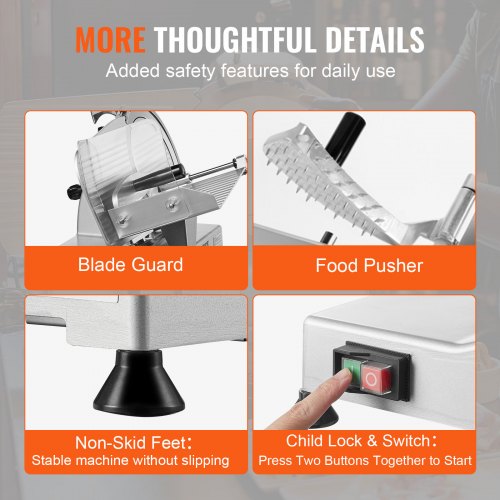
Protective gearis essential for safe slicer use. Always wear cut-resistant glovesand eye protection. Avoid loose clothing or jewelry that can get caught. Keep long hair tied back.
Handle the slicer with care. Use the food pusherto hold items, not your hands. Clean the slicer only when it is turned offand unplugged. Keep blades sharp for smooth cutting and less force.
| Emergency Stop Procedures | Details |
|---|---|
| Locate the emergency stop button | Usually red and easy to reach |
| Press immediately if slicer malfunctions | Stops blade instantly |
| Unplug the slicer after stopping | Ensures full power off |
| Report any issues to supervisor | Prevents further accidents |
Maximizing Productivity
Efficient workflow ensures smooth slicing operations. Organize tasks clearly. Set up the slicer before starting work. Keep tools and materials close by to save time. Check the slicer settings for each product type. A well-planned process reduces delays and errors.
Batch processing helps finish similar tasks together. Group items that need the same slicer settings. This cuts down on frequent adjustments and speeds up production. Use a timer to track batch times and improve pacing.
- Teach staff the right way to use the slicer.
- Show safety rules clearly and often.
- Practice with real examples and hands-on sessions.
- Encourage questions to clear up confusion.
- Review common mistakes and fix them fast.
Frequently Asked Questions
How Do I Safely Start Operating A Slicer?
Always ensure the slicer is clean and properly assembled. Use the guard and keep hands away from the blade. Turn it on only when ready to slice, and never leave it unattended while running.
What Settings Improve Slicer Efficiency?
Adjust the blade thickness according to the product. Use consistent pressure and speed while slicing. Regularly check and sharpen the blade to maintain smooth operation.
How Often Should I Clean The Slicer?
Clean the slicer after every use to avoid contamination. Follow manufacturer guidelines for disassembly and sanitization. Proper cleaning improves slicer performance and food safety.
Can I Slice Different Foods On One Slicer?
Yes, but clean the slicer thoroughly between food types. This prevents cross-contamination and flavor transfer. Use separate slicers for allergen-sensitive products if possible.
Conclusion
Operating a slicer efficiently saves time and reduces waste. Keep blades sharp and clean for smooth cuts. Always follow safety rules to avoid accidents. Adjust settings based on the food type and thickness needed. Regular maintenance keeps the slicer working well longer.
Practice steady movements to achieve even slices each time. These simple steps help you use a slicer with confidence and ease.