
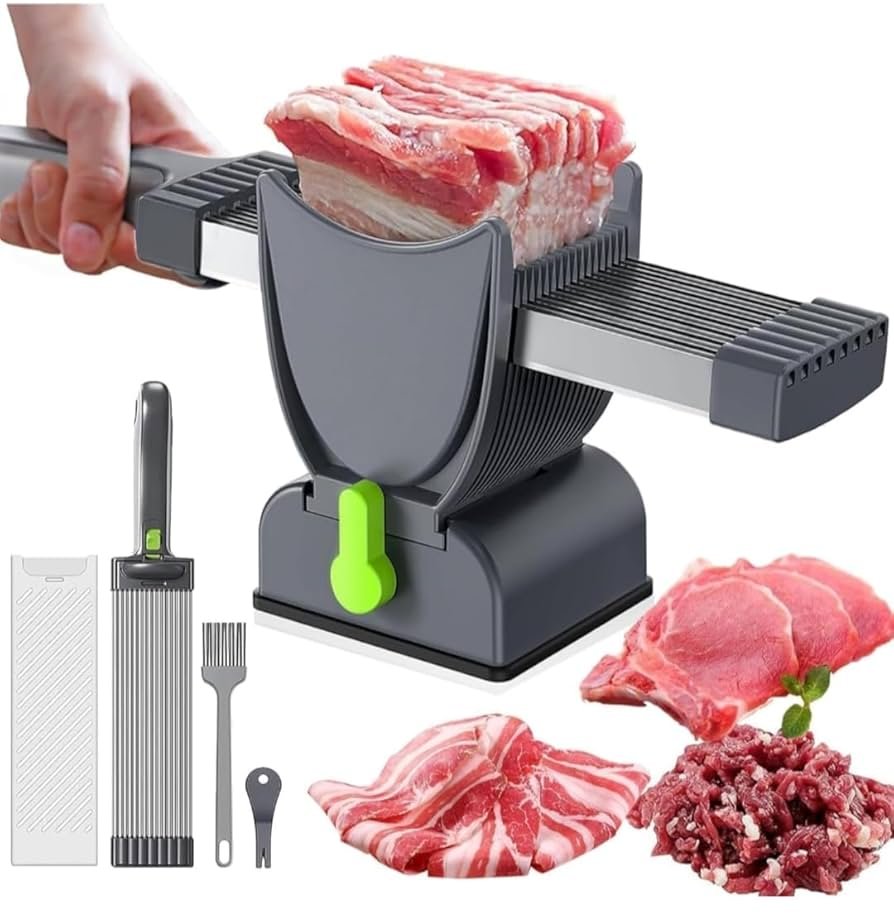
If you’ve ever tried to slice jerky meat by hand, you know how tricky it can be to get even, thin pieces without wasting any. Using a manual slicer can make the job easier and give you perfect slices every time.
But how do you use it correctly to avoid common mistakes and get the best results? In this guide, you’ll discover simple steps and insider tips to slice your jerky meat like a pro. Keep reading, and you’ll soon master the art of slicing jerky with precision and ease.
Choosing The Right Manual Slicer
Manual slicers come in many types. Some use a hand crankto cut meat. Others have a leverfor slicing. Choose one that fits your strength and comfort. A slicer with a stable basehelps keep the meat steady. Look for a compact sizeif you have little space.
| Blade Material | Best For | Size Range |
|---|---|---|
| Stainless Steel | Durable and rust-resistant | 7-10 inches |
| Carbon Steel | Sharp but needs care | 8-12 inches |
| Ceramic | Sharp and stays sharp long | 6-9 inches |
Safety is key. Look for slicers with safety guardsto protect fingers. A non-slip basekeeps the slicer from moving. Some have a lock featureto stop the blade when not in use. Choose slicers that are easy to clean to avoid germs.

Credit: www.amazon.in
Preparing Jerky For Slicing
Choose meat that is fresh and lean. Fat can spoil jerky quickly. Beef, turkey, or venison are popular choices. Look for cuts that are firm and have little marbling. Always check for any signs of spoilage like a bad smell. A good choice ensures tasty jerky.
Keep the meat cold before slicing. Cold meat is easier to slice. It helps in getting even pieces. Store the meat in the fridge until ready to slice. Do not freeze completely as it becomes too hard. Slight chill is perfect for slicing.
Trim off excess fat from the meat. Fat affects jerky’s shelf life. Cut the meat into uniform strips. Strips should be around a quarter-inch thick. This size ensures proper drying. Use a sharp knife for clean cuts. Even portions dry at the same rate.
Setting Up The Manual Slicer
Adjust the blade thickness by turning the knob or dial on the slicer. Choose a thin setting for delicate jerky slices. Use a thicker setting for chunkier pieces. Make sure the blade is sharp and clean before use.
Place the jerky flat on the slicer platform. Hold it firmly with the clamp or handle. This keeps the meat from slipping while slicing. Proper securing helps create even slices every time.
- Check the slicer is on a stable surface.
- Ensure all parts are tight and secure.
- Keep hands away from the blade during use.
- Wear cut-resistant gloves for extra safety.
Techniques For Smooth Jerky Slices
Apply steady pressurewhile slicing to get even jerky pieces. Too much force can cause uneven cuts or damage the slicer. Too little force makes slicing slow and uneven. Keep your hand firm and steady.
Maintain a consistent speedduring slicing. Moving too fast can cause jagged edges. Moving too slow can make slices uneven. Find a smooth rhythm for clean cuts.
Irregular shapes need extra care. Hold the meat securelyand adjust the angle as you slice. Use short, careful strokes for tricky pieces. This helps keep the slices uniform and neat.
Cleaning And Maintaining Your Slicer
Disassembling the slicer helps clean hard-to-reach parts. Remove the blade carefully and wash it with warm, soapy water. Use a soft cloth to wipe down the body. Avoid soaking the slicer to protect the motor and other parts.
Keep the blade sharp for smooth cuts. Use a sharpening stone or tool made for slicer blades. Sharpen the blade after every few uses to keep it in good shape. A dull blade can tear the meat and make slicing harder.
Store the slicer in a dry place to stop rust. Cover the blade with a guard or cloth to protect it. Make sure the slicer is fully dry before storing to avoid mold or damage.

Credit: www.amazon.in
Troubleshooting Common Issues
Stuck jerkycan block the slicer and slow you down. Gently pull the meat back and forth to loosen it. Use a small brush to clear bits stuck near the blade. Keep the jerky slightly cool; warm meat sticks more. Avoid forcing the slicer to prevent damage.
Dull bladescause uneven cuts and require more effort. Sharpen the blade regularly with a whetstone or blade sharpener. Replace blades if sharpening no longer helps. Always clean and dry the blade after use to keep it sharp longer.
- Keep jerky firm but not frozen for smooth slicing.
- Slice in steady, even strokes to avoid jagged edges.
- Adjust the thickness setting for consistent slice size.
- Check blade alignment to prevent uneven cuts.

Credit: www.amazon.in
Frequently Asked Questions
How Do I Prepare Jerky Meat For Slicing?
Freeze the jerky meat slightly for easier slicing. This firms the meat and ensures uniform, thin slices with a manual slicer.
What Blade Thickness Is Best For Jerky Slicing?
Use a thin blade setting, around 1/8 inch. This thickness provides tender, chewable jerky slices without shredding the meat.
How To Maintain Safety When Using A Manual Slicer?
Always use the hand guard and keep fingers clear. Work slowly and steadily to avoid accidents during slicing.
Can I Slice Frozen Jerky With A Manual Slicer?
Yes, partially freezing jerky firms it for clean cuts. Avoid fully frozen meat to prevent blade damage and uneven slices.
Conclusion
Slicing jerky meat with a manual slicer is simple and safe. Always keep the blade sharp and handle it carefully. Cut the meat slowly to get even slices. Clean the slicer after each use to keep it working well. Practice a few times to improve your skill.
Enjoy fresh, perfect jerky slices every time. This method saves money and ensures great texture. Try it yourself and see how easy it can be. Your jerky snacks will taste better with every slice.