
Ever wondered if your hard anodized cookware can safely make the leap from stovetop to oven? You’re not alone.
With its sleek appearance and durable nature, hard anodized cookware has become a staple in many kitchens. But the question remains: can you confidently pop these pots and pans into the oven without a second thought? Understanding the capabilities of your cookware can make a world of difference in your culinary adventures.
Imagine the convenience of seamlessly transitioning from cooking on the stove to baking in the oven, all with the same trusty piece of cookware. This article will uncover the truth and arm you with the knowledge you need. Get ready to unlock the full potential of your kitchen tools—because the answer might surprise you!
What Is Hard Anodized Cookware?
Hard anodized cookware is made from aluminumthat is treated to make it strong. This treatment makes the surface non-stickand durable. Many people like this cookware because it heats up quicklyand cooks food evenly. It’s also easy to clean. These pots and pans can last for a long time.
The surface is very hard. It does not scratch easily. This makes it perfect for everyday cooking. The cookware usually looks dark gray and sometimes has shiny parts. It is very popular in kitchens all over the world. Chefs like it for its strength and performance.

Credit: www.all-clad.com
Benefits Of Hard Anodized Cookware
Hard anodized cookware is durableand long-lasting. It resists scratches and wear. The surface is non-stick. Food doesn’t stick easily. Cleaning is simple and quick. It heats evenly, so food cooks well. No hot spots. The material is safe. It doesn’t react with food acids. This keeps food tasting good.
It’s versatile. You can use it on many cooktops. Gas, electric, or induction. It can go in the oven safely. Handles stay cool on the stovetop. It’s lightweight, making it easy to handle. Many chefs prefer it. It offers consistent cooking results. This cookware makes cooking fun. A good choice for home kitchens.
Oven Safety Of Hard Anodized Cookware
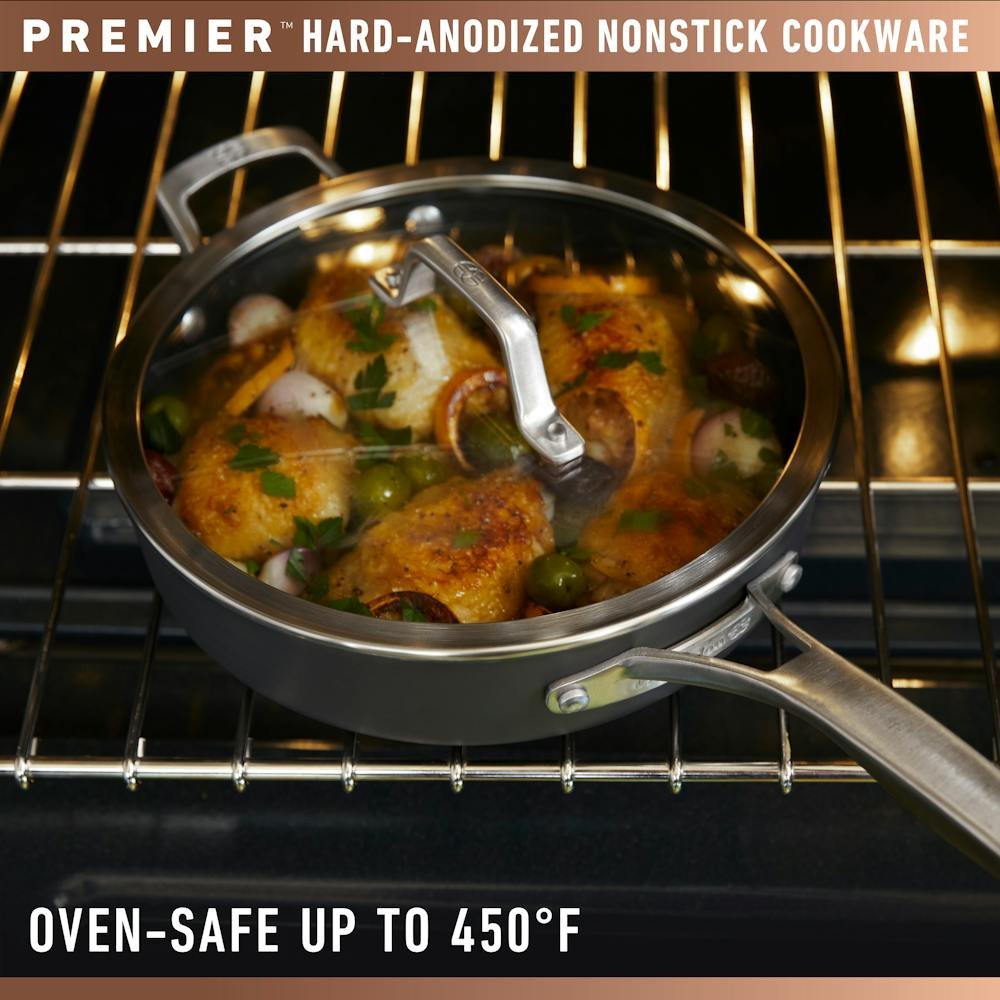
Hard anodized cookware can often handle high heat. Most brands can go up to 450°F. Some can even go up to 500°F. Check your cookware’s instructions. Never exceed the temperature limit given. This keeps the cookware safe. It also prevents damage.
Hard anodized cookware is made from strong aluminum. This makes it durable and sturdy. The anodized layer helps in resisting scratches. It also improves heat distribution. Handles may be made of different materials. Metal handles are usually oven-safe. Plastic handles may melt in high heat. Always check the handle material. This ensures safe oven use.
Identifying Oven-safe Cookware
Read labels on your cookware before using it in the oven. Labels tell if the cookware is oven-safe. Look for symbols or words like “oven-safe” or “heat-resistant.” These give clues about temperature limits. Always check the manufacturer’s website for more details. They often have safety tips and temperature ranges. Some cookware can handle high heat, while others cannot.
Handles and lids need checking, too. Some handles are not safe for ovens. They might melt or get damaged. Use pot holders when touching hot handles. Look for lids that can handle heat. Glass lids may not be safe in high heat. Follow these tips to keep your cookware safe.
Look at the color and texture of the cookware. Dark and smooth surfaces usually mean they are oven-safe. Shiny and glossy surfaces may not be safe. Check for rubber or plastic parts. They might melt in the oven.
Metal parts are often safe. But read the instructions to be sure. Pay attention to any warnings. Cookware with oven-safe symbols is usually a good choice. These symbols make it easy to know if you can use them in the oven.
Precautions For Oven Use
Handles and lidsare important for oven safety. Many handles can melt in high heat. It’s wise to check if they are oven-safe. Metal handles are usually safe. Plastic handles are risky. Lids should fit tightly to keep heat in. Loose lids can cause accidents.
Preheating considerationsare crucial. Always preheat the oven to the right temperature. This helps cook food evenly. Hard anodized cookware needs proper heat. Avoid sudden temperature changes. They can warp the cookware. Keep an eye on temperature settings.
Common Misconceptions
Many think all cookware is the same. This is not true. Hard anodized cookware is special. It has a strong surface. Some believe it can’t go in the oven. But it can. Check the handle first. If it’s metal, it’s usually safe. Avoid putting plastic handles in the oven. They can melt. Always read the label on your cookware. It tells you if it’s oven-safe. Not all hard anodized cookware is the same. Different brands have different rules. Some can handle high heat. Others can’t. Always be careful. Using it the wrong way can damage it. Keep your cookware safe by knowing these facts. It’s easy if you follow the rules. Enjoy cooking without worry.
Care And Maintenance Tips
Gently wash hard anodized cookware by hand. Use warm water and mild soap. Avoid harsh scrubbers that can scratch the surface. A soft sponge is best for cleaning. Rinse well to remove all soap. Dry with a soft towel to prevent spots. Never use a dishwasher. It can damage the coating.
Store cookware properly to keep it safe. Stack pans with care. Use protective pads between them. This prevents scratches. Keep lids separate to avoid damage. Store in a dry place. Avoid damp areas to prevent rust. Check regularly for any signs of wear. Replace if necessary to ensure safety.

Credit: circulon.com
Alternatives To Hard Anodized Cookware
Stainless steel cookware is very popular. It is strong and does not rust. It is also safe for the oven. Cast iron pans are heavy but durable. They keep heat for a long time. Copper cookware is shiny and heats up fast. It looks nice in the kitchen. Ceramic cookware is good for baking. It is safe for high temperatures. Aluminum pans are light and heat quickly. They are often cheaper than other types. Glass cookware is clear. You can see your food while it cooks. Each type has its own benefits. Choose the one that fits your cooking style.

Credit: greensafaris.com
Frequently Asked Questions
Can You Put Hard Anodized Pans In The Oven?
Yes, hard anodized pans can go in the oven. Check the manufacturer’s instructions for temperature limits to avoid damage. Most pans can handle up to 500°F. Always use oven mitts when handling hot pans. Ensure lids are oven-safe too. Proper care extends the pan’s lifespan.
What Are The Disadvantages Of Hard Anodized Cookware?
Hard anodized cookware can be heavy and expensive. It isn’t compatible with induction cooktops. The surface might scratch over time. Some cookware may contain PTFE or PFOA, leading to health concerns. Always check for labeling to ensure safety and compatibility with your cooking needs.
What Temperature Is Hard Anodized Cookware?
Hard anodized cookware withstands temperatures up to 500°F (260°C). It is ideal for high-heat cooking. Use it for stovetop and oven-safe recipes. Avoid using it in microwave ovens. Hard anodized cookware is durable and resists warping. Always check the manufacturer’s guidelines for specific temperature recommendations.
Is Calphalon Hard Anodized Oven Safe?
Yes, Calphalon hard-anodized cookware is oven safe. It can typically withstand temperatures up to 450°F. Always check the manufacturer’s guidelines for specific temperature limits. Using it in the oven enhances versatility, making it ideal for various cooking methods. Ensure handles are also oven-safe.
Conclusion
Hard anodized cookware can safely be used in the oven. Always check the manufacturer’s guidelines for specific temperature limits. This type of cookware offers durability and even heat distribution. Perfect for roasting, baking, or broiling dishes. Its non-stick surface makes cleaning easy.
Remember to use pot holders when handling hot pans. Avoid sudden temperature changes to protect the cookware’s coating. Great for home cooks who seek versatility. Enjoy experimenting with new recipes. Enhance your cooking experience with hard anodized cookware. Happy cooking!