
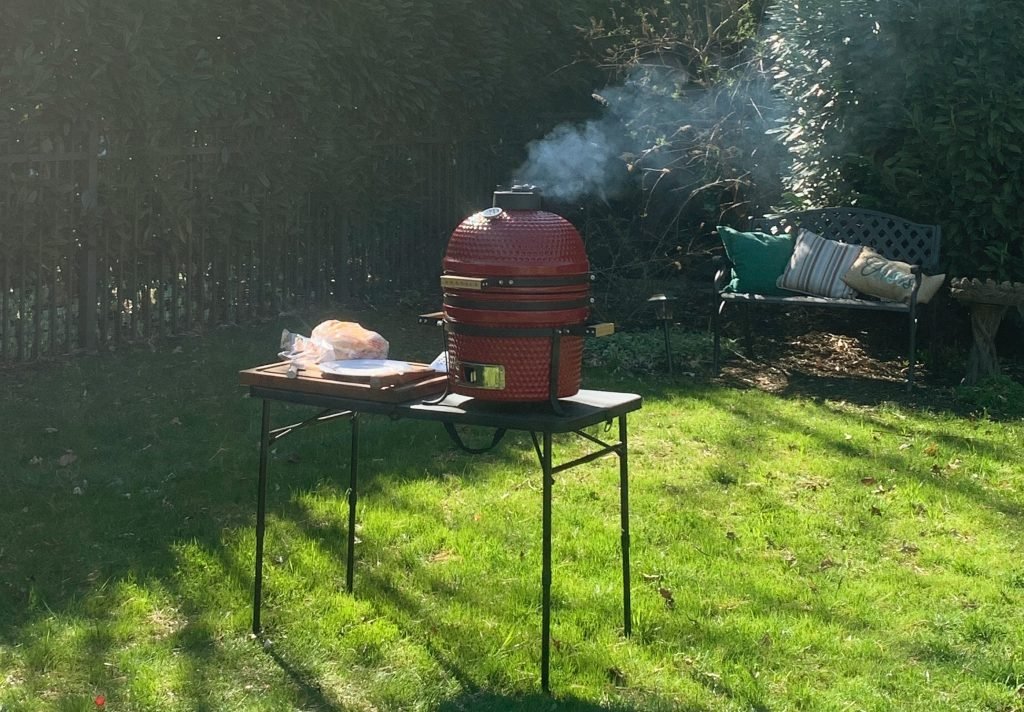
If you love grilling but want to take your cooking to the next level, mastering indirect cooking on your Kamado grill is a game-changer. Imagine perfectly tender, juicy meats and flavorful dishes cooked evenly without burning.
You might think indirect cooking is complicated, but with the right setup, it becomes simple and enjoyable. You’ll discover easy steps to set up your Kamado grill for indirect cooking, so you can impress your family and friends every time you fire it up.
Ready to unlock the full potential of your grill? Let’s dive in.
Choosing The Right Kamado Grill
Setting up a Kamado grill for indirect cooking starts with picking the right grill. Your choice affects how well you cook and the flavors you get.
This guide helps you understand material and size options. It also shows essential features to consider for the best cooking experience.
Material And Size Options
Kamado grills come in different materials like ceramic, steel, and aluminum. Each has strengths and weaknesses for heat retention and durability.
| Material | Heat Retention | Weight | Durability |
| Ceramic | Excellent | Heavy | High |
| Steel | Good | Medium | Medium |
| Aluminum | Fair | Light | Low |
Size is also important. Small grills suit solo or couple cooking. Larger grills fit family and party cooking. Choose size based on how many people you cook for.
Essential Features To Look For
Some features make indirect cooking easier and more effective. Look for vents to control airflow and temperature.
- A tight-sealing lid to keep heat and smoke inside
- A heat deflector or plate to separate food from direct flames
- A built-in thermometer for accurate temperature readings
- Sturdy legs or a stand for stability
- Easy access to charcoal or fuel for long cooks
These features help keep steady heat and protect food from burning during slow cooking.

Credit: www.kamadojoe.com
Tools And Accessories Needed
Setting up a Kamado grill for indirect cooking needs some special tools. These tools help control heat and cook food evenly.
This guide focuses on two important accessories: heat deflectors and plates, plus grill racks and thermometers.
Heat Deflectors And Plates
Heat deflectors and plates block direct heat from the charcoal. This creates a gentle cooking environment, like an oven.
- Heat deflectors are ceramic or metal pieces that sit between the charcoal and food.
- Plates can absorb and spread heat evenly inside the grill.
- They prevent flare-ups and burning.
- Use them to cook large cuts of meat or slow-cook dishes.
Grill Racks And Thermometers
Grill racks hold food above the heat deflectors. Thermometers help monitor the cooking temperature.
| Accessory | Purpose | Tips |
| Grill Rack | Supports food during cooking | Choose sturdy racks for heavy meats |
| Thermometer | Measures grill or food temperature | Use digital or probe types for accuracy |
Preparing The Grill For Indirect Cooking
Indirect cooking on a Kamado grill lets you cook food slowly and evenly. This method uses heat from the charcoal without placing food directly over flames.
To get good results, you need to prepare the grill correctly. This includes setting up charcoal, arranging heat deflectors, and adjusting airflow.
Setting Up The Charcoal
Use lump charcoal for the best heat and less ash. Light the charcoal and let it burn until covered with white ash.
Place the charcoal on one side of the grill. This creates a hot zone and a cooler zone for indirect cooking.
- Fill the charcoal basket about halfway
- Light the charcoal and wait 15-20 minutes
- Push the hot coals to one side for indirect heat
Arranging Heat Deflectors
Heat deflectors block direct heat from the coals. They spread heat evenly and protect food from burning.
Place the heat deflectors above the charcoal. Use ceramic or stone deflectors designed for Kamado grills.
- Set one or two deflectors over the hot coals
- Ensure they cover the charcoal completely
- Place the cooking grate above the deflectors
Adjusting Airflow For Temperature Control
Airflow controls the grill temperature. More airflow means higher heat. Less airflow lowers the heat.
Use the bottom vent and top damper to adjust airflow. Open them wide to increase heat or close slightly to reduce heat.
- Start with vents open for fast heating
- Close vents slowly to reach target temperature
- Keep vents stable during cooking to maintain heat

Credit: www.youtube.com
Temperature Management Tips
Setting up a Kamado grill for indirect cooking needs good temperature control. Keeping the heat steady is key to cooking food evenly.
Using the grill’s dampers right helps you manage airflow and heat. This guide shows how to keep the temperature steady.
Maintaining Consistent Heat
To keep heat steady, avoid opening the grill too often. Every time you open it, heat escapes and changes temperature.
Use a good quality thermometer to watch the temperature inside. Adjust the vents in small steps to keep the heat stable.
- Fill the charcoal all the way for even heat
- Use a heat deflector to spread heat evenly
- Check temperature every 15-20 minutes
- Avoid lifting the lid too much
Using Dampers Effectively
The top and bottom dampers control airflow in the Kamado grill. More air means higher heat, less air means lower heat.
Start by opening both dampers fully to light the fire. After that, close them partly to keep the temperature steady for indirect cooking.
- Open bottom damper to feed air to coals
- Use top damper to control smoke and heat release
- Make small adjustments to avoid sudden heat changes
- Close dampers slowly to lower temperature
Cooking Techniques For Perfect Bbq
Setting up your Kamado grill for indirect cooking helps you cook food evenly. It allows you to use lower temperatures and avoid flare-ups.
Indirect cooking is great for smoking and roasting. It gives your food a smoky flavor and tender texture.
Low And Slow Smoking
Low and slow smoking means cooking meat at a low temperature for a long time. This technique breaks down tough fibers and adds smoky flavor.
To set your Kamado for smoking, place a heat deflector or plate setter inside. Load charcoal on one side and add wood chunks for smoke.
- Keep grill temperature between 200°F and 250°F
- Use indirect heat to avoid burning
- Monitor internal meat temperature with a thermometer
- Maintain airflow for steady smoke
Roasting With Indirect Heat
Roasting on a Kamado grill uses indirect heat to cook food evenly. It works well for whole chickens, vegetables, and larger cuts.
Set your heat deflector to create two zones: one for charcoal, one for cooking. Place food on the cooler side to roast slowly.
- Preheat grill to 300°F to 350°F
- Use a drip pan to catch juices and prevent flare-ups
- Turn food halfway for even browning
- Check doneness with a meat thermometer
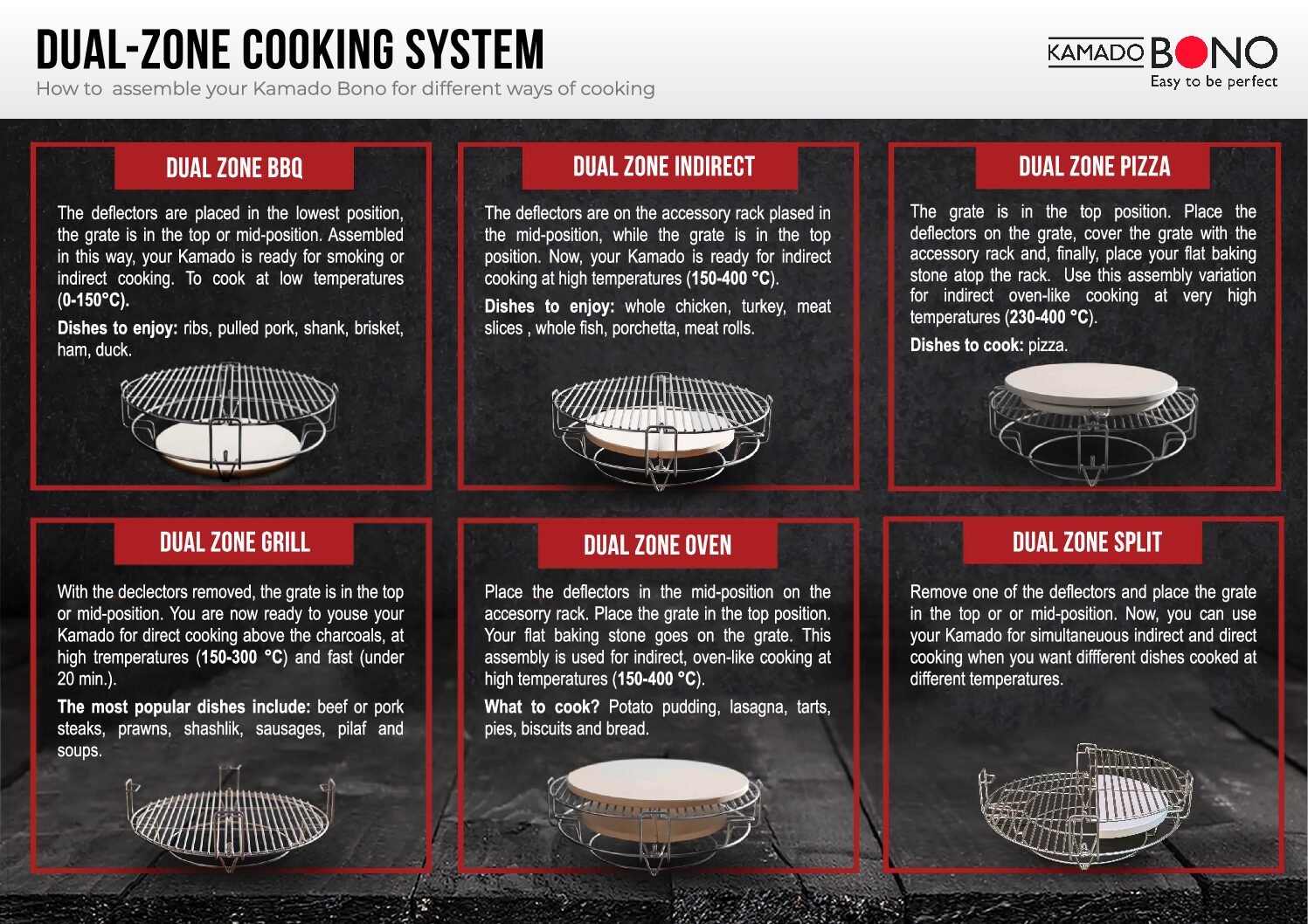
Credit: www.kamadobono.co.uk
Cleaning And Maintenance
Keeping your Kamado grill clean after cooking helps it work well for years. Regular care stops buildup and damage.
Simple cleaning steps and proper maintenance make your grill ready for the next meal. This guide covers key tips.
Post-cooking Cleanup
After cooking with indirect heat, wait for the grill to cool down before cleaning. Remove ashes and food scraps carefully.
- Use a grill brush to clean the cooking grate.
- Empty the ash catcher to prevent airflow blockage.
- Wipe the interior with a damp cloth to remove grease.
- Check the water pan and clean or replace it if needed.
Grill Care For Longevity
Proper care protects your Kamado grill from rust and damage. Check seals and parts regularly to keep it sealed and safe.
| Maintenance Task | Frequency | Tip |
| Check gasket seal | Every 3 months | Replace if cracked or loose |
| Clean exterior surface | Monthly | Use mild soap and water |
| Inspect vents | Before each use | Clear any blockages |
| Season ceramic | Yearly | Apply vegetable oil lightly |
Frequently Asked Questions
How Do You Set Up A Kamado For Indirect Cooking?
To set up a Kamado grill for indirect cooking, use a heat deflector. Place the deflector above the charcoal to create a barrier. This setup allows heat to circulate around the food without direct contact. Adjust the vents to control temperature and ensure even cooking.
What Temperature Is Best For Indirect Grilling?
For indirect grilling, maintain a temperature between 225°F and 275°F. This range is ideal for slow-cooking and smoking. It allows the food to cook evenly and absorb smoky flavors. Use a thermometer to monitor and adjust as needed.
Why Use A Heat Deflector In Kamado?
A heat deflector is essential for indirect cooking. It creates a barrier between the charcoal and food. This prevents direct heat, allowing for slow, even cooking. It’s perfect for smoking meats or baking. The deflector ensures the food remains juicy and tender.
Can I Use Wood Chips For Indirect Cooking?
Yes, wood chips add flavor when using a Kamado grill. Soak them in water before adding to the charcoal. This ensures they produce smoke, enhancing the flavor of your food. Choose different wood types for varied flavors. Adjust the amount based on your taste preference.
Conclusion
Setting up a Kamado grill for indirect cooking takes practice and patience. This method helps cook food evenly and keeps it juicy. You control the heat by arranging the coals and using a heat deflector. This setup works well for slow-cooked meats and vegetables.
Try different setups to find what suits your taste best. Enjoy the rich flavors that indirect cooking brings. Keep your grill clean and check the temperature often. Cooking with a Kamado grill can be fun and rewarding. Give it a try and taste the difference.