

Imagine the tantalizing aroma of crispy, golden-brown fries wafting through your kitchen without the guilt of excessive oil. This is the magic of an air fryer, a kitchen gadget that promises to revolutionize the way you cook.
But how exactly does it differ from your trusty oven? You might be wondering if it’s really worth the hype or just another fad. By understanding the unique features and advantages of an air fryer compared to an oven, you can make informed choices that elevate your cooking experience.
Get ready to uncover the secrets behind these two culinary titans—this knowledge could transform the way you prepare your favorite meals. Keep reading to discover the differences that could change your culinary game forever!
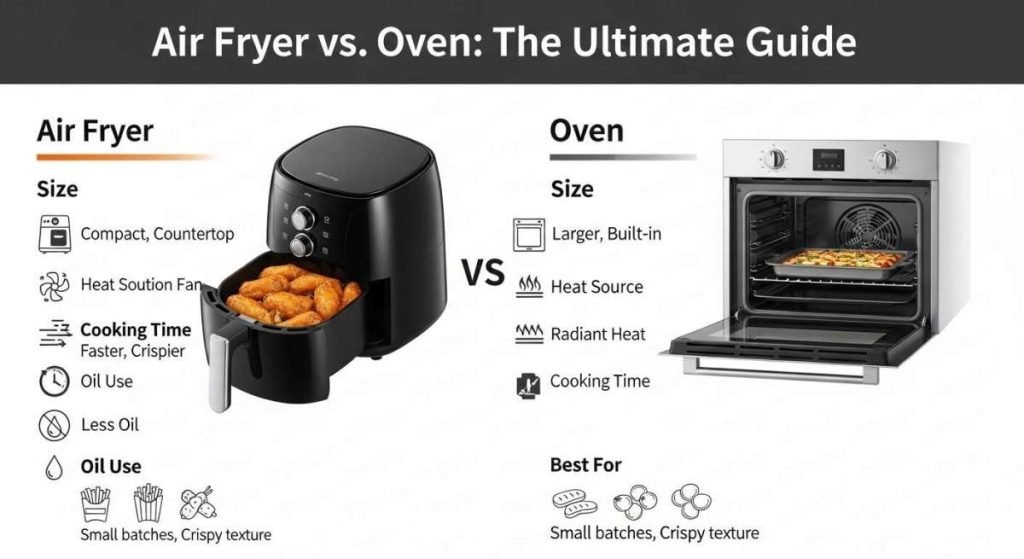
Air Fryer Basics
Have you ever wondered why everyone is buzzing about air fryers? These compact kitchen devices have taken the culinary world by storm. They’re not just another gadget; they’re changing how we cook. If you’re curious about how air fryers compare to ovens, you’re in the right place.
What Is An Air Fryer?
An air fryer is a compact appliance designed to make crispy, delicious food with little to no oil. Think of it as a mini convection oven. It’s small enough to fit on your countertop, yet powerful enough to deliver mouthwatering results. Imagine enjoying crispy fries without the guilt of deep frying—sounds like a win, right?
Air fryers have gained popularity for their ability to mimic the texture of fried foods. They’re perfect for those seeking healthier alternatives. Whether it’s chicken wings or roasted veggies, the air fryer has got you covered.
How Air Fryers Work
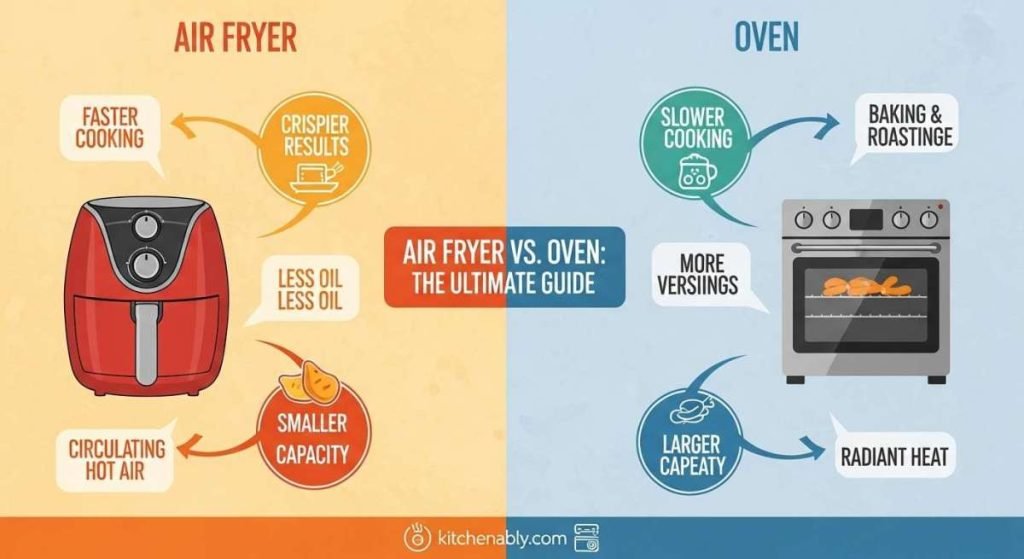
Air fryers work by circulating hot air around the food. This rapid air movement cooks food quickly and evenly. The result? Crispy, golden brown meals without the need for excessive oil.
Inside an air fryer, a fan pushes hot air all around your food, creating a crispy layer. Ever wondered why your fries come out so perfect? It’s the magic of air circulation! This method is not only efficient but also time-saving.
But here’s the kicker: air fryers use significantly less energy than traditional ovens. You get fast cooking times and energy savings all in one. Plus, they’re easy to clean—no more scrubbing greasy oven trays.
Have you tried using an air fryer? If not, what are you waiting for? Dive into the world of crispy, delicious, guilt-free cooking today!
Oven Fundamentals
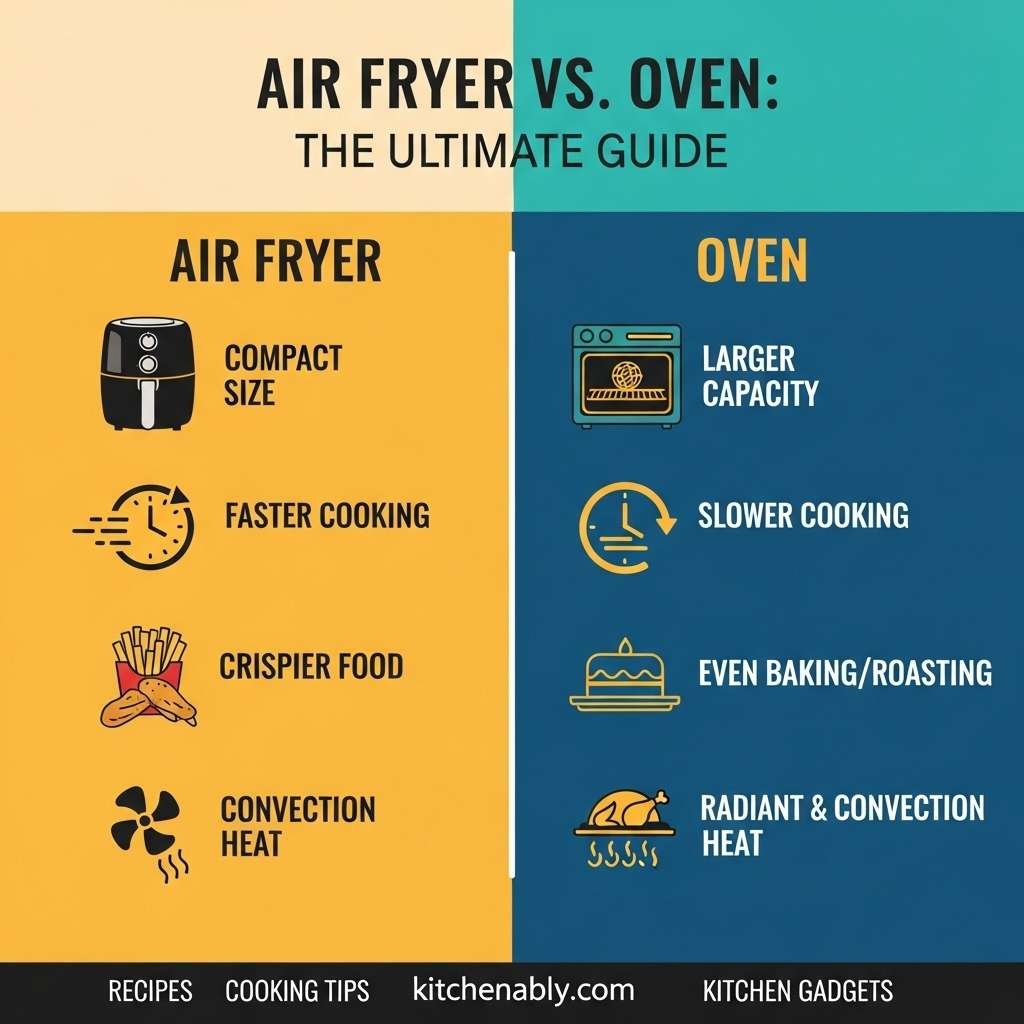
Air fryers use rapid air circulation to cook food quickly and evenly. Traditional ovens rely on slower, radiant heat. Air fryers often require less oil, making them a healthier option. Ovens, however, offer more cooking space, ideal for larger meals or baking tasks.
If you’re someone who loves cooking or just enjoys a good meal, understanding oven fundamentals can enhance your kitchen experience. Ovens are a staple in many households, helping us bake, roast, and cook a variety of delicious dishes. But what makes them tick, and how do they differ from modern appliances like air fryers? Let’s dive into the essentials of ovens and see what sets them apart.
Types Of Ovens
Ovens come in different forms, each serving unique purposes. The traditional conventional oven is a common sight in kitchens, using heating elements at the top and bottom to cook your food. These ovens are great for baking and roasting, offering even heat distribution.
Then there’s the convection oven, which adds a fan to circulate hot air around the food. This feature speeds up cooking times and ensures more consistent results, making it a favorite for those who love a crispy finish. Microwave ovens use electromagnetic radiation to heat food quickly. While they’re excellent for reheating and defrosting, they’re not ideal for achieving that golden-brown texture.
Lastly, toaster ovens are compact and versatile, perfect for small spaces or quick meals. They toast, bake, and can even broil, offering a mini version of a full-sized oven’s capabilities.
How Ovens Operate
Understanding how ovens operate can help you make better cooking choices. Conventional ovens rely on thermal conduction, where heat is transferred directly from heating elements to the food. This method is effective but can sometimes lead to uneven cooking.
Convection ovens, with their fan-forced heat, offer a solution to this problem. The circulating air ensures a more uniform temperature, reducing cooking times and enhancing flavors. Imagine baking a pie where both the crust and filling are perfectly cooked—convection ovens make this possible. Microwave ovens, on the other hand, excite water molecules in food using microwaves, generating heat internally.

This process is fast but doesn’t brown or crisp food, which is why you might miss that satisfying crunch. Toaster ovens operate similarly to conventional ovens but on a smaller scale.
They use radiant heat from coils and often include a fan to mimic convection cooking. This makes them handy for small tasks like melting cheese or baking a small batch of cookies. Have you ever wondered why your oven might not cook evenly, or why certain dishes turn out better in one type of oven over another?
Knowing the ins and outs of how ovens work can transform your cooking, allowing you to choose the right tool for the task. What kind of oven do you think suits your cooking style best?
Cooking Method Comparison
Understanding the differences in cooking methods between an air fryer and an oven can help you make better kitchen choices. Both appliances cook food by using heat. Yet, the way they deliver that heat makes them unique. Let’s explore these differences through two key factors: convection vs. air circulation and heat distribution differences.
Convection Vs. Air Circulation
Ovens typically use convection to cook food. This method involves heating the air inside the oven. A fan then circulates this hot air around the food. This process ensures even cooking. Air fryers, on the other hand, rely on rapid air circulation. They heat food by moving hot air quickly around it. This creates a crispy texture, similar to frying.
Heat Distribution Differences
In ovens, heat usually comes from either the top or bottom. This can lead to uneven cooking if not monitored. Rotating food can help balance this. Air fryers distribute heat more evenly. The rapid air movement ensures every part of the food gets equal heat. This results in a consistent texture and taste.
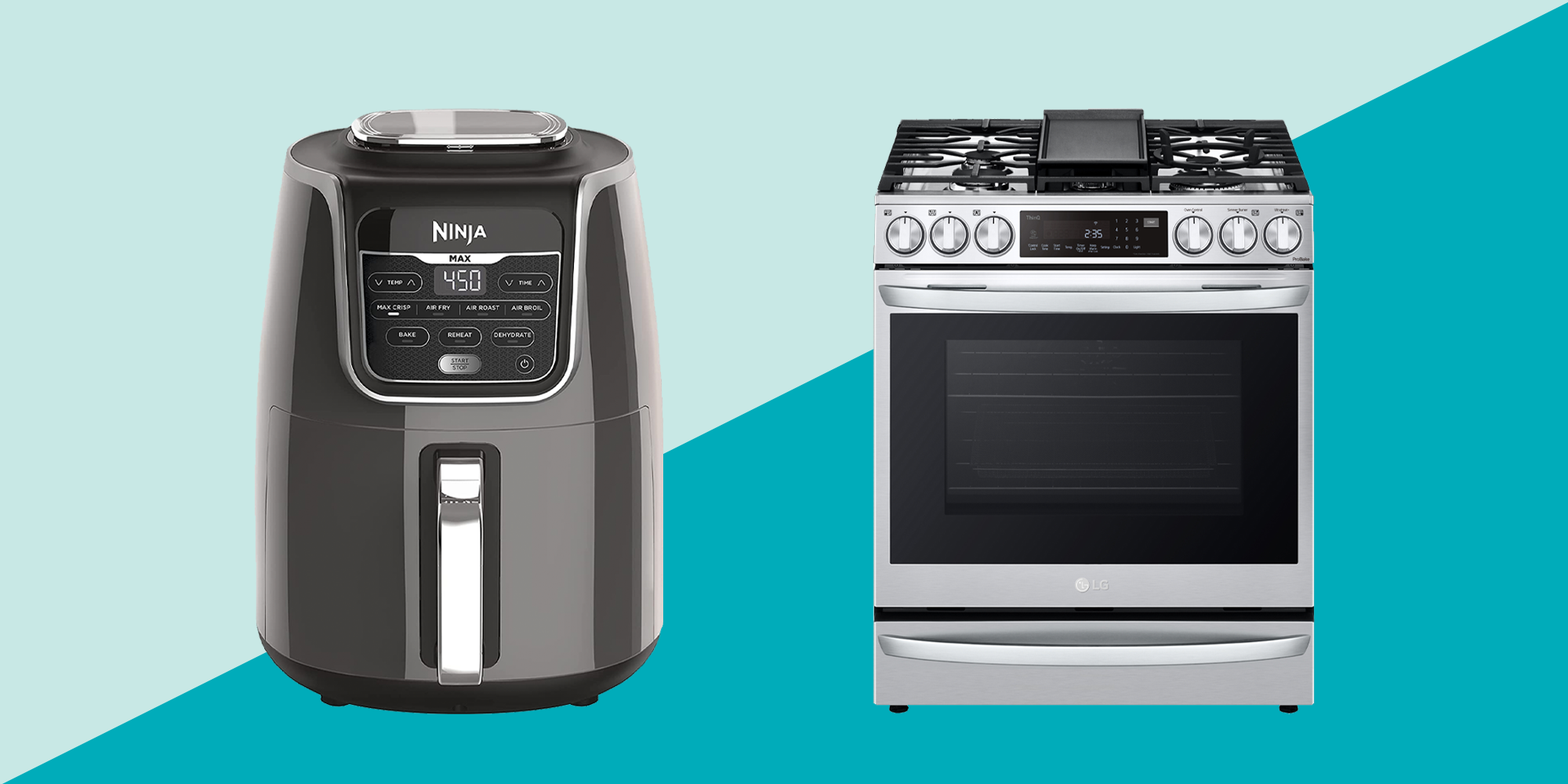
Credit: www.goodhousekeeping.com
Energy Efficiency
When you’re choosing between cooking appliances, understanding energy efficiency can make a big difference in both your bills and your environmental footprint. An air fryer and an oven serve similar purposes but differ in how they use energy. Let’s dive into the specifics and see how each appliance stacks up.
Power Consumption
Air fryers are known for their low power usage. Most models use between 800 to 1500 watts, depending on size and brand. This is significantly less compared to ovens, which can use up to 5000 watts. If you’re cooking small meals, an air fryer can be much more efficient.
Think about your cooking habits. Do you frequently heat up large batches of food? If not, an air fryer may save you energy and money. A smaller device heats up faster and maintains its temperature without consuming as much power.
Environmental Impact
Consider the broader environmental impact of your cooking choices. Air fryers generally have a smaller carbon footprint due to their energy efficiency. They heat up quickly, reducing the time and energy needed for cooking.
But don’t just rely on energy consumption numbers. Air fryers also produce less heat, which means your air conditioning system won’t have to work overtime in the summer. This indirect saving can contribute to reduced environmental strain.
So, which is better for you? Are you focused on reducing your carbon footprint or minimizing your energy bills? Evaluating these aspects can help you make an informed decision that aligns with your values and lifestyle. Choose wisely, and take a step towards a more energy-efficient kitchen.
Cooking Speed
Air fryers cook faster than ovens by using rapid hot air circulation. This method crisps food quickly. Ovens take longer, heating food more slowly with a steady, distributed heat.
When it comes to kitchen gadgets, the air fryer and the traditional oven both have their own unique set of benefits and drawbacks. However, when you’re pressed for time, cooking speed can become a crucial factor in choosing between the two. The air fryer has been praised for its ability to cook food faster than a conventional oven, but how significant is this difference? Let’s delve into what makes the air fryer a speed demon in the kitchen.
Time Efficiency
If you’ve ever been in a rush to get dinner on the table, you know that every minute counts. Air fryers are built for speed, often cooking meals up to 30% faster than a conventional oven. This is largely due to their compact size and efficient hot air circulation. Imagine preparing a batch of crispy chicken wings. In an air fryer, you’re looking at about 20 minutes, compared to the 30-40 minutes it might take in an oven. In busy households, those extra minutes can be a game-changer, allowing you more time for other activities or simply to relax.
Preheating Needs
Preheating is another area where air fryers outshine traditional ovens. Most ovens require at least 10-15 minutes to reach the desired temperature. The air fryer, on the other hand, often needs no preheating at all. Think about those spontaneous moments when you decide to bake cookies. In an oven, you’d have to wait for it to preheat. With an air fryer, you can start cooking almost immediately, satisfying those cravings much quicker. Consider how this speed and convenience fit into your lifestyle. Are you someone who values quick meal prep, or do you prefer a more leisurely cooking pace? Understanding these differences can help you make the right choice for your kitchen needs.
:max_bytes(150000):strip_icc()/what-is-the-difference-between-your-air-fryer-and-the-convection-setting-on-your-oven-60276f4cb16243cfb26c2f715e8c75df.jpg)
Credit: www.eatingwell.com
Food Texture And Taste
Cooking appliances have transformed how we prepare meals. An air fryer and an oven are popular choices. They offer unique benefits, especially in food texture and taste. Understanding these differences can help make the right culinary choice.
Crispness And Flavor
Air fryers excel in creating crispy textures. They use rapid air circulation. This mimics deep frying. Food emerges with a delightful crunch. Ovens provide a more uniform texture. They evenly cook items. Some dishes may lack the crispness found in air-fried foods. The flavor in air fryers often feels intense. It locks in spices and seasonings. Ovens, while flavorful, can differ. They may require longer cooking times. This can lead to a milder taste.
Moisture Retention
Moisture retention varies between these appliances. Air fryers excel in keeping food juicy. They seal moisture inside while cooking. This results in tender meats and vegetables. Ovens, conversely, use consistent heat. This can dry out food if not managed well. To retain moisture, oven dishes often need basting or added liquids. Air fryers simplify the process. No need for extra steps. Food remains moist without effort.
Versatility And Capacity
Air fryers and ovens both cook food, but they serve different needs. Understanding their versatility and capacity can help you choose the right appliance. Air fryers offer quick cooking and flexibility. Ovens provide more space and can handle larger meals.
Cooking Limitations
Air fryers have a small cooking area. They are great for small batches. Ovens, on the other hand, can cook large meals. You can bake, roast, and broil in an oven. Air fryers excel in frying with less oil. They can’t bake large cakes or roast big meats.
Portion Sizes
Portion sizes differ between air fryers and ovens. Air fryers suit small families or singles. Their compact size limits the amount you can cook. Ovens can cook for big groups. Large trays and racks fit more food. Perfect for family dinners and gatherings.
Health Considerations
Choosing between an air fryer and an oven can impact health. Each appliance offers different cooking methods that may affect nutritional value and fat content. Understanding these differences helps make informed cooking choices. Here’s how air fryers and ovens compare in terms of health benefits.
Oil Usage
Air fryers require minimal oil, often just a spray. This leads to lower calorie meals. Ovens may need more oil to achieve a crispy texture. Less oil means less fat in your diet. This can benefit heart health and weight management.
Nutrient Retention
Air fryers cook food quickly at high temperatures. This method helps maintain more nutrients. Ovens can take longer, possibly reducing some vitamins. Faster cooking preserves essential vitamins and minerals. Keeping nutrients intact supports a healthy diet.
Maintenance And Cleaning
Keeping your kitchen appliances clean can be a daunting task. Both air fryers and ovens require regular maintenance and cleaning. The difference in design and functionality affects how you handle each appliance. Understanding these differences helps maintain their performance and extend their lifespan.
Ease Of Cleaning
Air fryers are compact and easy to clean. They have fewer parts compared to ovens. Most air fryers come with removable baskets and trays. These parts can be cleaned with warm water and soap. Some models have dishwasher-safe components. This makes cleaning even simpler.
Ovens have larger spaces and more components. Cleaning them requires more effort. You often need special cleaners for the oven racks and walls. Regular cleaning prevents food buildup and keeps the oven running efficiently.
Durability And Longevity
Air fryers are designed for frequent use. They have sturdy parts that last long with proper care. Regular cleaning ensures their durability and functionality. Ovens are built to withstand more intense cooking. They can last several years with proper maintenance.
Ignoring cleaning can lead to wear and tear. This affects both air fryers and ovens. Regular care and cleaning extend the lifespan of both appliances. Keeping them in good shape enhances their performance and saves money.
Cost Analysis
Choosing between an air fryer and an oven can be a tricky decision, especially when it comes to understanding the costs involved. Whether you’re setting up a new kitchen or simply upgrading your appliances, it’s crucial to know what you’re getting into financially. Let’s break down the cost differences so you can make an informed choice.
Initial Investment
When purchasing an air fryer, you’ll likely notice the price is often lower than that of a traditional oven. Most air fryers range from $50 to $200, depending on size and features. This is relatively affordable compared to ovens, which can start at $300 and go up to several thousand dollars for high-end models.
Consider how often you cook and the type of meals you prepare. If you’re only making small, quick meals, an air fryer might be sufficient. However, if you need to bake large dishes or cook for a family, an oven might justify the higher price tag.
Long-term Costs
Think about the energy consumption. Air fryers typically use less electricity than ovens, which could save you money on utility bills over time. While ovens are more versatile, they can be less efficient, especially if you’re cooking small portions.
Then there’s maintenance. Air fryers usually have fewer parts to clean and maintain, potentially reducing long-term costs. Ovens, with their larger size and complexity, might require more regular upkeep and occasional repairs.
Have you considered the lifespan of your appliances? Air fryers might need replacing after a few years, while a well-maintained oven can last much longer. This could impact your overall spending in the long run.
Ultimately, the choice depends on your cooking habits and financial priorities. Would you prefer lower initial costs and energy savings, or a versatile appliance that might require more investment upfront? Your budget and lifestyle will guide your decision.
Choosing The Right Appliance
Air fryers cook food faster by circulating hot air, creating a crispy texture with less oil. Ovens use radiant heat, providing even cooking but typically require more time and oil. Both are great for different culinary needs.
Choosing the right appliance for your kitchen can significantly impact how you cook and enjoy meals. Whether you’re considering an air fryer or a traditional oven, understanding the key differences can help you make an informed decision. Your choice should reflect your lifestyle, cooking habits, and available space and budget.
Lifestyle And Cooking Habits
Consider how often you cook and what types of meals you prepare. If you enjoy quick, crispy snacks without much oil, an air fryer might be your best friend. It’s perfect for making guilt-free fries or chicken wings in a fraction of the time. On the other hand, if you love baking or cooking large meals for family gatherings, an oven offers more versatility. It handles everything from casseroles to cakes with ease. Think about your weekly meal routine—does it involve more baking or frying?
Space And Budget Considerations
Kitchens come in all shapes and sizes, and so do appliances. If your counter space is limited, an air fryer’s compact design can be a lifesaver. It fits neatly on a countertop and can be easily stored away when not in use. However, if you have ample kitchen space, an oven can be a staple appliance that stays put.
Consider your budget as well. Air fryers are generally more affordable upfront but think about long-term usage and energy costs. Have you thought about how much space you can dedicate to a new appliance or how much you’re willing to spend? Balancing these factors can help you decide which appliance aligns best with your needs.
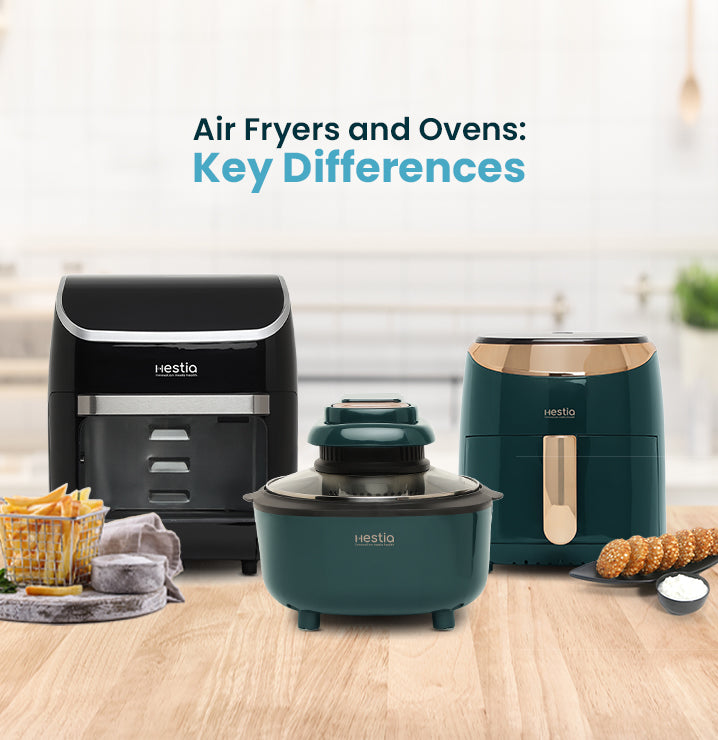
Credit: www.hestiaappliances.com
Frequently Asked Questions
What Makes Air Fryers Unique?
Air fryers use rapid air circulation to cook food quickly. This method results in crispy textures similar to frying. Unlike ovens, air fryers require little to no oil, making them a healthier option. Their compact size also allows for faster preheating times, which saves energy and time.
Can Air Fryers Replace Ovens?
Air fryers can complement ovens but not fully replace them. They excel in cooking smaller portions efficiently. While ovens are versatile and can bake, roast, and broil large meals, air fryers specialize in frying-like textures. For dishes requiring slow cooking or baking, ovens remain the preferred choice.
Are Air Fryers More Energy-efficient?
Yes, air fryers are generally more energy-efficient than ovens. They heat up quickly and cook food faster, reducing energy consumption. Their compact size requires less energy to maintain cooking temperatures. For small meals or snacks, air fryers offer a cost-effective, energy-saving alternative to traditional ovens.
Do Air Fryers Cook Faster Than Ovens?
Air fryers typically cook faster due to rapid air circulation technology. This process evenly distributes heat, allowing food to cook quickly and efficiently. For smaller portions or single servings, air fryers reduce cooking time significantly compared to conventional ovens, making meal preparation quicker.
Conclusion
Choosing between an air fryer and an oven depends on your needs. Air fryers cook faster and use less oil. They are compact and save kitchen space. Ovens offer more cooking options and larger capacity. Energy consumption varies between the two.
Both have their advantages. Consider your lifestyle and kitchen space. Think about what you cook most often. Each appliance suits different preferences and cooking styles. Making the right choice enhances your cooking experience. Choose what fits your cooking habits best.
Enjoy delicious meals with your chosen appliance.