
Are you wondering if it’s okay to place your refrigerator right next to your outdoor grill? It sounds convenient—having cold drinks and fresh ingredients just steps away while you cook.
But before you set things up, there are important things you need to know. This isn’t just about space; it’s about safety, appliance lifespan, and getting the best out of your outdoor kitchen. Keep reading to discover the facts that will help you make the smartest choice for your grill and fridge setup.

Credit: rtaoutdoorliving.com
Risks Of Placing Refrigerator Near Grill
Putting a refrigerator next to an outdoor grill can cause problems. The heat and smoke from the grill may harm the fridge.
It is important to know the risks before placing these appliances close together. Safety and appliance life can be affected.
Heat Damage To Refrigerator
Grills produce high heat that can damage a nearby refrigerator. The fridge’s outer parts may warp or fade over time.
Heat can also harm the refrigerator’s internal components. This may cause it to stop working properly or break down early.
Fire Hazards
Placing a refrigerator too close to a grill creates a fire risk. Flames or sparks can ignite nearby materials or the fridge parts.
Gas grills especially can cause sudden flare-ups. This increases the chance of fire near the refrigerator and surrounding areas.
Impact On Appliance Efficiency
Heat from the grill forces the refrigerator to work harder. This uses more electricity and raises energy bills.
High temperatures also reduce the fridge’s cooling power. Food inside may spoil faster and the fridge may not stay cold enough.

Credit: bestofbackyard.com
Recommended Distance Between Appliances
Placing a refrigerator next to an outdoor grill requires careful planning. The right distance keeps both appliances safe and working well.
Knowing the proper space between them helps avoid heat damage and ensures good airflow.
Manufacturer Guidelines
Always check the manuals for both appliances. Manufacturers often give clear rules about spacing. They set minimum distances to avoid damage and fire risks.
- Keep at least 12 inches between the grill and refrigerator.
- Follow the grill’s heat shield recommendations.
- Use non-combustible materials for surfaces near the grill.
- Check for any specific ventilation needs stated by the manufacturer.
General Safety Distance
Besides manuals, general safety rules apply. Heat from the grill can harm the fridge if too close. Smoke and grease may also build up near the refrigerator.
| Distance | Purpose |
| 12-18 inches | Protect refrigerator from heat |
| 24 inches or more | Reduce smoke and grease contact |
| Clear space above grill | Prevent fire hazards |
Ventilation Considerations
Good airflow keeps the refrigerator cool and the grill safe. Place appliances where air moves freely. Avoid tight corners or enclosed spaces.
- Leave open space around the refrigerator’s vents.
- Ensure the grill’s exhaust can escape upward without obstruction.
- Do not block air pathways between appliances.
- Use fans or vents if natural airflow is poor.
Materials And Placement Tips
Placing a refrigerator next to an outdoor grill needs careful thought. The heat from the grill can affect the fridge’s performance and lifespan.
Choosing the right materials and location helps protect the refrigerator and keeps your outdoor space safe and functional.
Heat-resistant Barriers
Heat-resistant barriers protect the refrigerator from the grill’s heat. These barriers reduce heat damage and keep the fridge cool.
- Use metal or stone panels between the grill and fridge.
- Install a heat shield made from fire-resistant materials.
- Keep a gap of at least 12 inches between the grill and fridge.
Shaded And Covered Areas
Shade helps lower the temperature around the refrigerator and grill. It also protects from rain and sun damage.
| Area Type | Benefits |
| Covered Patio | Keeps rain off appliances |
| Shade Sail | Blocks direct sunlight |
| Umbrella | Provides flexible shade |
Stable And Level Surfaces
A stable and level surface prevents the fridge from tipping or working unevenly. It also helps the grill stay safe during cooking.
- Choose a flat concrete or stone base.
- Make sure the surface can support the weight of both appliances.
- Check the level using a carpenter’s level tool.
- Adjust the feet of the refrigerator to balance it perfectly.
Electrical Safety Near Outdoor Grills
Placing a refrigerator next to an outdoor grill requires careful electrical safety measures. Grills produce heat and moisture that can affect electrical devices.
Understanding wiring, weatherproofing, and exposure risks helps keep your setup safe and functional.
Proper Wiring And Outlets
Use outdoor-rated wiring and outlets designed to handle weather conditions. Ground Fault Circuit Interrupter (GFCI) outlets reduce shock risks near grills.
- Install GFCI outlets at all outdoor electrical points.
- Ensure wiring insulation suits outdoor use.
- Keep wiring away from heat sources to avoid damage.
- Hire a professional electrician for installation.
Weatherproofing Electrical Components
Protect outlets and wiring from rain, snow, and humidity. Use weatherproof covers and seal all electrical connections.
| Component | Weatherproofing Tip |
| Outlet | Use waterproof cover with gasket |
| Wiring | Apply weather-resistant conduit or tubing |
| Connections | Seal with silicone or waterproof tape |
Avoiding Water And Heat Exposure
Place the refrigerator and electrical components away from direct water splashes and grill heat. Heat can damage wiring and cause shorts.
- Keep a minimum distance of 3 feet between the grill and refrigerator.
- Do not install outlets directly behind the grill.
- Use drip pans or shields to divert water away from electrical parts.
- Check for heat damage regularly and replace damaged parts.
Maintenance And Cleaning Practices
Placing a refrigerator next to an outdoor grill needs good care. Proper cleaning and maintenance keep both appliances safe and working well.
Regular checks and cleaning help avoid damage and pests. They also keep your outdoor space neat and hygienic.
Regular Inspection For Damage
Check the refrigerator and grill often for any signs of damage. Look for rust, dents, or broken parts that could cause problems.
Early fixes prevent bigger repairs. Check seals on the fridge door and the grill’s gas lines carefully.
- Inspect fridge door seals for cracks or gaps
- Look for rust or corrosion on grill surfaces
- Check gas connections for leaks or cracks
- Ensure refrigerator vents are clear and not blocked
Cleaning Grill And Refrigerator Areas
Clean both the grill and refrigerator regularly to remove dirt and grease. This helps prevent fire hazards and keeps food safe.
Use mild soap and water to clean outside surfaces. Avoid harsh chemicals that may damage finishes or seep into food areas.
- Wipe grill grates after each use
- Clean refrigerator exterior weekly
- Remove food crumbs from fridge seals
- Empty drip trays and grease catchers often
Preventing Pest Infestation
Pests like ants and rodents may be attracted to food spills near your grill and fridge. Keep the area clean to avoid this problem.
Seal any gaps or cracks where pests can enter. Store food in sealed containers and clean spills right away.
- Keep the area free of leftover food and grease
- Seal holes or cracks near appliances
- Use pest deterrents safely around outdoor kitchen
- Store food items in airtight containers
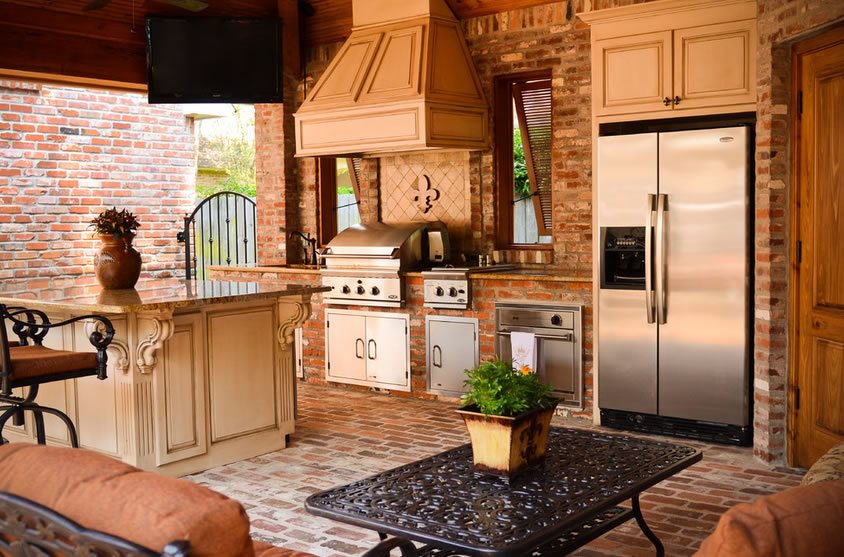
Credit: www.landscapingnetwork.com
Frequently Asked Questions
Can I Place A Refrigerator Next To My Outdoor Grill?
Placing a refrigerator next to an outdoor grill is not recommended. Heat from the grill can damage the refrigerator and reduce its efficiency. Maintain at least a few feet of distance to protect your appliance and ensure safe, optimal performance.
What Is The Safe Distance Between Grill And Fridge?
A safe distance of at least 3 feet is advised between the grill and refrigerator. This gap prevents heat damage, avoids fire hazards, and allows proper ventilation for both appliances. Always follow manufacturer guidelines for specific clearance recommendations.
Will Grill Heat Affect My Outdoor Fridge’s Lifespan?
Yes, grill heat can shorten your outdoor refrigerator’s lifespan. Excessive heat forces the fridge to work harder, causing wear and higher energy use. Keeping them separate helps maintain your fridge’s efficiency and durability over time.
Can Outdoor Refrigerators Handle Grill Heat Exposure?
Most outdoor refrigerators are not designed to withstand direct heat from grills. Prolonged exposure can damage components and reduce cooling efficiency. Use protective barriers or place the fridge away from the grill to avoid heat exposure.
Conclusion
Placing a refrigerator next to an outdoor grill can be convenient but needs care. Keep enough space between them to avoid heat damage. Make sure the fridge stays cool and works well. Protect the fridge from rain and sun to last longer.
Think about safety and easy access while cooking outside. A smart setup helps your outdoor kitchen stay useful and safe. Take time to plan where each item goes. This way, your grill and fridge work well together.