
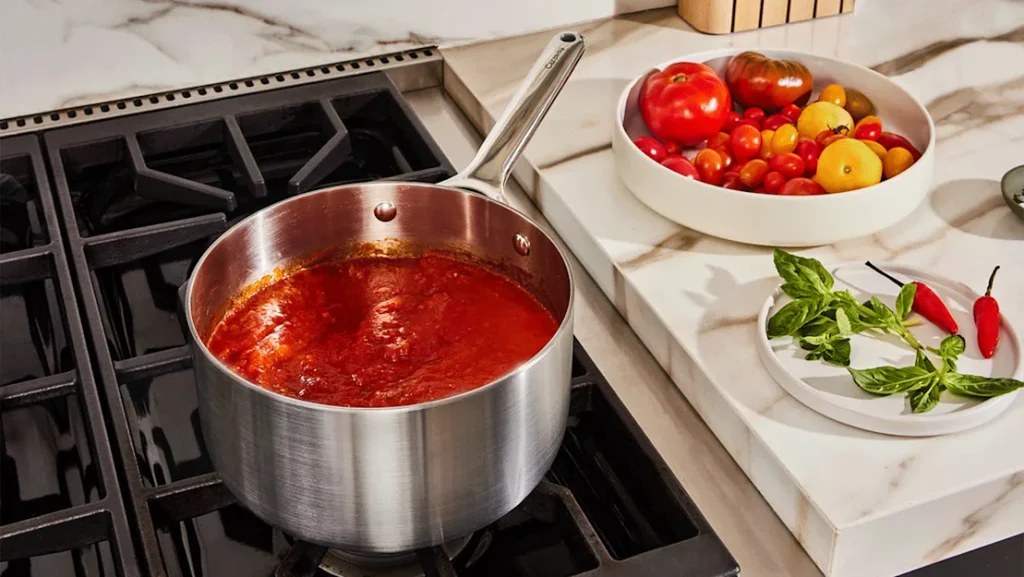
If you want your sauce to taste rich and full of flavor, knowing how to simmer it properly is key. But using a nonstick saucepan can be tricky if you’re not sure how to handle the heat or avoid sticking.
You might worry about ruining your sauce or damaging your pan. Don’t worry—this guide will show you simple, effective steps to simmer your sauce perfectly in a nonstick saucepan. By the end, you’ll have the confidence to create delicious sauces every time, without any hassle.
Keep reading to discover easy tips that will transform your cooking!
Credit: www.carawayhome.com
Choosing The Right Nonstick Saucepan
Choosing the right nonstick saucepanhelps cook sauce evenly and prevents sticking. The size and capacityshould match the amount of sauce you plan to simmer. Smaller saucepans work well for sauces that serve one or two people. Larger pans are best for big batches or family meals.
The material and coatingaffect heat distribution and durability. Look for pans with thick basesto avoid hot spots. Common coatings include PTFE (Teflon)and ceramic. PTFE offers smooth release but needs gentle heat. Ceramic coatings handle higher heat but can wear faster.
| Feature | Details |
|---|---|
| Size | Small (1-2 quarts) for small sauces; Large (3+ quarts) for big batches |
| Material | Aluminum or stainless steel base for even heating |
| Coating | PTFE (gentle heat) or ceramic (higher heat tolerance) |
Preparing Ingredients For Simmering
Choose fresh ingredientsfor better flavor and texture. Fresh herbs, vegetables, and spices enhance the sauce’s taste. Avoid wilted or old produce to keep the sauce rich and vibrant.
Wash all vegetables and herbs thoroughly. Remove any dirt or debris to keep the saucepan clean. Chop ingredients into small, even pieces for even cooking.
- Peel garlic and onions to release strong flavors.
- Dice tomatoes or bell peppers for smooth sauce texture.
- Measure spices carefully to balance taste.
Proper ingredient preparation helps the sauce simmer evenly without sticking. This process ensures your sauce cooks smoothly in a nonstick saucepan.
Temperature Control Techniques
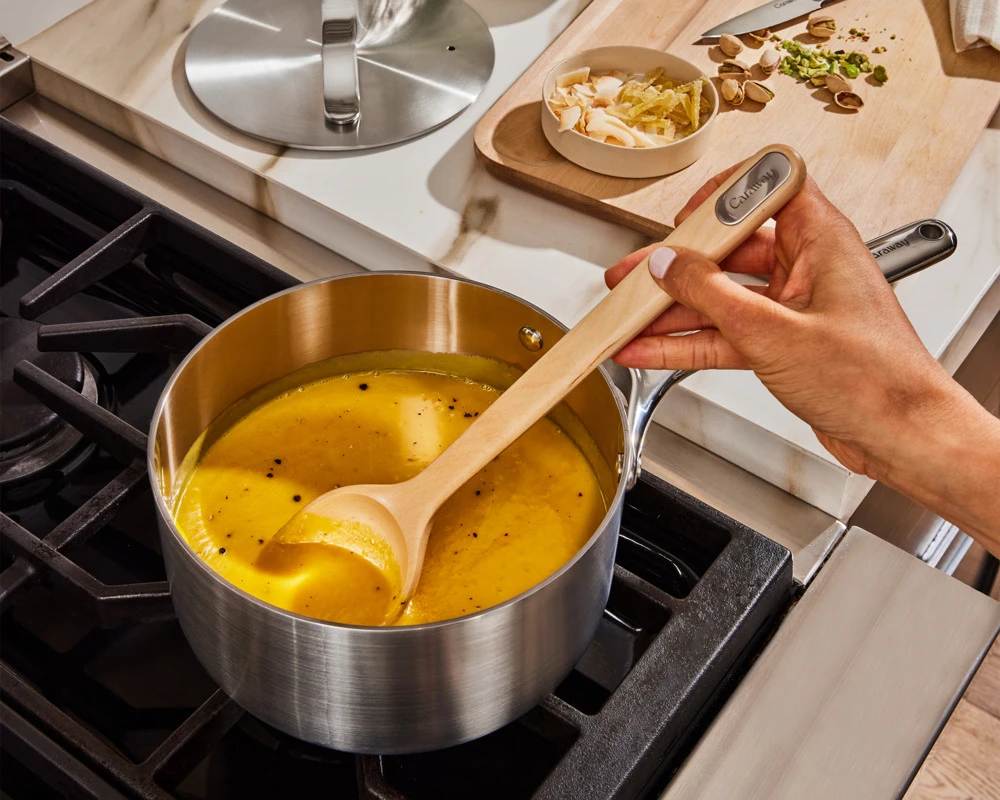
Use low to medium heat to simmer sauce in a nonstick saucepan. High heat can burn the sauce or stick it to the pan. Start by heating the pan gently until small bubbles form around the edges.
Keep adjusting the heat to maintain a gentle simmer. Too high heat causes boiling, which changes the sauce texture. Too low heat slows cooking and may not reduce the sauce properly.
- Watch the surface for tiny bubbles, not big ones.
- Stir occasionally to prevent sticking, even in a nonstick pan.
- Use a lid partially covered to control steam and heat.
Keep a close eye on the sauce. Stirring and adjusting heat helps keep the simmer steady. A steady simmer cooks sauce evenly and brings out the best flavors.
Credit: www.carawayhome.com
Stirring And Mixing Tips
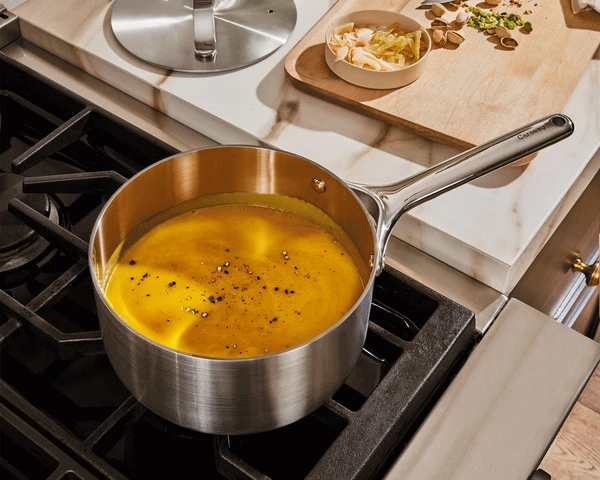
Choose utensils that do not scratch your nonstick saucepan. Silicone, wood, or plastic spoons work best. Metal tools can damage the coating and reduce its life.
Stir gently to spread heat and ingredients evenly. This helps prevent sauce from sticking or burning. Use a circular motion, scraping the bottom and sides.
- Use a spoon or spatula with a soft edge.
- Mix slowly to keep the sauce smooth.
- Keep stirring to avoid lumps and hot spots.
- Check the sauce thickness while stirring.
Avoiding Common Mistakes
Use low heat to avoid burning the sauce. High heat can cause the sauce to stick and burn quickly. Stir the sauce often to keep it moving and prevent hot spots. Use a wooden or silicone spoon to gently scrape the bottom and sides.
Keep the sauce thickness steady by stirring regularly. If the sauce becomes too thick, add a small amount of water or broth. This keeps the sauce smooth and easy to pour. Avoid adding too much liquid at once to prevent thinning the sauce too much.

Credit: www.420spotshop.com
Cleaning And Maintenance Of Nonstick Saucepans
To keep your nonstick saucepanclean, use warm waterand mild dish soap. Avoid harsh scrubbing pads that can damage the coating. Soft sponges work best.
For stuck-on food, soak the pan in warm soapy water for a few minutes. This helps loosen residue without scratching.
- Never put your nonstick pan in the dishwasher.
- Dry the pan completely after washing.
- Store it carefully to avoid scratches from other cookware.
Using these cleaning tips helps extend the pan’s lifespan. Proper care keeps the nonstick surface smoothand effectivefor longer.
Frequently Asked Questions
How Do You Simmer Sauce In A Nonstick Saucepan?
To simmer sauce in a nonstick saucepan, heat the sauce over low to medium heat. Stir occasionally to prevent sticking and ensure even cooking. Avoid high heat as it can damage the nonstick surface. Simmer gently until the sauce thickens to desired consistency.
Can I Use High Heat To Simmer Sauce In Nonstick Pans?
No, high heat is not recommended for simmering sauce in nonstick pans. It can damage the coating and release harmful fumes. Use low to medium heat instead for gentle simmering, preserving both the pan’s surface and the sauce’s flavor.
How Long Should Sauce Simmer In A Nonstick Saucepan?
Simmer sauce in a nonstick saucepan for 10 to 20 minutes. This allows flavors to meld and sauce to thicken. Stir occasionally to prevent sticking. Adjust time based on sauce type and desired thickness.
Should I Cover The Nonstick Saucepan While Simmering Sauce?
Covering the saucepan helps retain moisture and heat, speeding up simmering. However, leaving it uncovered allows sauce to reduce and thicken. Choose based on your recipe’s needs and desired sauce consistency.
Conclusion
Simmering sauce in a nonstick saucepan keeps flavors rich and smooth. Control the heat to avoid burning or sticking. Stir often to mix ingredients well and prevent lumps. Use low to medium heat for best results. Patience helps the sauce thicken slowly and taste better.
Following these simple steps makes cooking easier and more enjoyable. Enjoy your delicious sauce with confidence every time. Keep practicing to improve your simmering skills. Cooking can be simple and fun with the right methods.